
What Actually Makes Someone A Bogan?
| Pronunciation | /ˈboʊ.ɡən/ (ボウガン) |
|---|---|
| English Definition |
Challenges the assumption that bogan is about low income, pointing to the rise of the CUB (cashed-up bogan) — wealthy, educated or professional people who still fit the bogan cultural profile — and argues the real dividing line is cultural taste rather than money. |
| Japanese Translation |
いったい「ボーガン」って何者なのか? |
| Japanese Explanation |
「ボーガン=低所得層」という思い込みに疑問を投げかけ、裕福で高学歴な「CUB(キャッシュ・アップ・ボーガン)」の存在を紹介しながら、本当の違いはお金ではなく文化的センスにあると論じる。 |
Origin
Part of the Bogue series on kangaeroo.com, an ongoing cultural examination of Australian bogan culture.
Related Words
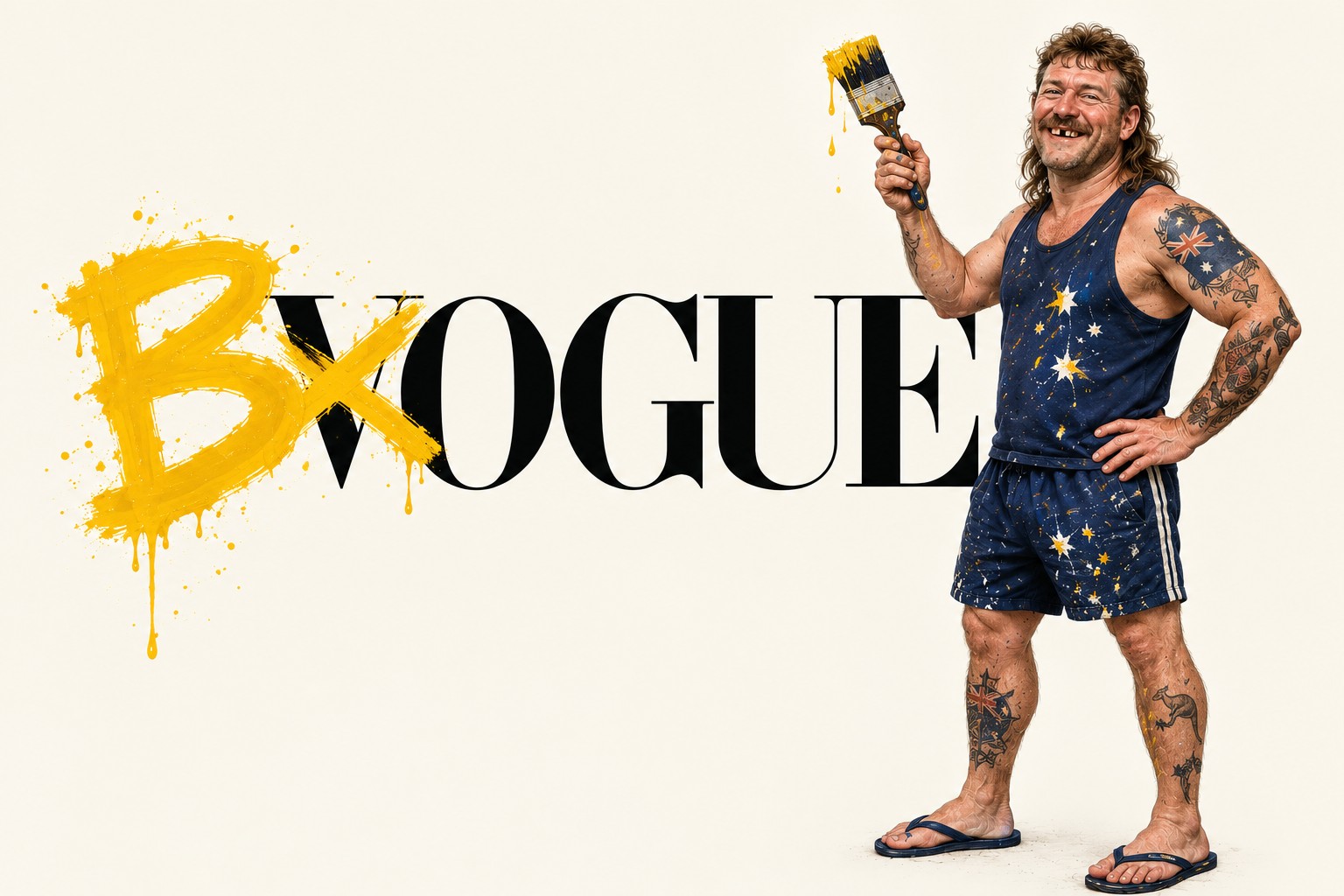
This is where things get complicated. The classic visual stereotype is: Mullet + flanno + singlet + black jeans/shorts + boots/thongs + tattoos + beer + ute + loud music.
The stereotype is so powerful that even people who don’t identify as bogans know exactly what the image means. But researchers increasingly point out that the real definition isn’t socioeconomic status.
A wealthy person can be a bogan.
An educated person can be a bogan.
A professional can be a bogan.
A person with a university degree and a six-figure salary can apparently be a CUB — “cashed-up bogan.”
The rise of the CUB was particularly important because it broke the connection between being poor and being bogan. The more accurate distinction is often cultural capital rather than financial capital. In plain English: You can have money without having taste.
And Australia has enormous fun with that idea.