和製カンガルー

Japan has an unlikely array of its own kangaroo logos, from delivery and construction companies to sports teams and care services. Find out more about them here.

日本には、宅配や建設会社からスポーツチーム、介護サービスまで、意外なほど多くのカンガルー・ロゴがあります。ここでその魅力を詳しく紹介します

  • | | |

    How Did A 19th Century Kangaroo Spark Japan-Australia Ties That Now Seem A Perfect Match?

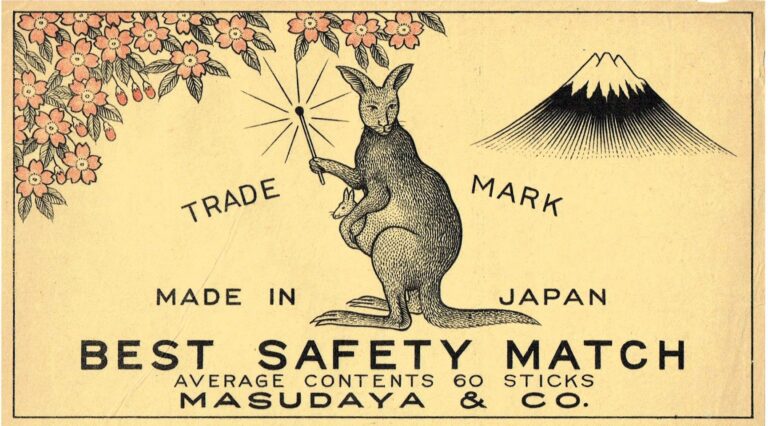
    カンガルーが火をつけた日豪交流 ― まさに“マッチ”した関係の始まり? Long before Australia became one of Japan’s closest partners, Japanese manufacturers had been using kangaroos to promote their products. The earliest documented reference to the commercial use of a kangaroo in Japan came from 1884, when a misemono traveling curiosity show advertised that it would feature a fukuro nezumi, literally a pouch mouse, at the Tenmangu Shrine grounds in Osaka. オーストラリアが日本の最も親しいパートナーの一つとなるはるか以前、日本のメーカーはすでにカンガルーを商品の宣伝に活用していました。 現在確認されている日本におけるカンガルーの最初期の商業利用は、1884年に大阪・天満宮境内で開かれた見世物興行の広告です。そこには、カンガルーが「袋鼠(ふくろねずみ)」として紹介されていました。 A Kangaroo on a Matchbox マッチラベルに描かれたカンガルー Japan first enacted a trademark registration system in June 1885, and Kobe-based match manufacturer Seisuisha registered its first trademark on Oct. 11 of that year. It was a matchbox featuring a lion. The lion was part of a series…

  • | |

    Why Do Japanese Zoos Know So Much About Kangaroos?

    なぜ日本の動物園はカンガルーにこんなに詳しいのか? Kangaroos are popular exhibits in Japanese zoos. But their success didn’t happen by accident. It grew from decades of cooperation with Australian wildlife experts, creating one of the world’s most successful international partnerships in animal care. 日本の動物園では、カンガルーは人気者です。しかし、その飼育技術は偶然生まれたものではありません。長年にわたるオーストラリアとの協力が、世界でも高い水準の飼育技術を育ててきました。 More Than an Exhibit 展示動物では終わらない Kangaroos first arrived in Japan as remarkable Australian animals. Keeping them healthy, however, proved far more challenging than displaying them. Japanese keepers needed to understand their diet, behaviour, reproduction and social structure. 展示動物では終わらない カンガルーは、オーストラリアを代表する珍しい動物として日本にやって来ました。 しかし、健康に飼育することは決して簡単ではありませんでした。 飼育員たちは、食性や行動、繁殖、生態について一から学ぶ必要がありました。 Australia Shared Its Knowledge オーストラリアから学んだ Australian zoos and wildlife specialists worked closely with Japanese institutions. Veterinarians, animal keepers and researchers exchanged information on nutrition, enclosure design, breeding and veterinary care. The…

  • | |

    Panasonic Super Kangaroos Pouched A History With Plenty Of Bounce

    For decades, Japan had a professional basketball team called the Super Kangaroos, and true to the team’s name, it made great leaps at times. The Matsushita Electric Super Kangaroos, which would later be renamed the Panasonic Super Kangaroos, were founded in 1951 and competed in Japan’s top company and professional leagues, the old company-based national competitions, JBL Super League from 2000 to 2007 and then the successor Japan Basketball League where it would eventually relocate and change its name to the Wakayama Panasonic Trians. The Super Kangaroos would win 13 league championships throughout its existence in various top flight competitions. Sadly, the team never made it to the bj league,…

  • |

    How A Kangaroo Helped Japanese Game Shows Get Charitable

    Tokyo Broadcasting System ran the very successful TBS Kangaroo Fund from 1976 to 2010, first to help children orphaned by traffic accidents, people with disabilities and the elderly before moving to help other social causes. TBS never publicly explained its choice of a kangaroo to symbolize the fund, but the marsupial infers a friendly, protective image with its pouch equating to encompassing care, which signalled that donations would carry and protect vulnerable children The TBS Kangaroo Fund collected viewer donations and corporate gifts and channelled grants to vetted charities and disaster relief. TBS used on-air drives, dedicated donation numbers and tie-ins such as using cash for quiz and game shows…

  • Jill Who Put The ‘Roo’ Into Frugal Promotes Award-Winning Environmentalism

    Mrs. Roo was a core character in the award-winning The Eco Zoo online pop-up picture book in the late Noughties and early 2010s. Mrs. Roo is the kangaroo character in The Eco Zoo story world. She is depicted as a thrifty, practical kangaroo who carries a shopping bag, which is a visual symbol encouraging reusable bags and careful consumption. The Eco Zoo began as a children’s picture-book project around 2006 and was developed into an interactive Flash web project around 2007–2008 by creative boutique Enjin together with McCann Erickson Japan. The web/popup-book version became widely noticed and won creative-site attention, including recognition through the Favorite Website Awards. The Eco Zoo…

  • An Award-Winning Concrete Pouch For Backpackers

    Outside of its name, Kangaroo Hotel has got absolutely nothing to do with bloody kangaroos or marsupials, and doesn’t even provide nominal acknowledgement of its macropod connection. But the name alone is enough to give a blog post to the tiny, design-focused guesthouse in Minami-Senju that opened in 2009, has about 18 private rooms across three floors, and positions itself as an affordable, stylish stay for backpackers and budget travellers. The sole connection the hotel seems to have to Australia is a eucalypt outside its front door. Kangaroo Hotel is divided into the A side original hotel and B side annex, and operates as a guesthouse and hostel with a…

  • | |

    Jumping At Chances Through A Yen For Kangaroos

    Vacel Inc. is a Tokyo company with a yen for kangaroos, literally and figuratively speaking, as well as a track record with marsupials that leaps from sporting fields to dining tables. The trading and manufacturing company specializing in kangaroo derived products started off in April 1980 as a specialist in kangaroo leather products mostly for soccer boots and then expanded over the subsequent decades to encompass all sorts of businesses including marsupial meat. Vacel imports, manufactures and sells kangaroo leather, develops FabRoo 0.3 mm ultra-thin leather, operates the RooMeat brand for kangaroo meat for human and pet consumption, and provides market-entry and liaison services for overseas companies in Japan. Vacel…

  • |

    Little League Laps Up Kanga Clout

    Kangaroos play a prominent role in encouraging kids to take up baseball in the Aichi Prefecture city of Kota. Kosuke the Kangaroo is the marsupial mascot of the Aichi Kota Boys youth baseball club that runs age-group squads including its Kangaroo Kids for first and second graders new to the game. The club has been around since 2009 but has not given a public explanation for why it chose the kangaroo as the animal to promote its game. It’s possibly because youth teams often pick animal names to sound friendly and energising. A kangaroo fits a young-players programme because it suggests bouncy energy, protection and youthfulness — easy, family-friendly branding…

  • Perfect Pose Sees Kitakyushu Kangaroos Idolized

    A mob of kangaroos caught on camera in a perfectly timed shot at a Kitakyushu zoo remains incredibly popular in Japan for its resemblance to the typical formations in which girl idol groups pose. Roos from Hibikinada Green Park were captured peering at the lens in an October 2024 photo that soon went viral. Millions saw the photo, which has since been removed from the park’s social media account but remains widespread online after it went viral. Netizens throughout Japan and across the world noted how the roos lined up in a manner almost perfectly resembling Japanese girl groups like AKB48, Nogizaka 46 and others of that ilk. Hibikinada Green…

  • Aichi Says Ouch! Roos Key To Oral Health

    Kangaroos are key to oral health in the central Japanese prefecture of Aichi. The Aichi Dental Association uses kangaroos as its mascots, focusing on the close relationship between generations symbolized by joeys in a pouch to encourage dental care from infancy through to old age. The ADA chose the character following a competition among students from HAL Nagoya vocational school in 2023. Competition winner Yuma Furuta made three kangaroo characters to represent the ADA. Aishii, the jill, is named through an anagram of Aichi and shika (the Japanese word for dentist). Boomer Ken is meant to symbolize kenko, the Japanese words for oral health. Their joey, Smile, has a self-explanatory…