The Great Bogan Aesthetic
| Pronunciation | /ˈboʊ.ɡən/ (ボウガン) |
|---|---|
| Part of Speech | noun |
| English Definition |
Describes bogan style as an almost complete design system across hair, clothing and accessories, and notes that this look has since been adopted well beyond bogan circles as a fashion statement in its own right. |
| Japanese Translation |
ボーガン美学 |
| Japanese Explanation |
マレットヘアを筆頭に、ファッションやアクセサリーまで、ボーガン美学がほぼ完成された一つの「デザインシステム」であることを解説し、その様式がボーガン以外の人々にもファッションとして取り入れられている現象を紹介する。 |
Origin
Part of the Bogue series on kangaeroo.com, an ongoing cultural examination of Australian bogan culture.
Related Words
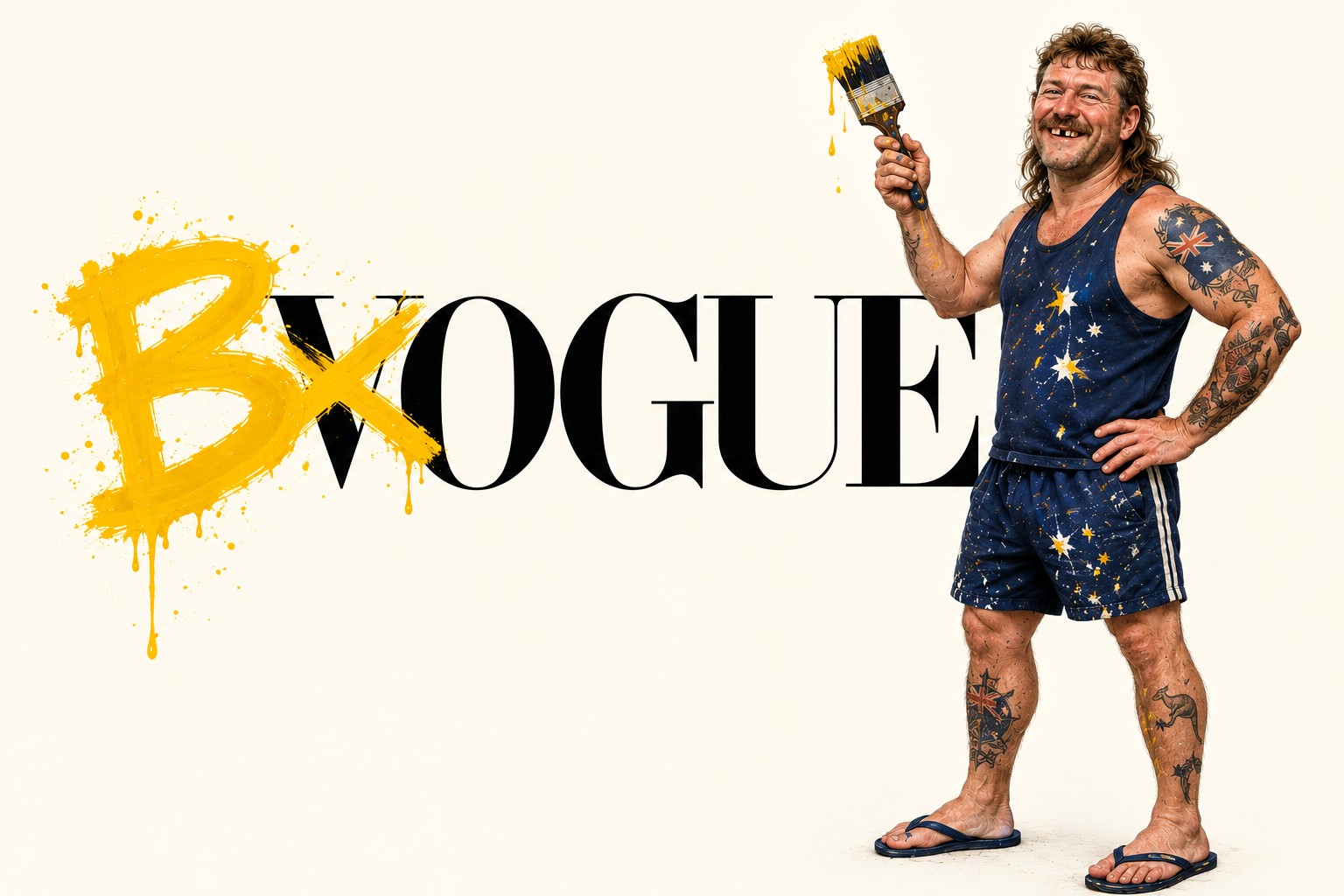
The visual language is almost a complete design system.
Hair
The mullet is probably the supreme bogan symbol. Business at the front. Party at the back. And, increasingly, deliberate cultural signalling.
The mullet has moved far beyond its original association with rough Australian masculinity and has become a self-conscious Australian cultural icon. Mullet competitions have become an actual spectacle, with categories such as “extreme”, “grubby”, “everyday” and “ranga”.
There are even children’s mullet competitions in Australia in 2026.
That is an extraordinary example of a hairstyle moving from social stigma → joke → nostalgia → fashion → identity.
Clothing
The classic wardrobe includes:
- flannelette shirts;
- singlets;
- footy jerseys;
- footy shorts;
- work shorts;
- thongs;
- Ugg boots;
- enormous sunglasses;
- high-vis workwear;
- denim;
- cheap branded clothing;
- deliberately unpretentious clothing.
But again, the interesting thing is that bogan fashion has escaped the bogan. Fashion-conscious people can now dress “bogan” without actually belonging to the social group originally being described.