
Where Did “Bogan” Come From?
| Pronunciation | /ˈboʊ.ɡən/ (ボウガン) |
|---|---|
| Part of Speech | noun |
| English Definition |
Traces the disputed origins of the word to early-1980s Melbourne, citing a 1984 Xavier College student magazine reference to a fictional bogan doll and its 1985 appearance in Tracks surf magazine, noting it may have been popularised by upper-middle-class private-school teens. |
| Japanese Translation |
「ボーガン」の語源をめぐる考察 |
| Japanese Explanation |
「ボーガン」の語源をめぐる談説を検証し、1980年代初頭のメルボルン発祥説や、1984年のザビエ境学生誌、1985年のTracks誌への登場例を紹介し、上流中産階級の私立校生によって広まった可能性にも触れる。 |
Origin
Part of the Bogue series on kangaeroo.com, an ongoing cultural examination of Australian bogan culture.
Related Words
This is where things get wonderfully murky.
The popular theories include:
- the Bogan River/Bogan Shire in western New South Wales;
- an old Australian literary reference;
- regional Australian slang;
- and the possibility that it originated as Melbourne teenage slang.
The evidence currently points most strongly toward Melbourne in the early 1980s, although the ultimate etymology remains uncertain.
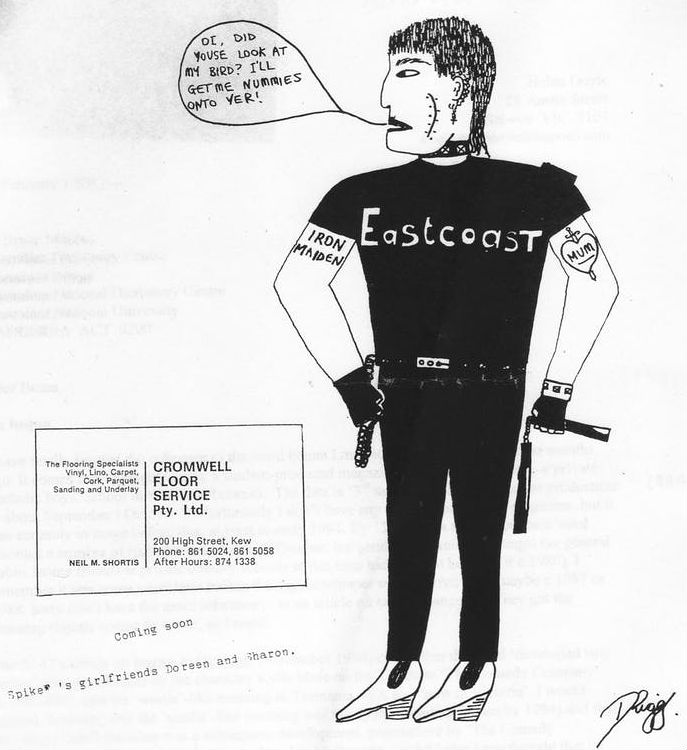
Historian and linguist Bruce Moore found evidence from 1984, in a student magazine at Melbourne’s Xavier College, describing a fictional “bogan doll”. The character already possessed many of the stereotypes we would recognise today: tattoos, long hair, heavy-metal clothing, sleeveless denim, etc. The word then appears in a 1985 issue of Tracks magazine.
By the late 1980s it was spreading nationally. By the early 1990s, it was essentially established Australian slang.
The really funny part
The word may have been popularised by upper-middle-class private-school teenagers describing people they considered uncultured.
In other words: The bogan may have been invented by people who weren’t bogans.
- Did an elite Melbourne private school give Australia the word ‘bogan’? – ABC News
- The Australian national dictionary : Australian words and their origins / edited by Bruce Moore ;… | Catalogue | National Library of Australia
- The Bogan Bible by Paul Fenech | Goodreads
- Legolingo : the cadets’ language / compiled by Bill Cowham ; with an introduction by Rob Darby | Catalogue | National Library of Australia