Anzac: The Legend That Started With Soldiers
| Pronunciation | /ˈæn.zæk/ (アンザック) |
|---|---|
| Part of Speech | noun |
| English Definition |
Originally an abbreviation for the Australian and New Zealand Army Corps; the name given to the soldiers of that corps, especially those of the Gallipoli campaign, and now a wider term (Anzac Day, Anzac biscuit) for the shared Australian and New Zealand tradition of service and remembrance. In capitals, ANZAC refers to the original corps. |
| Japanese Translation |
アンザック(豪・NZ合同軍団、またその兵士と追悼の伝統) |
| Japanese Explanation |
もともとはAustralian and New Zealand Army Corpsの頭文字から作られた言葉で、第一次世界大戦中、とくにGallipoliで戦ったオーストラリアとニュージーランドの兵士を指す呼び名として広まった。現在はAnzac DayやAnzac biscuitなど、両国が共有する歴史や追悼の記憶に関わる言葉としても使われる。ANZACと大文字で書く場合は、もともとの軍団そのものを指すのが基本。 |
Origin
Acronym of Australian and New Zealand Army Corps, the grouping of forces in Egypt in World War I; the shorthand became the name of the soldiers themselves.
Related Words
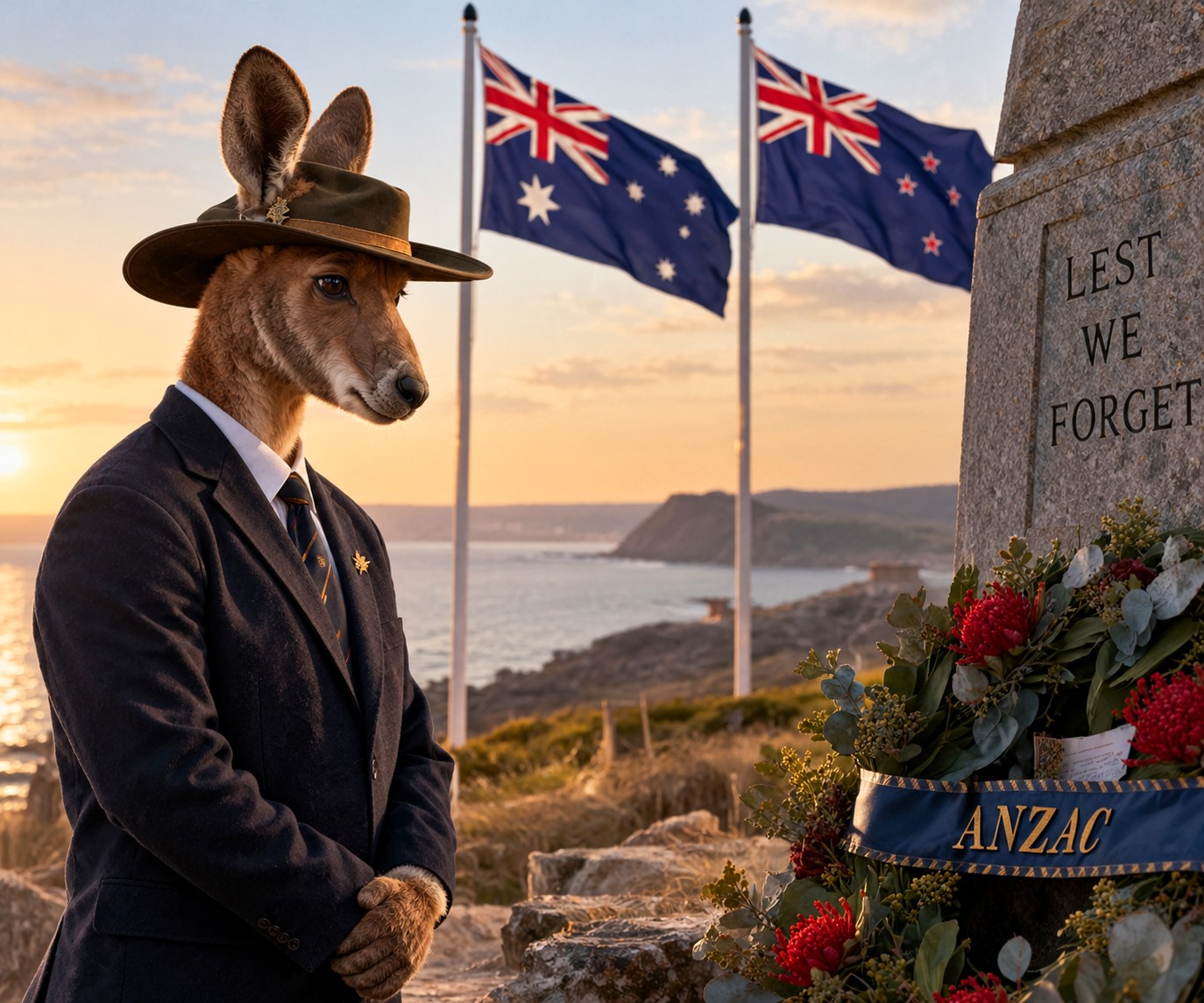
Some Australian words carry considerably more history than their five letters suggest.
Anzac began as a practical military abbreviation. Australian and New Zealand forces in Egypt were grouped into the Australian and New Zealand Army Corps, and “ANZAC” became the convenient shorthand. The word soon escaped its bureaucratic origins and became the name by which the soldiers themselves were known, particularly in connection with the Gallipoli campaign.
More than a century later, Anzac remains deeply embedded in Australian and New Zealand public life.
Meaning
「Anzac」はもともとAustralian and New Zealand Army Corpsの頭文字から作られた言葉です。第一次世界大戦中、とくにGallipoliで戦ったオーストラリアとニュージーランドの兵士を指す呼び名として広まりました。
現在では「Anzac Day」「Anzac biscuit」「the Anzacs」など、戦争に参加した兵士だけではなく、両国が共有する歴史や記憶に関係する言葉としても使われています。ただし、ANZACを大文字で書く場合は、もともとの軍団そのものを指す場合に使うのが基本です。
“Anzac” began as an abbreviation for the Australian and New Zealand Army Corps. It became widely used for the Australian and New Zealand soldiers associated particularly with the Gallipoli campaign.
Today the word has a much wider cultural use, appearing in terms such as “Anzac Day” and “Anzac biscuits” and referring to a shared Australian and New Zealand historical tradition. “ANZAC” in capitals specifically refers to the original military corps.
Example
「Anzac Day is one of the most important dates on the Australian calendar.」
「Anzac Dayはオーストラリアの暦の中でも特に重要な日の一つです。」
ここでのAnzacは第一次世界大戦の一個の軍団だけを意味しているのではありません。4月25日のAnzac Dayは、Gallipoli上陸に始まるAnzacの歴史を出発点として、現在では戦争で亡くなった人々や従軍した人々を記憶する日となっています。
“Anzac Day is one of the most important dates on the Australian calendar.”
Here, “Anzac” refers to the broader historical tradition rather than simply the original military corps. Anzac Day is observed on 25 April and today commemorates Australians who have served and those who died in military operations.
Australia–Japan connection
日本人学習者にとって注意したいのは、Anzacを単純に「オーストラリア兵」と訳してしまうと意味が狭くなりすぎることです。もともとはAustraliaとNew Zealandの合同軍団を指しており、New Zealandも最初から名前の一部でした。さらに現在のAnzacという言葉には、戦争、追悼、国家的記憶、AustraliaとNew Zealandの共有された歴史という複数の意味が重なっています。
For Japanese learners, translating “Anzac” simply as “Australian soldier” misses an important part of the word. New Zealand has always been part of the name, and the word now carries associations with military service, remembrance and the shared history of Australia and New Zealand.
Japan also contributed directly to the Anzacs, as we noted many years ago.

Anzac is a good reminder that Strine is sometimes carrying history around in an ordinary-looking word. Five letters can contain a military abbreviation, a campaign, two countries and more than a century of remembrance.