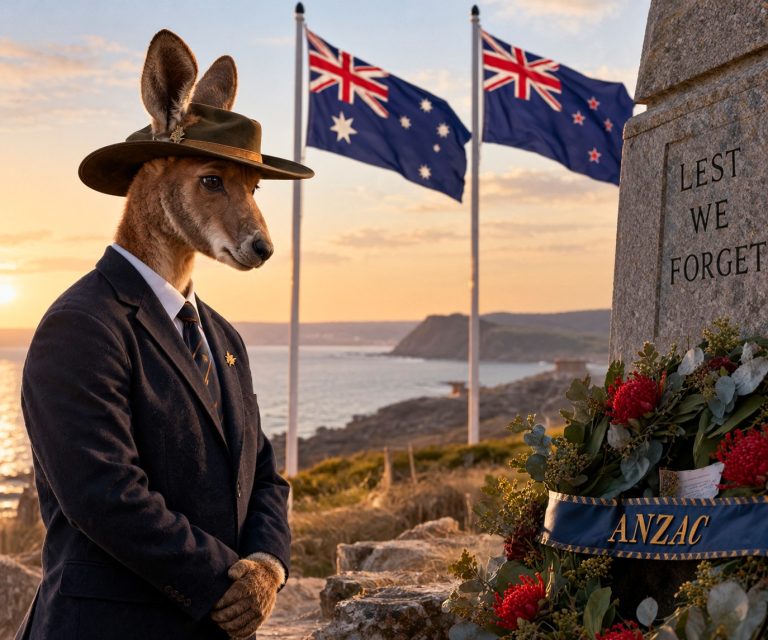
Anzac: The Legend That Started With Soldiers
Some Australian words carry considerably more history than their five letters suggest. Anzac began as a practical military abbreviation. Australian and New Zealand forces in Egypt were grouped into the Australian and New Zealand Army Corps, and “ANZAC” became the convenient shorthand. The word soon escaped its bureaucratic origins and became the name by which the soldiers themselves were known, particularly in connection with the Gallipoli campaign. More than a century later, Anzac remains deeply embedded in Australian and New Zealand public life. Meaning 「Anzac」はもともとAustralian and New Zealand Army Corpsの頭文字から作られた言葉です。第一次世界大戦中、とくにGallipoliで戦ったオーストラリアとニュージーランドの兵士を指す呼び名として広まりました。 現在では「Anzac Day」「Anzac biscuit」「the Anzacs」など、戦争に参加した兵士だけではなく、両国が共有する歴史や記憶に関係する言葉としても使われています。ただし、ANZACを大文字で書く場合は、もともとの軍団そのものを指す場合に使うのが基本です。 “Anzac” began as an abbreviation for the Australian and New Zealand Army Corps. It became widely…