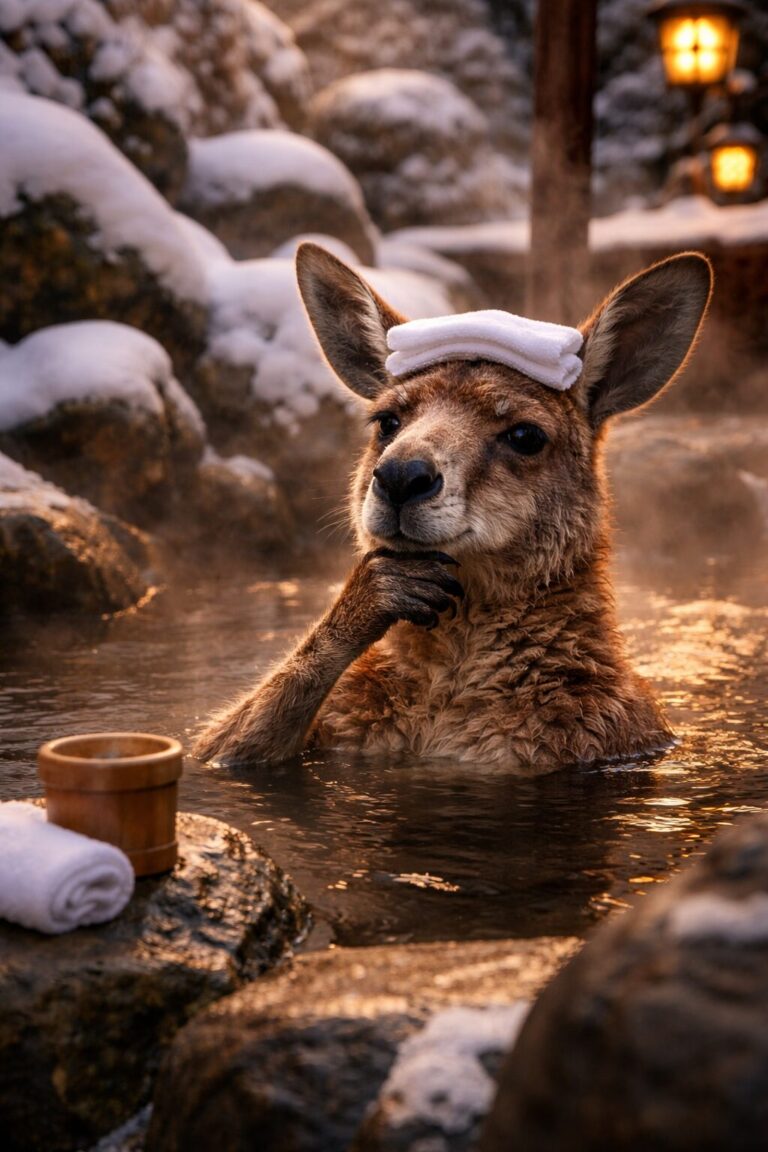
A Kangaroo Started From A Whisper That Now Shouts Out Loud

Kangaroo House in Kyoto is a free school for kids who don’t want to attend formal classes and named because of a child’s whisper “to be a kangaroo so I can hide in Mum’s pocket,” according to a report on the organization.

Kangaroo House got its name from a child’s remark: “If I were a kangaroo, I could jump free and hide in my mother’s pocket when anxious.”

Kangaroo House markets itself as a “mother’s pouch” for anxious kids: lessons by day, emotional charging by heart. Operators chose the kangaroo motif to signal a place that protects, carries and recharges worried children–literally invoking the pouch as a comfort metaphor.

NPO Mirai no Tobira opened the space in April 2024 as a play-and-learning drop-in for elementary and junior-high students who find regular school difficult.

Kangaroo House runs weekday drop-in sessions, small-group experiential learning, occupational therapy-informed support, online resources, and parent gatherings. It charges nominal fees for its services.

The appearance of any company, organization, or individual on Kangaeroo.com does not constitute an endorsement, approval, or criticism of that entity or its actions. Content is included solely because it relates to themes involving Japan–Australia relations, with a particular focus on kangaroos, and should not be interpreted as expressing any evaluative judgment.
免責事項:「考えRoo.com」に登場する企業・団体・個人について、掲載は推奨・支持・批判を意味するものではありません。内容は、日本とオーストラリアの関係、とりわけカンガルーに関するテーマに関連するため掲載しているものであり、当該主体に対する評価や判断を示す意図は一切ありません。

Cop A Gander At These Rippers Too...

  • Kangaroos Have a Proud History Adorning Japanese Marushi Bicycles

    Maruishi Cycle Ltd. is a prestigious bicycle manufacturer perhaps best-known today for its vintage models that until late in the 20th century also included penny farthings. Maruishi continues to make fine touring bikes in Japan. The company’s history dates back to 1894, though it has been Chinese-owned since 2006. Of greatest interest for Kangaeroo readers, though, is that Maruishi’s symbol throughout its history has been a kangaroo! Why Maruishi chose a kangaroo remains a mystery, though its cycles are renowned for their luggage-bearing capability, which probably goes some way toward providing an explanation. Although current Maruishi kangaroo displays appear largely limited to bicycle decals and store signage, marsupial images once…

  • |

    Campbelltown Forest of Wild Birds A Slice of Oz in Sleepy Saitama

    Koshigaya, located some 30 kilometers from downtown Tokyo, and Campbelltown, which is situated about 50 kilometers from Sydney’s central business district, were almost made for each other, even if only serving as satellite cities for their respective countries’ largest cities. Koshigaya and Campbelltown are sister cities and it’s hard to see a better example of the custom than the relationship between the Japanese bed town and its Aussie sibling. Koshigaya is also home to a picturesque corner of Australia, complete with wallabies, emus and some lovely wild birds, including rainbow lorikeets, superb parrots, Major Mitchell’s cockatoos, tawny frogmouths and kookaburras. The Campbelltown Forest of Wild Birds in Koshigaya could arguably…

  • |

    How Kangaroos Stop Demolition Work Scaring Japanese Kids

    Kangaroos have provided a way to provide a friendly face for a company operating in an industry sometimes seen as an unsavory business in Japan. Enomoto Kogyo uses the consumer-facing name of Kaitai Kangaroo for its demolition business; a line of work many Japanese associate with seediness and ties to organized crime. It’s an issue the company addresses directly, and a reason it puts kangaroos front and center of its operations. The company explicitly states it created the mascot to change the image of demolition and make the service more approachable. “The kangaroo character is a friendly mascot that visits customers and helps make demolition less scary for children and…

  • |

    How A Kangaroo Helped Japanese Game Shows Get Charitable

    Tokyo Broadcasting System ran the very successful TBS Kangaroo Fund from 1976 to 2010, first to help children orphaned by traffic accidents, people with disabilities and the elderly before moving to help other social causes. TBS never publicly explained its choice of a kangaroo to symbolize the fund, but the marsupial infers a friendly, protective image with its pouch equating to encompassing care, which signalled that donations would carry and protect vulnerable children The TBS Kangaroo Fund collected viewer donations and corporate gifts and channelled grants to vetted charities and disaster relief. TBS used on-air drives, dedicated donation numbers and tie-ins such as using cash for quiz and game shows…

  • | |

    Panasonic Super Kangaroos Pouched A History With Plenty Of Bounce

    For decades, Japan had a professional basketball team called the Super Kangaroos, and true to the team’s name, it made great leaps at times. The Matsushita Electric Super Kangaroos, which would later be renamed the Panasonic Super Kangaroos, were founded in 1951 and competed in Japan’s top company and professional leagues, the old company-based national competitions, JBL Super League from 2000 to 2007 and then the successor Japan Basketball League where it would eventually relocate and change its name to the Wakayama Panasonic Trians. The Super Kangaroos would win 13 league championships throughout its existence in various top flight competitions. Sadly, the team never made it to the bj league,…