Nissan Bluebird Oozui: When Australia (Briefly) Exported Cars to Japan
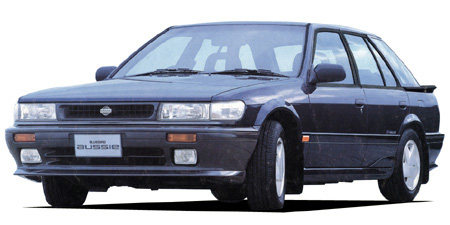
The Nissan Aussie sold in Japan.
This year marks the 20th anniversary of Australia’s disastrous foray into exporting cars to Japan.
For a brief period from 1989 to 1992, fully imported Bluebird Aussie cars made in Australia went on sale in Japan.
The Bluebird Aussie was apparently the result of Nissan Australia’s Matilda Project, which had aimed to make a solely Australian car for Australian conditions, but ended up being a modified bluebird.
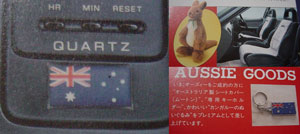
Aussie flag clock, kangaroo stuffed toy, sheepskin seat covers…premium added extras.
Australia was, at the time, at the peak of its powers in the enormously fickle Japanese market.
Thousands of Japanese tourists were flocking Down Under and Australia was on the verge of overtaking Hawaii (albeit very briefly as it turned out) as the most preferred destination for Japanese honeymooners.
Perhaps it was a desire to capitalize on this goodwill toward the land Down Under that prompted Nissan to import cars from Australia, hardly a country with a reputation for automaking.
Nonetheless, with all the very best of “That’ll have to do, mate” quality and offering added extras such as sheepskin seat covers, a free kangaroo stuffed toy, an Aussie flag keyring and Aussie flag sticker under the dashboard clock to entice Japanese punters, the Bluebird Oozui, as the car was labeled for the Japanese market, hit showrooms across the country.
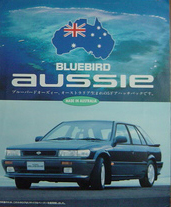
The Bluebird Aussie’s Japanese sales catalog
The Bluebird Aussie was an embarrassing failure in Japan…In fact, of the 44,049,099 new and used car sales in Japan from 1989 to 1992 — the period the Aussie was on sale — the Australian-made hatchback accounted for a mere 1,300 units.
Nissan Australia shut down its manufacturing plant in 1993 and the Aussie was never heard of again…not that many Japanese consumers ever seemed to have heard of it in the first place.

Cop A Gander At These Rippers Too...

  • | | |

    Why Did Suntory Choose Jacko For Its Ads?

    なぜサントリーはマーク・“ジャコ”・ジャクソンを起用したのか? In the 1980s, one of Australia’s most colourful sporting personalities unexpectedly found himself on Japanese television. AFL star Mark “Jacko” Jackson wasn’t a movie actor or musician, yet Suntory believed he had something special to offer Japanese audiences. Why? 1980年代、オーストラリアを代表する個性派スポーツ選手の一人、マーク・“ジャコ”・ジャクソンが日本のテレビCMに登場しました。俳優でも歌手でもない彼を、なぜサントリーは起用したのでしょうか。 Bigger Than Footy フットボールを超えた存在 In Australia, Mark “Jacko” Jackson was already famous. A talented Australian Rules footballer, he became equally well known for his humour, confidence and unmistakable personality. His catchphrase, “I’m an Individual”, made him one of Australia’s most recognisable media personalities. フットボールを超えた存在 オーストラリアでは、マーク・“ジャコ”・ジャクソンは人気の高い人物でした。 優れたオーストラリアン・フットボール選手であると同時に、ユーモアあふれる個性的なキャラクターでも知られていました。 「I’m an Individual(俺は俺だ)」という決めぜりふは、多くのオージーに親しまれました。 Japan Was Discovering Australia 日本がオーストラリアに注目していた時代 During the 1980s, Japan’s interest in Australia was growing rapidly. More Japanese families were travelling…

  • |

    「やばいリンガル」Lair (アジト)

     Lairは、米・英語で使うと「アジト」や「隠れ家」などを意味するけれど、オージー英語ではもっと軽い事を表す場合もある。どのような意味になるのか、見てみよう。 A lair in British or American English can conjure up images of a hideout or animal’s home, but it takes on fair less sinister meaning when used in Strine.

  • |

    豪キャブラリー: G’day

     典型的なオージー英語を一言で言うならG’dayは「これだ!」という感じだ。G’dayほど有名なオージー英語はない。ちなみに、ニュージーランド英語でもG’dayも使う。G’dayはgood dayという古い英語の省略であり、スペルもguddayやgiddayなどさまざまあるが、辞書などで調べるとG’dayが正しいのだ。

  • Croweater/南オーストラリア州出身

    croweater Australian English A native or resident of the state of South Australia. 日本語 南オーストラリア州出身及び定住者。直訳すると「烏を食べる人」という意味。由来は、現在の南オーストラリア州となっている地域の最初のヨーロッパ系住民が食料不足と戦い、生き残るために烏を食べたらしい。南オーストラリア州の州都はアデレード市であり、公園か色鮮やかな祭りやメルヘンっぽいビルが多く、とても綺麗な街並みで有名が、「教会の都市」との別名があり、一部では「つまらない」という悪評もある。ちなみに、今、南オーストラリア州では、烏を食べる人がいないと思うが、同州の人々がプライドをもって「自分がクローイーターだ」と言い張る。同州がドイツ系移民が始まったブドウ園からあの有名なオーストラリア・ワインの最も伝統が長い産地でもある。 Plain English A South Australian. Strine Dictionary

  • |

    ‘Die Jockey,’ ‘Pyscho,’ ‘Odds Calais Summer Days’ & Hugh Jackman’s Other Japanese Lessons

      「サイコ」、「騎士死ね!」と「オッズ、<フランスの>カレー夏の日々」が豪出身俳優ヒュー・ジャックマン氏が「ウルヴァリン」シリーズ映画撮影のためこの頃来日した際使えた日本語のヒントだった。「最高」、「大ジョッキー」と「お疲れ様です」を示すがジャックマン氏が使用した英語版ヒント・シートには日本語の発音を近づくために使った英語の言葉が上記の意味となる! “Psycho,” “Die Jockey!” and “Odds Calais Summer Days” were some of the phrases given on a Japanese language cheat sheet Hollywood heartthrob Hugh Jackman used recently in Japan while here to film the latest installment of the Wolverine movies. Far from being anything sinister, though, Psycho was the description given for saiko, awesome, great, outstanding, the best, Die jockey! the rendition of dai jokki, a large beer glass, and Odds Calais Summer Days, which sounds something akin to a vacation on the French coast, but actually refers to otsukaresamadesu, a largely meaningless phrase used to encourage or praise a colleague upon completing a task and that literally translates…