Big PeopleがなければBig Thingsが揃わない

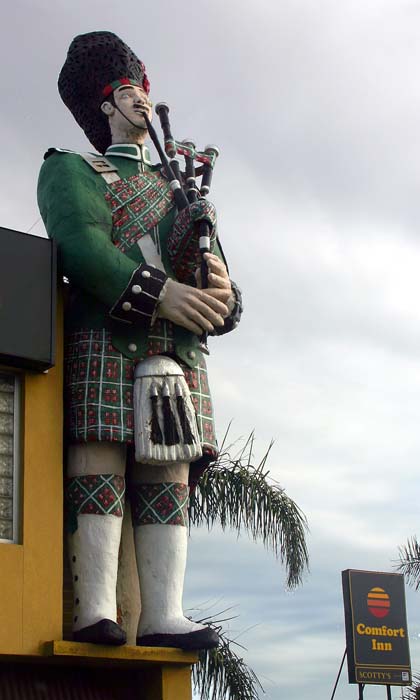
The Big Scotsman, Adelaide, SA
 オーストラリア各地にある「Big Things」というB級観光名所の正確な数が不明だが百数十件から200件件以上の間は間違いなくある。
 ほとんどの「Big Things」が動物や設置されている地域の名産物などを称えるが、中には「人間」の姿をしているものもある。
 彫刻など芸術性を重視するではなく、ほかの「Big Things」と同じようにコミカルな印象があり、キッシュが中心となっている。
 また、オーストラリアの歴史も「Big Things」そのもの歴史も人間像に見える。
 たとえば、南オーストラリア州都であるアデレードの一角であるメンディンディーという町にBig Scotsman(巨大スコットランド人)がある。
 これは1963年に作られ、事実上オーストラリアの「Big Things」の最も早く作られたものだった(ニューサウスウェールズ州にあるBig Bananaが自称<初めて>とも言うだけど、、、)。
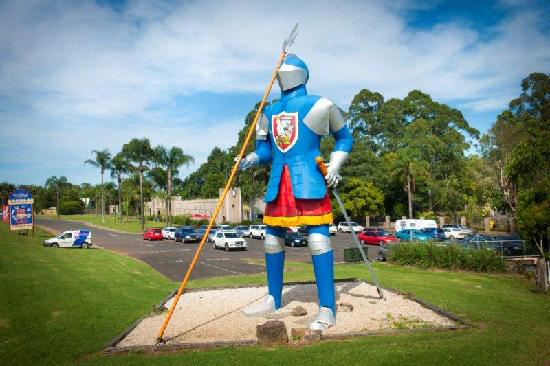
The Big Knight, Knockrow, NSW.
 初めてとは言えはっきり言ってイメージとしてオーストラリアと関係ない。
 同じく、「何で?」と思わせる「Big Things」ニューサウスウェールズ州にオーストラリア固有種のナッツであるマカダミアテーマパークにある。
 そもそも変なのは同遊園地のテーマがヨーロッパ中世風のお城だ。
 そして、それらしくかもしれないがオーストラリアらしくないのがお城の真ん前にある医大騎士であるBig Knightだ。
 しかし、そのほか人間像の「Big Things」が国の歴史ともう少しつながりがある。
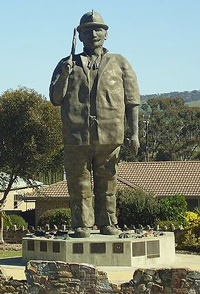
Map the Miner, Kapunda, SA.
  豪経済を昔も今も深い関わり合いがある鉱業を称えるオブジェがみつもある。
 南オーストアリア州カプンダにある鉱山労働者像Map the Minerがある。
 同町がオーストラリア初銅鉱業があり、それを称えるために1988年のオーストラリア建国200周年記念を祝う行事一つとして作られた。
 しかし、2006年にあるティーンエージャーが同像を目立つように軽油をかけ火をつけてから写真撮ろうとしたが、ボヤーとなってMap the Minerを全焼した。
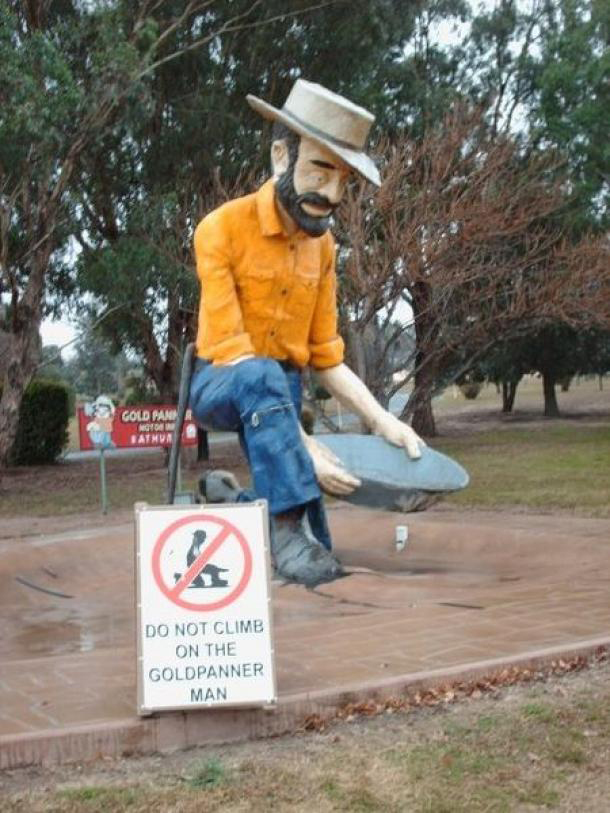
The Big Gold Panner, Bathurst, NSW.
幸いに保険がかけられたため作り直すことができた。
(ちなみに、余談だが、このオブジェがあるカプンダはオーストラリアで最も幽霊が多い町とされているらしい。)
 金が同じような鉱業労働者像の共通点である。
 まず、19世紀半ば頃ニューサウスウェールズ州バスハーストという所に金が見つけられ「ゴールド・ラッシュ」となった。
 今ではバスハースト中心街に入る道路を通ると迎えてくれるのはBig Gold Pannerである。
 砂金を探している男の「Big Things」だ。
 オーストラリアの産業化に重要な役割を果たしたゴールド・ラッシュのキックオフがバスハーストにあったかもしれないが、最も大きかったゴールド・ラッシュがほぼ同じ時期にビクトリア州バララットというところに起きた。
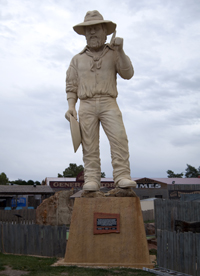
The Big Miner, Ballarat, VIC.
さらに鉱業関係の「Big Things」以前に掲載したクイーンズランド州ザ・ジェムフィールズにある数箇所も忘れてはいけない。
The Big Farmer, Wudinna, SA.
 またオージーらしく鉱業並みに同国の経済に貢献した農業(厳密に言えば農家だけど、、、)を称える南オーストラリア州ウッディナにあるBig Australian Farmerだ。
 しかいし、このオブジェは他の「Big Things」と違ってあまりコミカルやキッシュな面がなく最も真面目な物だ。
 考えRooの個人的な見解だがこれが「Big Things」より彫刻だ。
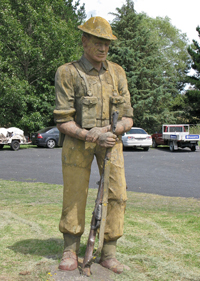
The Big Soldier, Uralla, NSW.
 また真面目だけどもっと「Big Things」らしいのがニューサウスウェールズ州ウラッラにあるBig Soldierだ。
 軍事博物館前に設置されているこのオブジェが物や行事などを称えるより同博物館の広告塔だ。
 ちなみにこの地域が最も有名な理由が19世紀でオーストラリア独特な泥棒であるブッシュレンジャーが大活躍した場所のひとつだった。 
Cop A Gander At These Rippers Too...

  • Harbor City Coathangered! Sydney Opera House Among World Heritage List’s ‘Three Great Disappointments’

    Sydney Opera House is undoubtedly a symbol of Australia around the world, but is regarded by many Japanese as one of the “Three Great Disappointments” among World Heritage Listed sites, according to Japanese AllAbout.com. It’s been common for centuries for the Japanese to rank lots of tourism-related sites — look at Katsushika Hokusai‘s famous Unfortunately for Australia’s Harbor City, the Sydney Opera House is generally regarded as one of the most disappointing World Heritage Sites, joining other disappointments such as the Eiffel Tower (Tokyo has a bigger replica of its own) and Mannekin Pis (which Tokyo also has its own version of). Thirty-Six Views of Mount Fuji as an example…

  • | |

    Jumping At Chances Through A Yen For Kangaroos

    Vacel Inc. is a Tokyo company with a yen for kangaroos, literally and figuratively speaking, as well as a track record with marsupials that leaps from sporting fields to dining tables. The trading and manufacturing company specializing in kangaroo derived products started off in April 1980 as a specialist in kangaroo leather products mostly for soccer boots and then expanded over the subsequent decades to encompass all sorts of businesses including marsupial meat. Vacel imports, manufactures and sells kangaroo leather, develops FabRoo 0.3 mm ultra-thin leather, operates the RooMeat brand for kangaroo meat for human and pet consumption, and provides market-entry and liaison services for overseas companies in Japan. Vacel…

  • Tucker/食事

    Tucker Australian English Food, a meal. A school canteen in Australia is called a “tuckshop,” and a crate in which food is stored is called a “tuckerbox.” Australia’s arguably most legendary dog was one that sat on a tuckerbox in a small town called Gundagai in the state of New South Wales. It has been the subject of numerous songs and there is a statue to commemorate it in the town. 日本語 食べ物。食事。オーストラリアの学校売店は、tuckshopと言い、食べ物を入れる箱のことはtuckerboxだ。また、オーストラリアでの最も伝説的な犬は、ニューサウスウェールズ州の小さな町であるガンダガイでtuckerboxの上に座った。同犬に関して数多くの歌が作詞されるなど、伝説的な存在となり、町の中には祈念彫刻もある。 Plain English Food, a meal. Strine Dictionary

  • |

    Chiba Company Rapt To Choose A Roo For Wrapping

    Kangaroos are the choice of a company symbol for packaging-materials trading company Kawawa Co., Ltd. from Nagareyama, Chiba Prefecture. Kawawa chose to use a kangaroo to symbolize their operations because it represents “the spirit of wrapping,” according to the company’s website. Although the company has nothing to do with Australia, it chose to represent itself with the country’s national symbol because its pouch is a natural metaphor for wrapping, carrying with care, and protecting what’s inside. Even beyond the company’s official explanation for using a kangaroo logo, the choice is very logical for Japanese commercial design. The pouch representation is perfect for packaging. A kangaroo’s pouch is one of the…