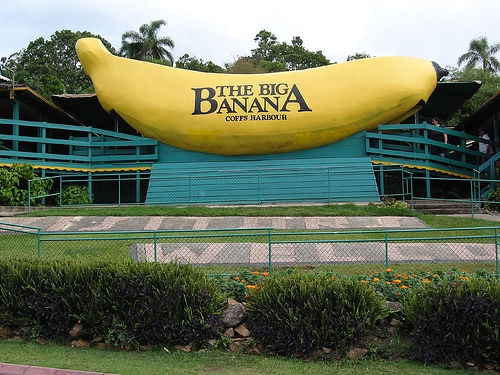
元祖Big Bananaが豪のBig Things原点だ

The Big Banana, Coffs Harbour, NSW
 オーストラリアの「Big Things」現象は、1964年ニューサウスウェールズ州北部のコッフス・ハーバーにあるビッグ・バナナで始まった。
 同町が熱帯地にあり、ビッグ・パイナップル同様に熱帯地果物産地だ。が、1960年代に入ると格安の輸入品に対しての競争力低下などがあり、綺麗な海岸や海を生かせて観光地として生まれ変わろうとした。その結果がなんとビッグ・バナナだった。
 元祖ビッグ・バナナは長さ13メートルと高さ5メートルである。中に入り、近くにバナナ農園かお土産屋や乗り物及びウォータースライダーがあり、立派な観光地となっている。その他、まねするビッグ・バナナが他の地域にもできた(別途で後日お話しするね!)。


View Larger Map
Big Banana Official Website

Cop A Gander At These Rippers Too...

  • |

    豪キャブラリー: Lob

    テニスをやる時に相手がネットの近くにいるいながら自分が相手の頭の上に高く叩いてコートの奥まで狙ってうつとロブショットを言うよね。 オージー英語ではこれの意味がある上に事前連絡なしで人のところなどをいきなり遊ぶの遊びに行くや訪問するなどは同じくlobを言う。Lob shotとlobが両方とも相手を驚かす行動であるからlobの由来となった。  昔テニス大国だったオーストラリアのスポーツからの言語への貢献の例のひとつだ。

  • やばいリンガル:Alky

    Alky is the Strine term used to describe an alcoholic. Back in the olden days, this would have been quite an acceptable term, but nowadays, someone with an alcohol dependence would probably be described as having substance abuse disorder. Alkyというストラインはアルコール依存症者を示す。Alkyは古語であり、昔はどの場面でも使えたが今では恐らくsubstance abuse disorderにかかっている方と言われるだろう。Alkyは恐らく軽蔑である、使うことは勧めない。 Strine Dictionary | 考えRoo

  • 豪キャブラリー:Rockmelons

    Rockmelons can be a bit of a trap for young players, because it’s a Strine saying for a fruit found pretty much all over the world. Note the distinctive orange texture of the rockmelon flesh. This distinguishes it from the cantaloupe Europeans eat, musk melon preferred by the Japanese and Americans and spansek found in southern Africa. All these fruits are bloody nice wherever you eat them, but the only fair dinkum rockmelons are in Australia, so that’s what makes it a 豪キャブラリー term.  ストライン(オージー英語)で rockmelon と言うと、世界中どこにでもあるフルーツのことだから、初心者にはちょっとした落とし穴になる。果肉がオレンジ色なのが特徴で、ヨーロッパで食べられているカンタロープ、日本やアメリカなどで好まれるマスクメロン、南部アフリカのスパンセックとはそこが違う。どれもめちゃくちゃうまいんだけど、「本物のrockmelonはオーストラリア産だけ。だからこそ、これは(豪キャブラリー)なんだ。」 Strine Dictionary | 考えRoo

  • |

    いち早くCool Japanを先駆けて80・90年代の豪テレビCM

    Japan was trending in Australia long before it became flavor of the month in the way it has in recent years courtesy of Cool Japan. 近年の「クール・ジャパン」現象はオーストラリアでは、かなり昔から現れていた。 During the late 1980s through to the mid-1990s, a time when trade friction between a seemingly unstoppable Japan and the struggling United States resulted in such incidents as American autoworkers using sledgehammers to demolish a Japanese car, Australia was slowly moving out of its self-imposed isolation to embrace the Asia-Pacific region and building the firm relationship it now has with Japan. Australia was a pioneer in the Japan Exchange and Teaching (JET) and Working Holiday programs now welcoming thousands of people from all over…