Pushing Pedals in an Exploration to Find Tokyo’s Myriad Monsters
Befitting the world’s largest city’s proclivity for being destroyed – and saved – over and again on almost countless occasions over the past several decades, Godzilla is an almost ubiquitous presence in Tokyo.

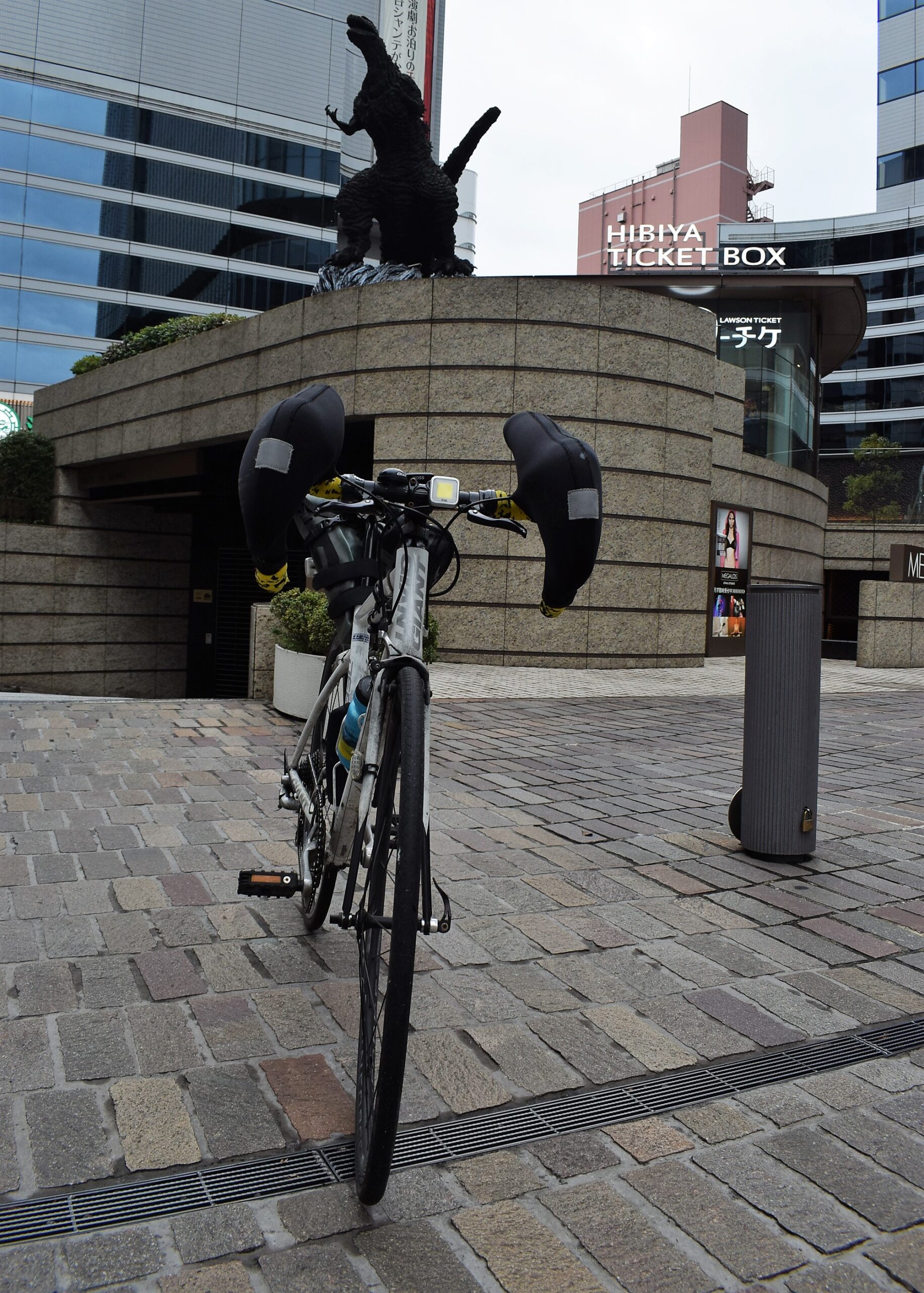
Godzilla can be found roaming in several parts of Tokyo, from the leafy suburbs of Denenchofu right in the central hub areas of Shinjuku, where he peers over the Kabukicho entertainment district, to the posh shopping area of Hibiya.

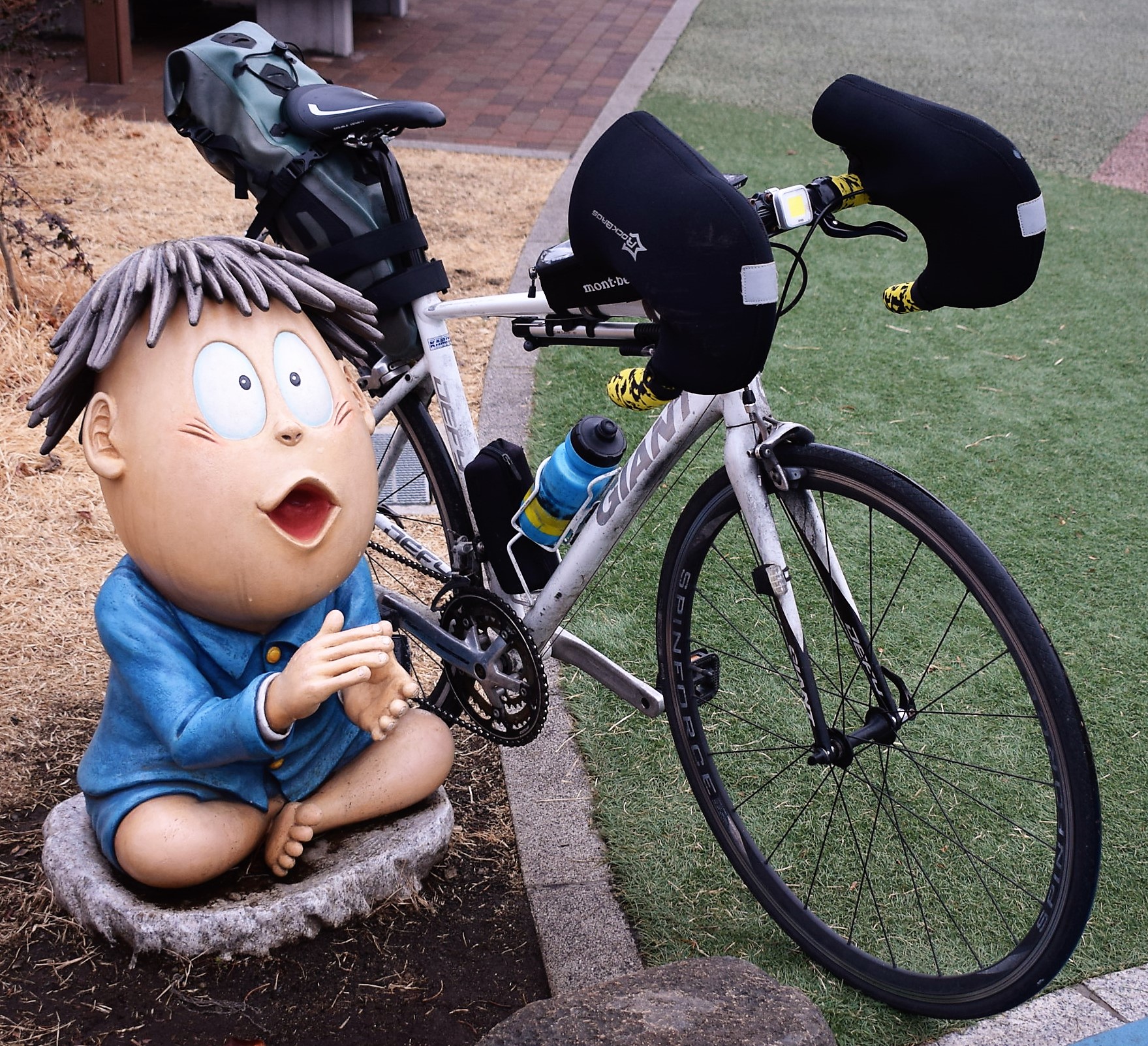
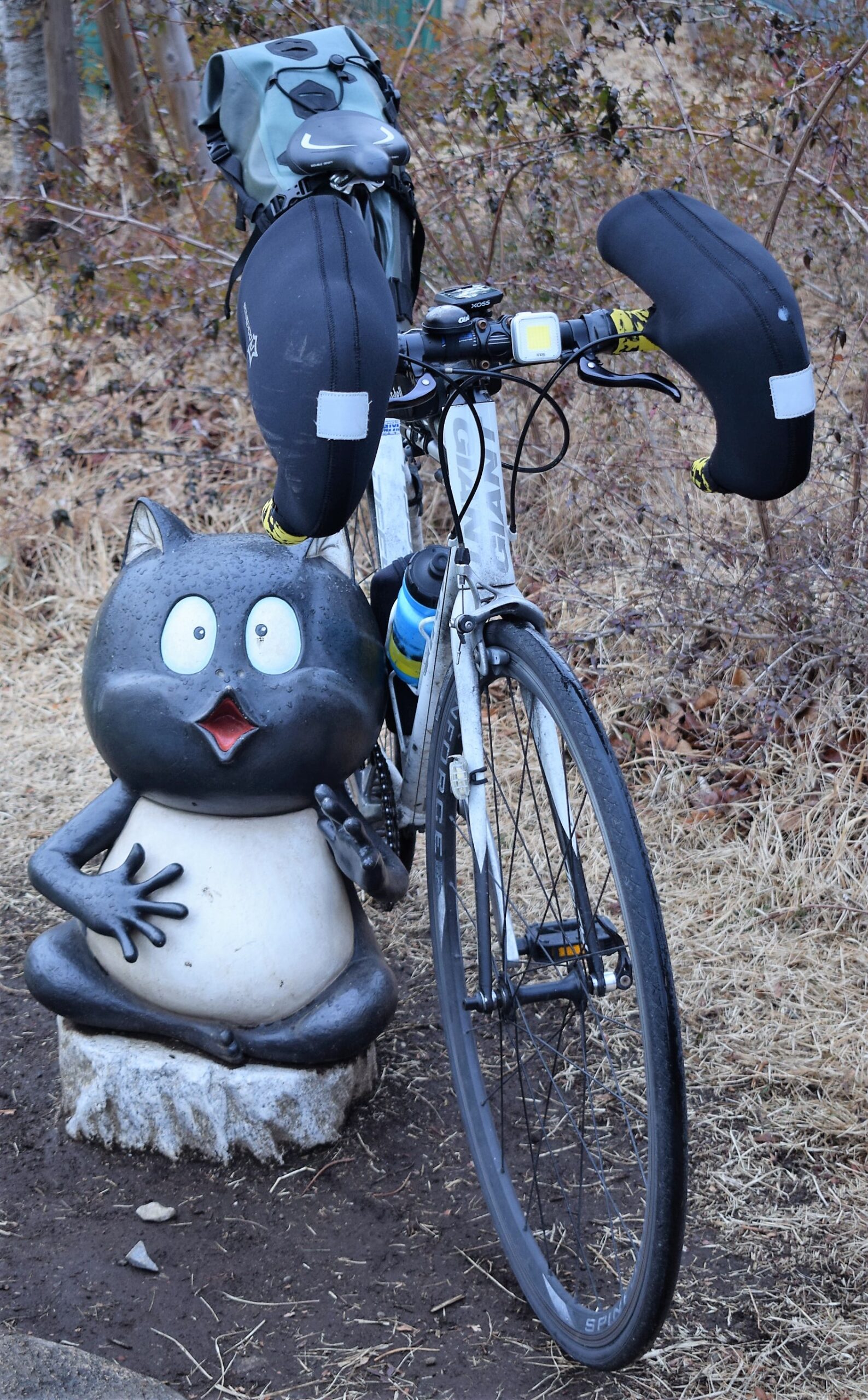
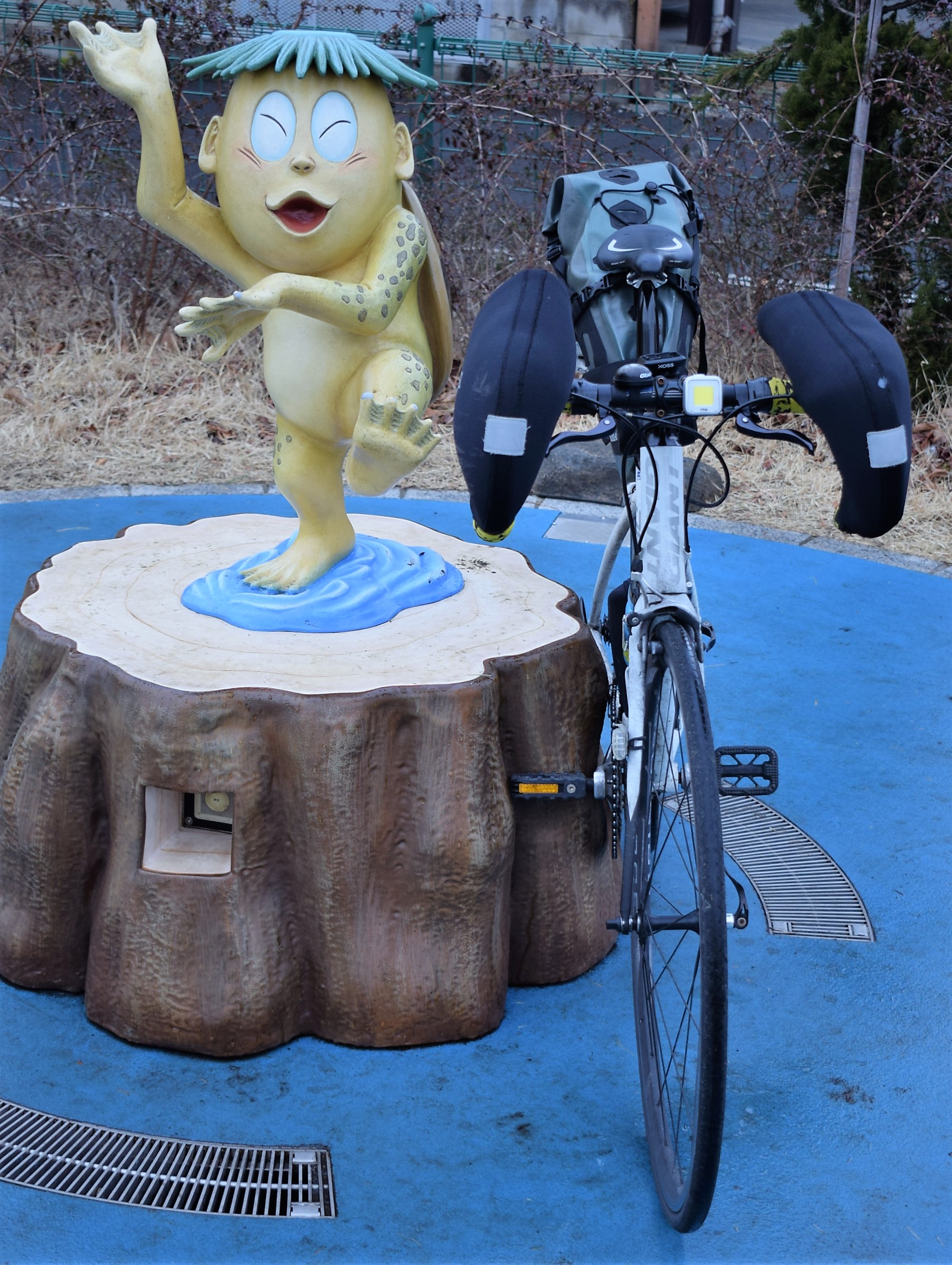
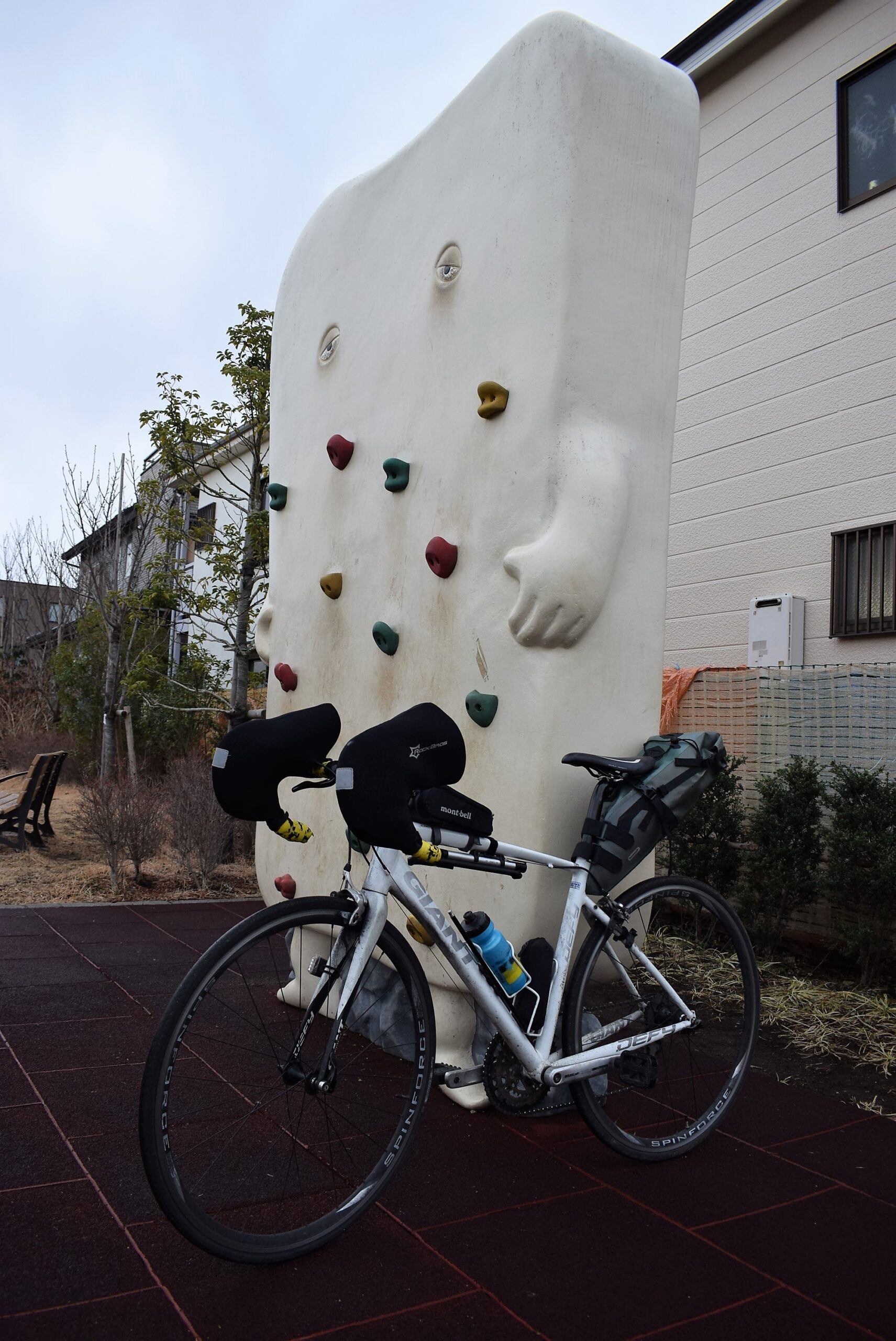
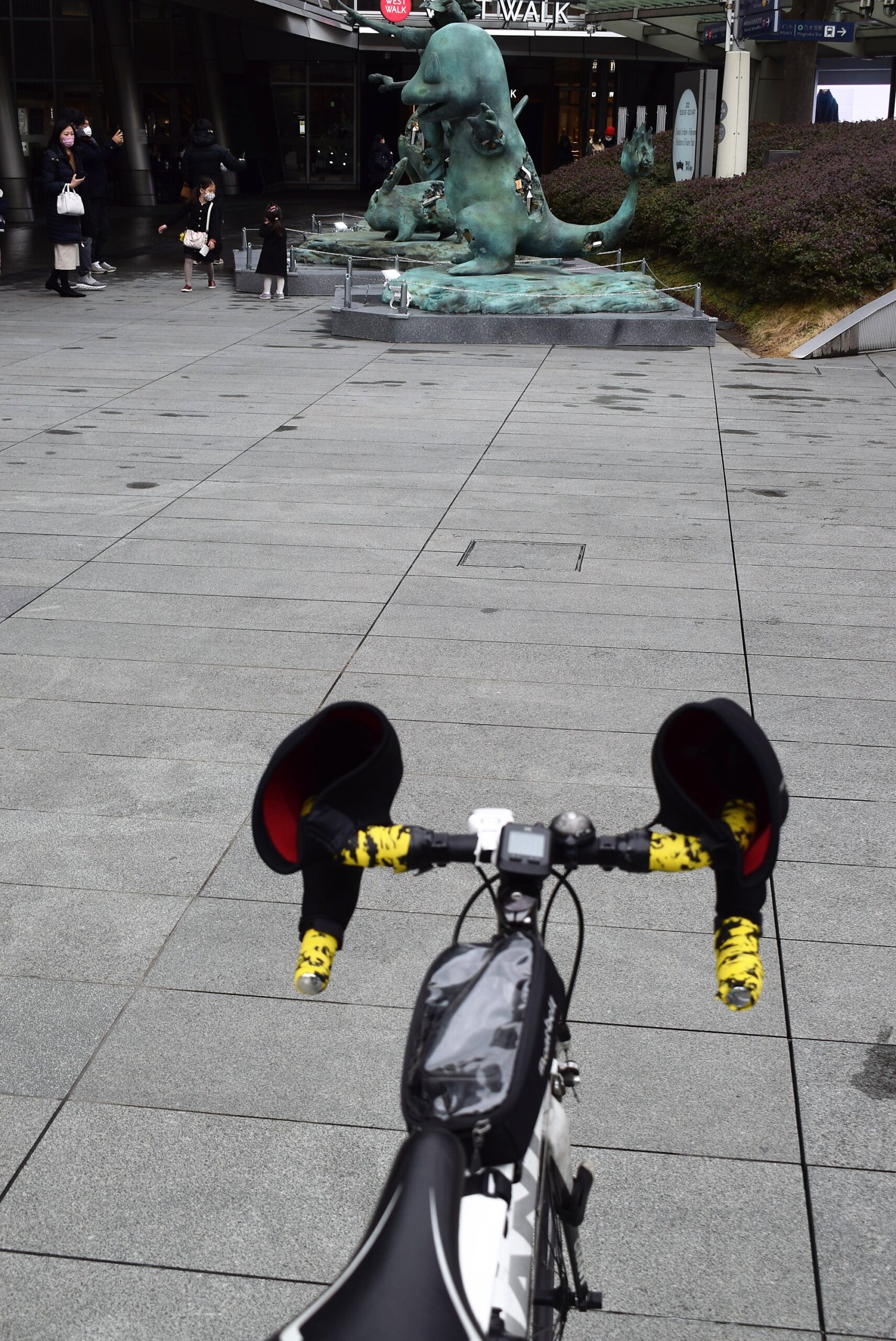
Inspired by Tokyo Time Out’s feature from last summer on the 10 monsters you’ll meet in Tokyo, Kangaeroo finally got on the bike and headed out to check out the creepy colossuses dotting Tokyo’s streets and parks.

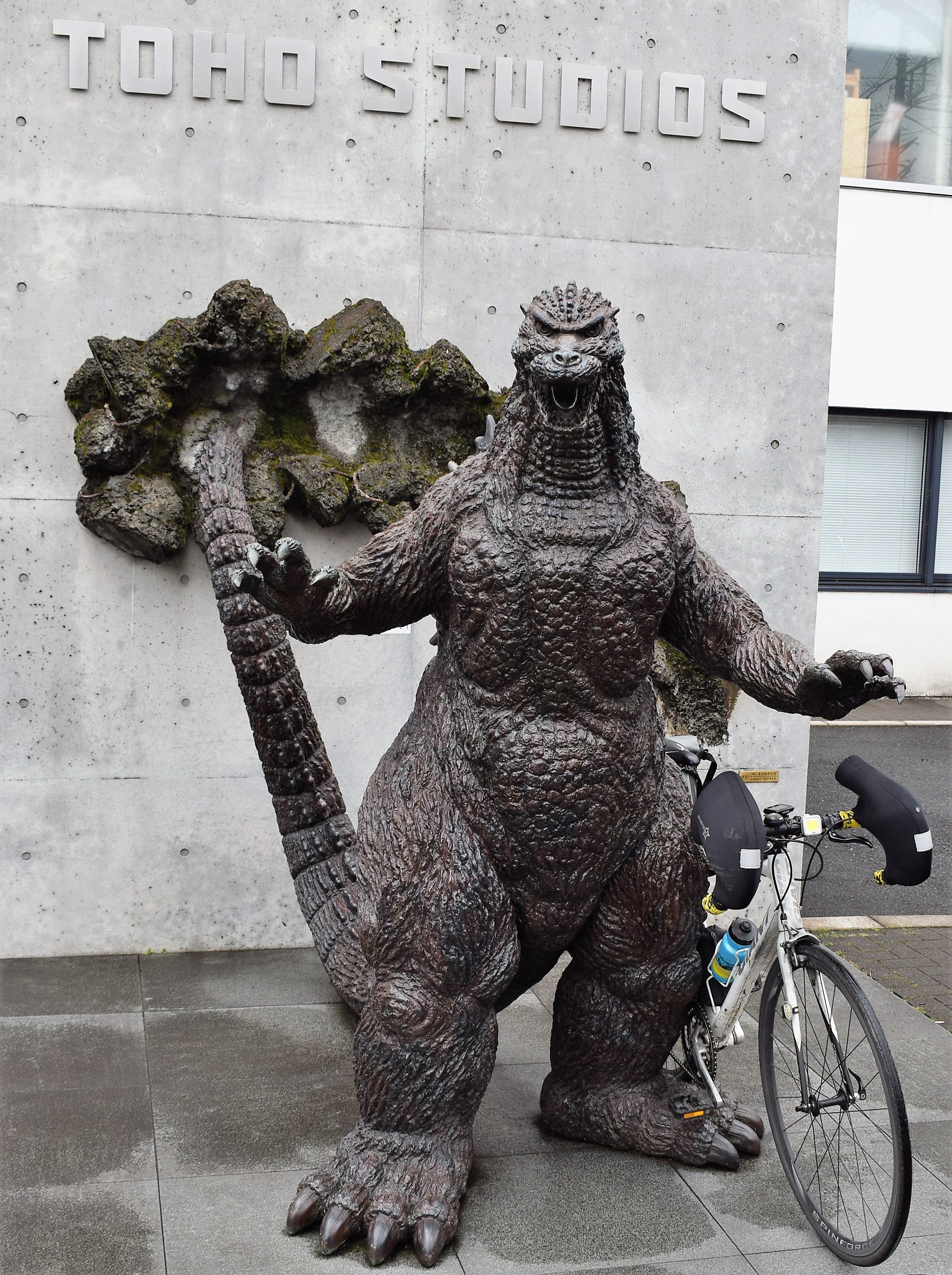
Godzilla is probably the quintessential Japanese monster, so gets first write-up. Godzilla statues can be found in many areas associated with Toho, the film studio that first gave birth to the creature.

Toho Studios has a huge mural and a statue dedicated to its most famous monster. Godzilla also looms over cinemas in central Tokyo.

Godzilla has a long-term rival in King Kong, dating back to the early 1960s in Japan, and also prominent in Hollywood. Although not specified as such, considering the enormity of the beast, it’s little surprise that the gigantic ape also occupies a prime position in Tokyo’s annals of monsters.

King Kong-like giant apes can be found along Setagaya-dori, an arterial road leading into central Tokyo from the western suburbs.

The first Kong adorns a glasses store. There are actually two gorillas, one with a headband, holding a lovebug and sucking on a cigar, and the other an apparent offspring bearing a flag urging road users to drive safely, somewhat ironic considering how much of a distraction it is on the busy road.

The next great ape is a few kilometers further down the same road in Sangenjaya, a mini-hub from the suburbs on the road into the Tokyo sub-center of Shibuya and meeting point for Route 246, a prime road in Tokyo that also heads out of the capital toward Odawara, Hakone and Mount Fuji.

Sangenjaya’s great gorilla sits atop a convenience store in a bustling shopping street leading off the main route. It holds a a woman in its hands and a smaller gorilla also adorns the entry to the building.

The reason for the existence of these gorillas has apparently been lost in the annals of time. They appear to be a relic of Japan’s booming postwar decades when there was money to throw around on advertising that would stand out from the crowd. There are “gorilla buildings” across Japan, and not just these examples from Tokyo.

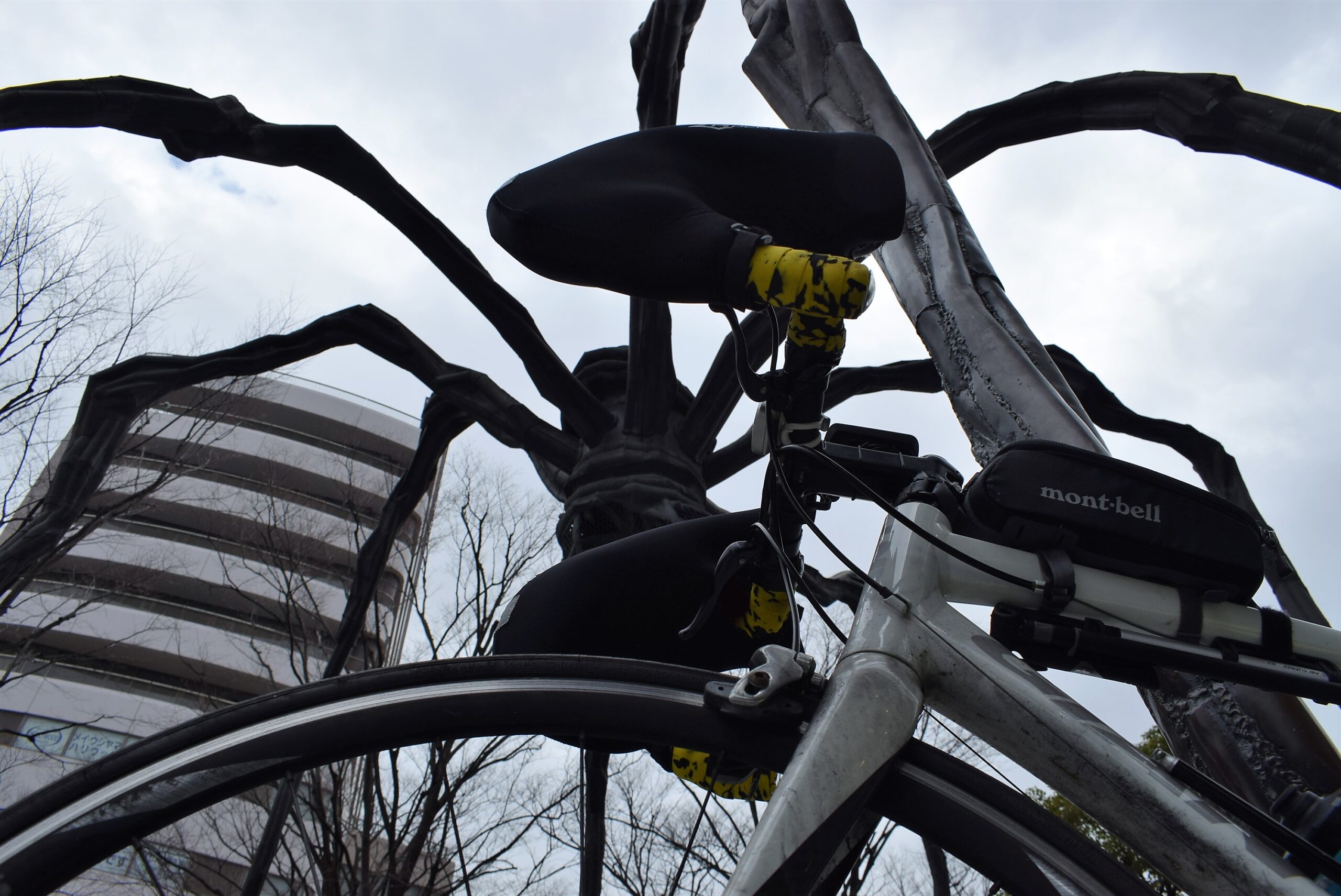
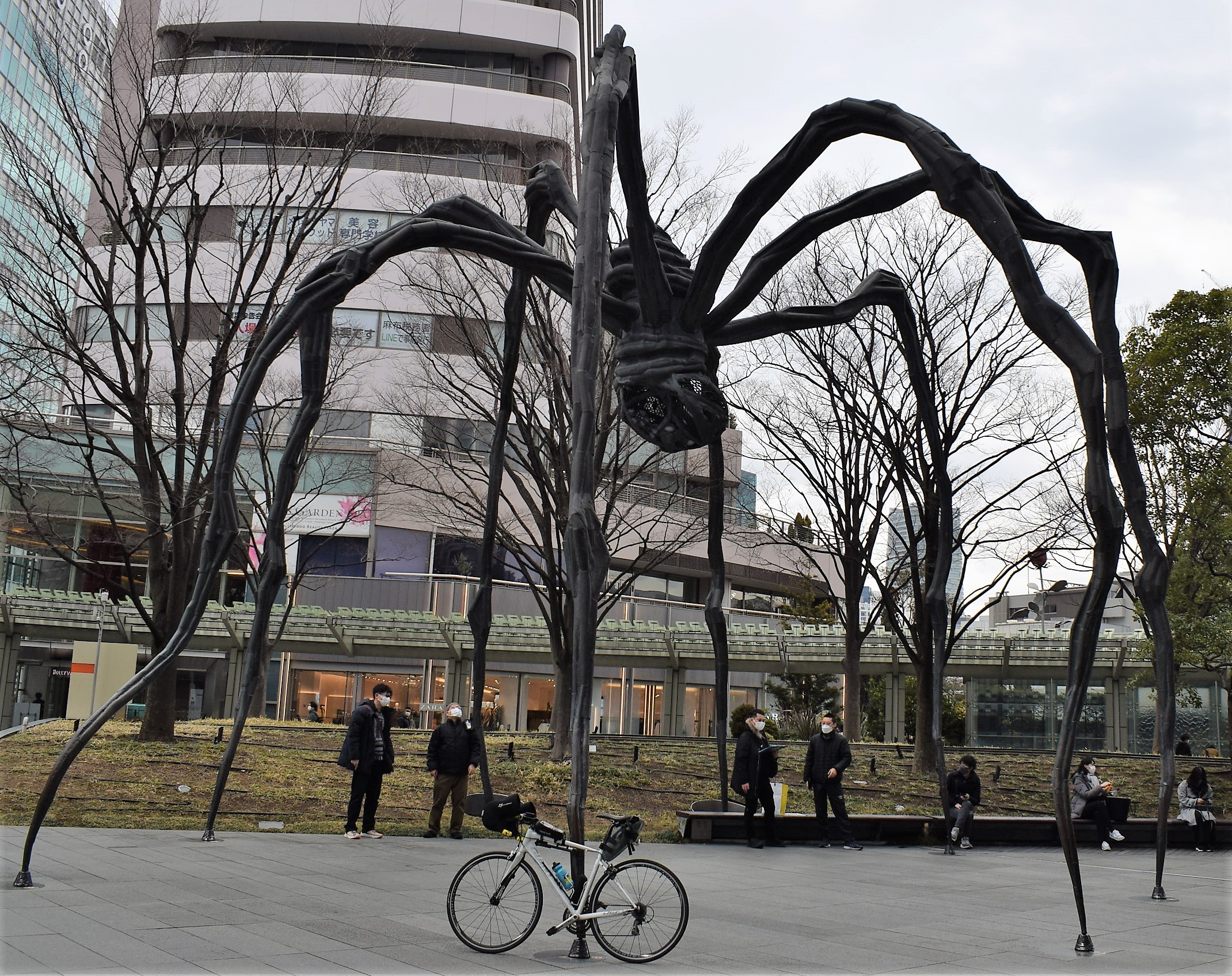
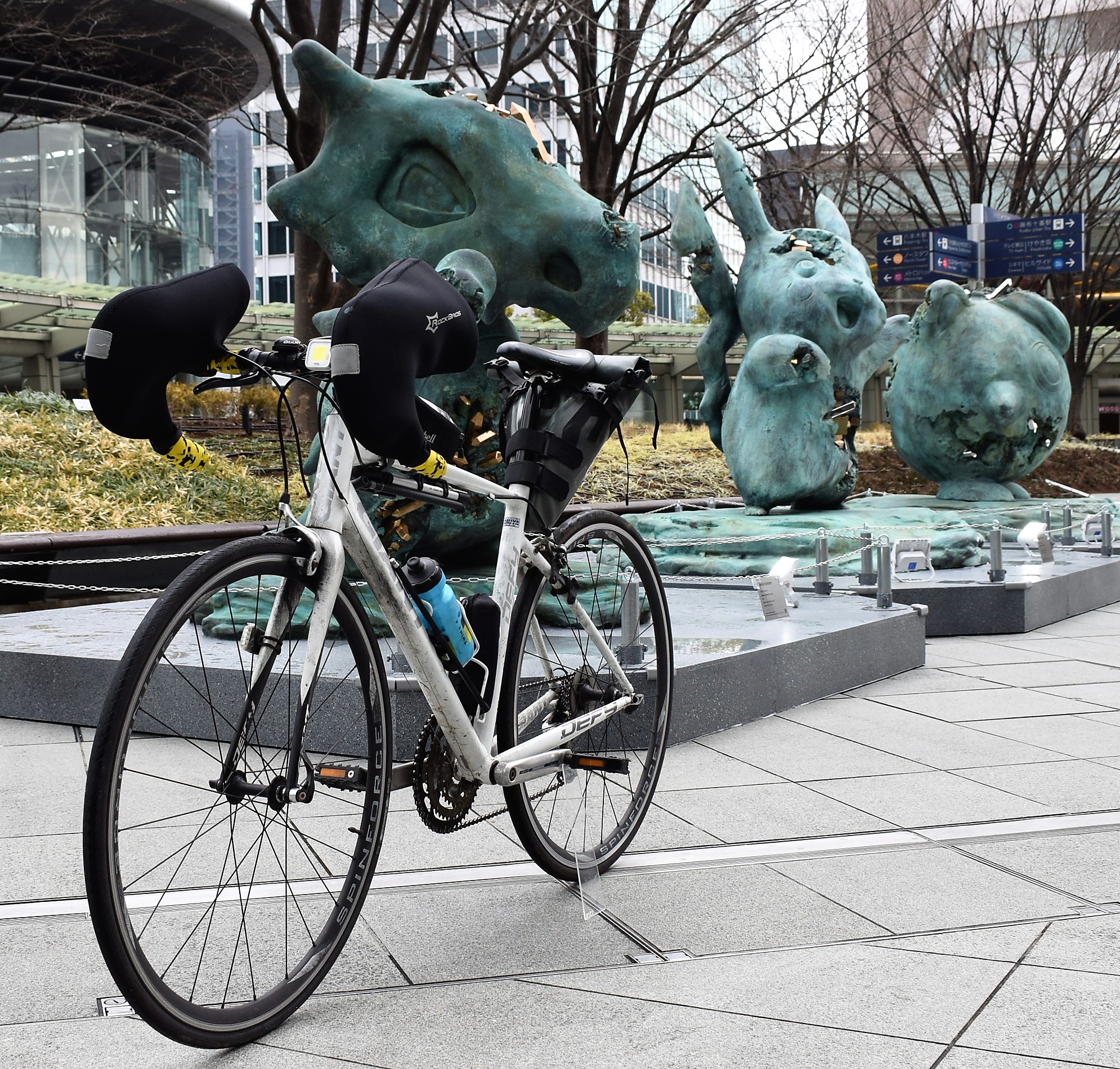
Speaking of throwing money around, few do so better than Roppongi Hills, a center of wealth in Tokyo, and home to some monsters (including Goldman-Sachs, possibly one of the most hideous monsters of all). Maman is a spider-like sculpture on permanent display, while coincidentally there is currently also an array of pocket monsters on show.
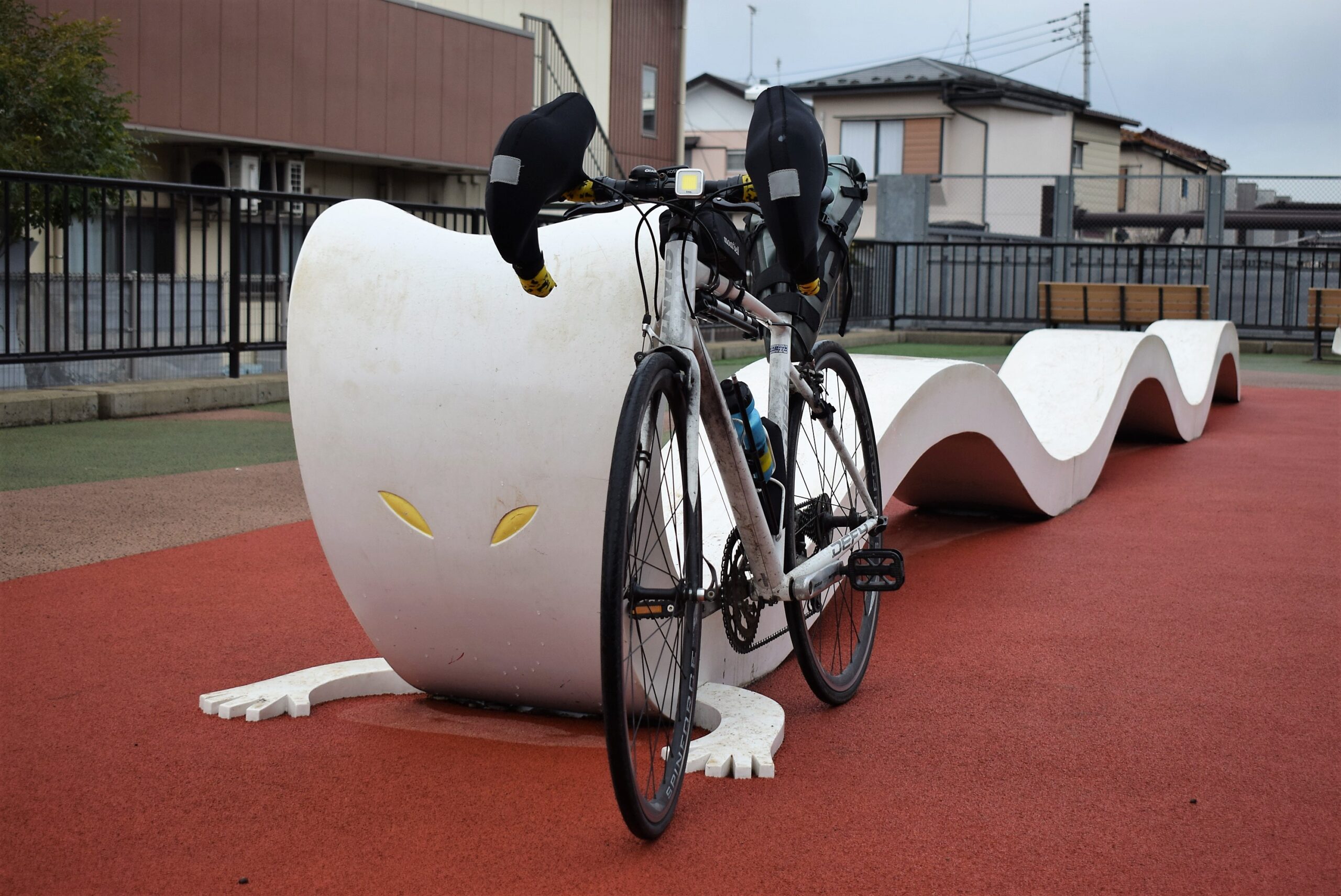
Other monsters on the trip were in somewhat nondescript parks.

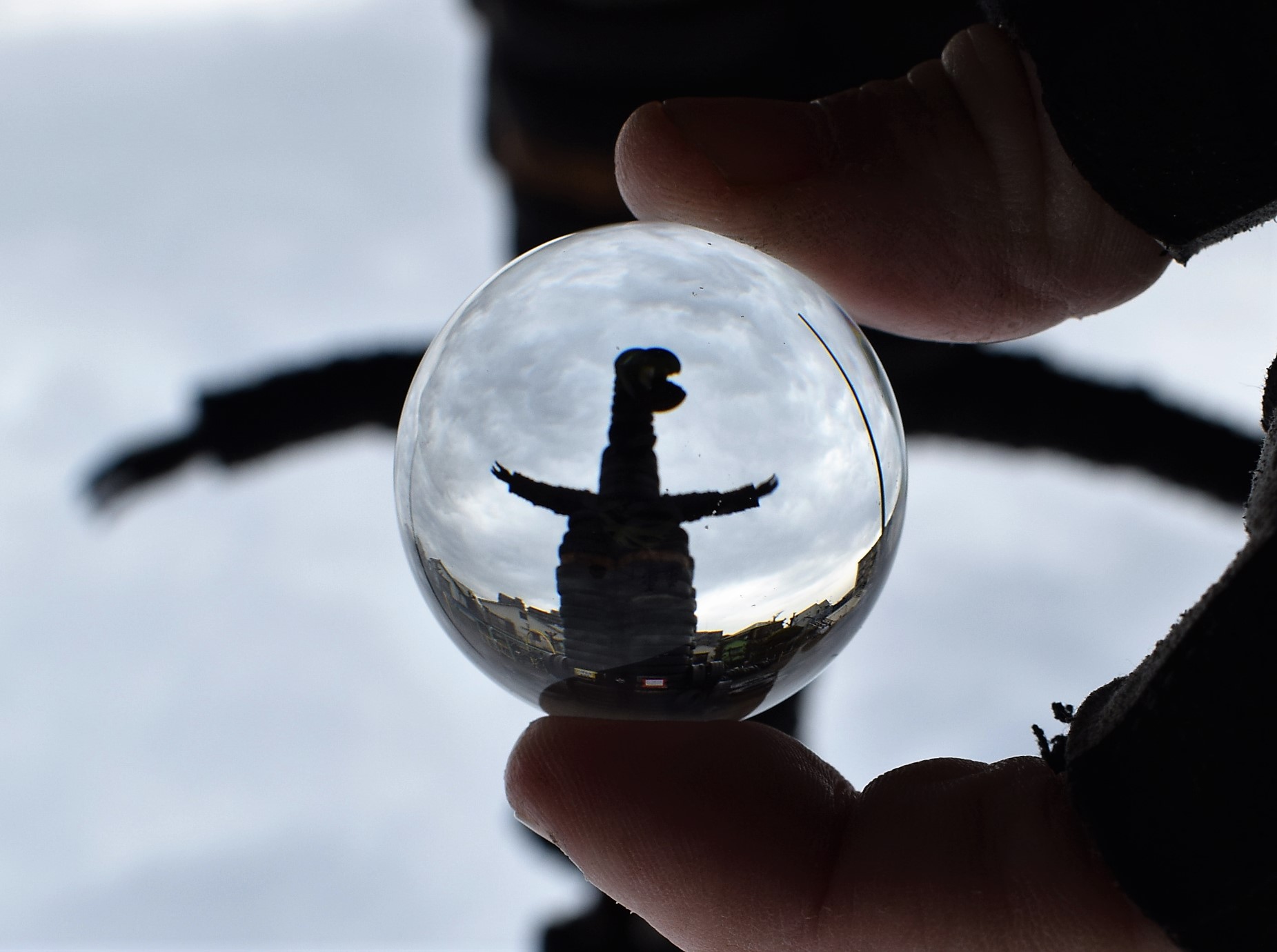
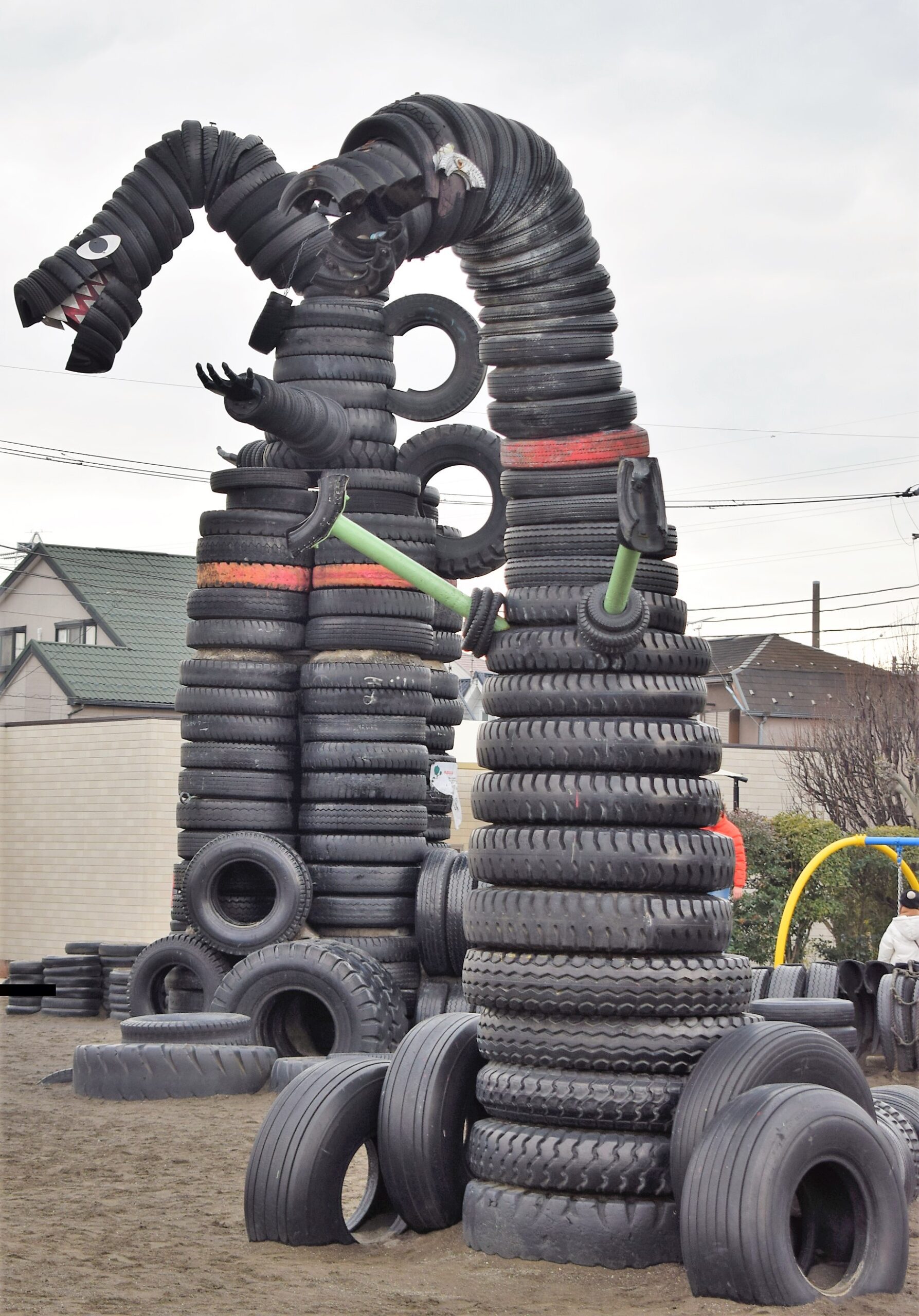
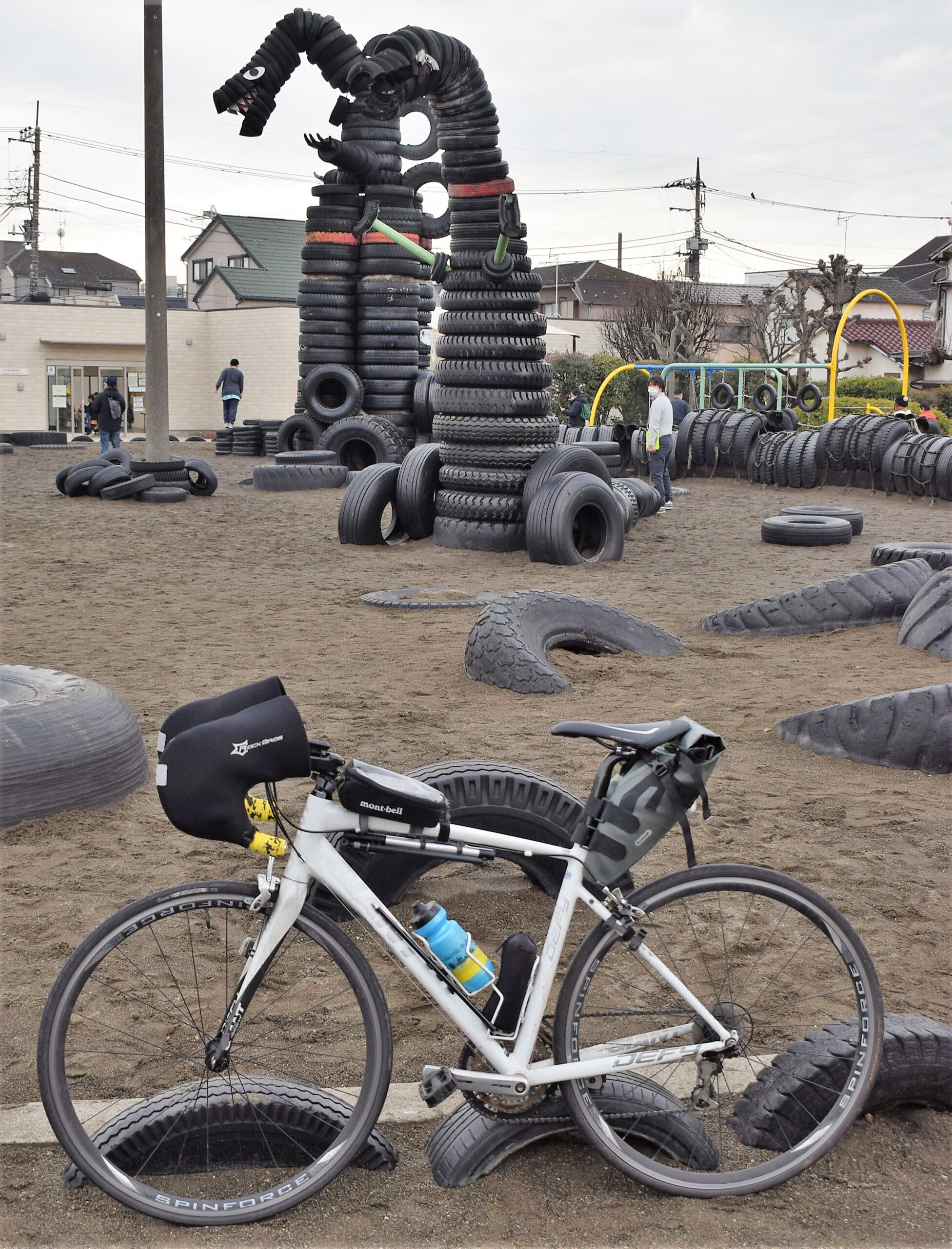
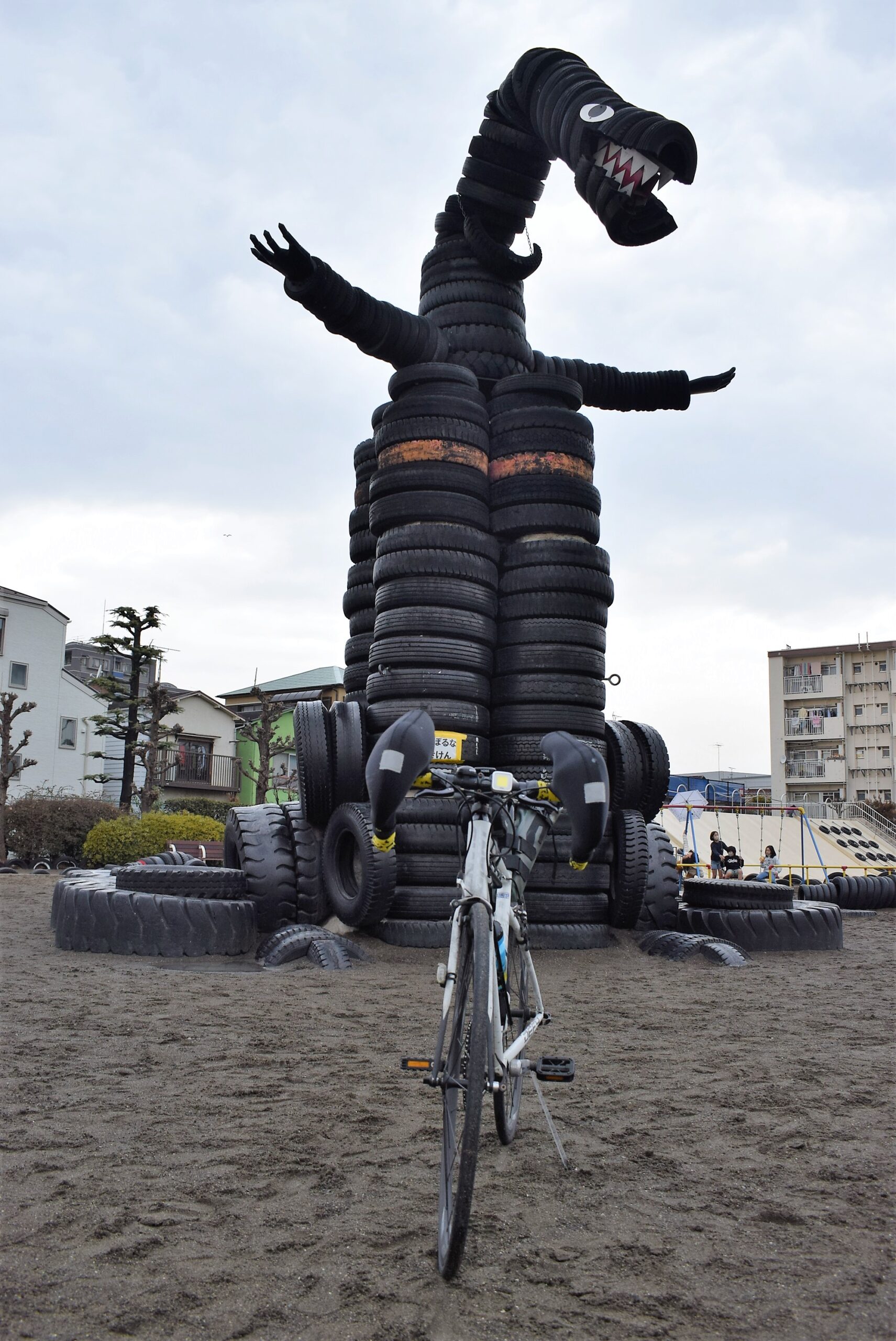
Tire Park in Ota-ku in the southern part of Tokyo has a collection of huge monsters made from tires. The monsters include dinosaurs and a robot.

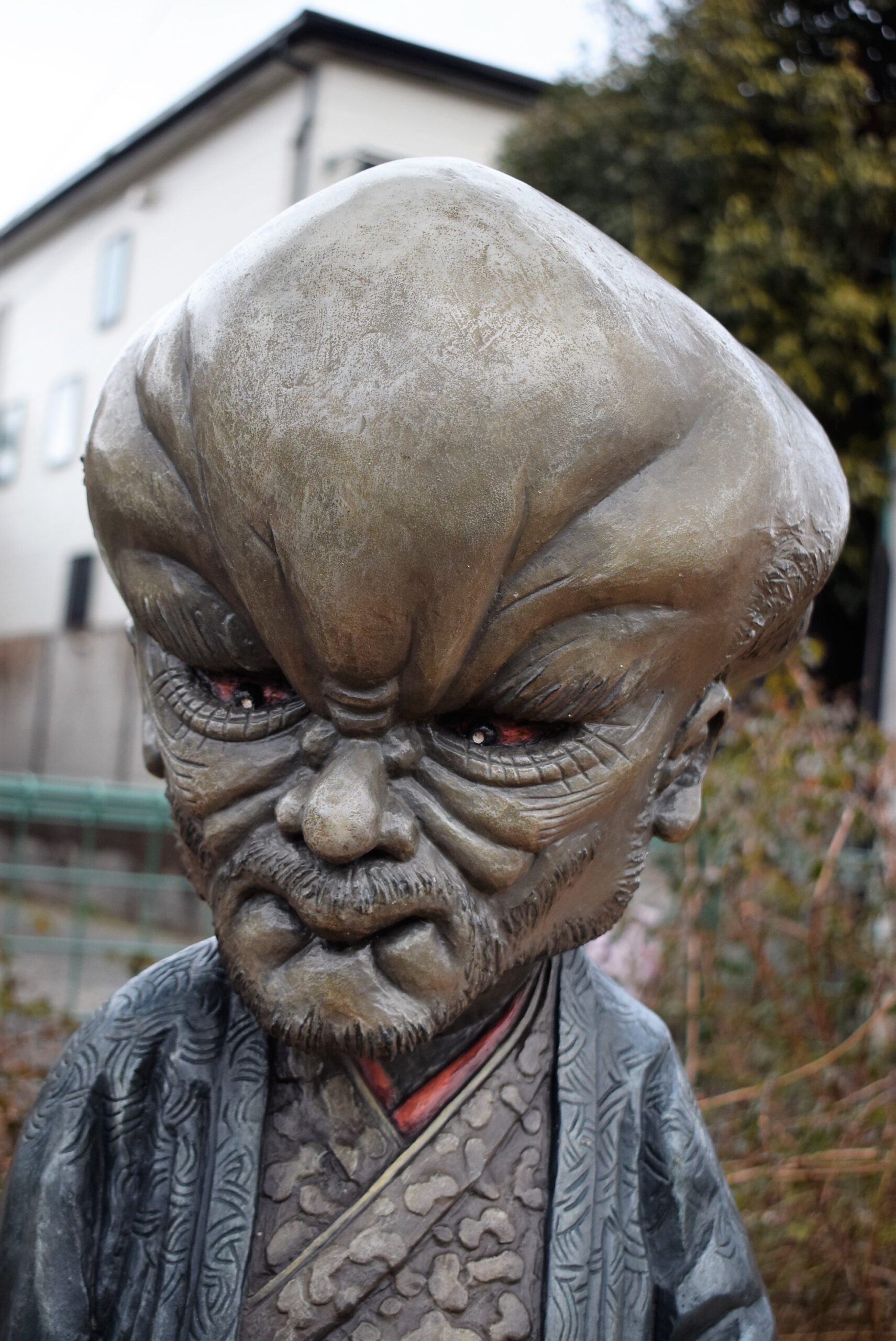
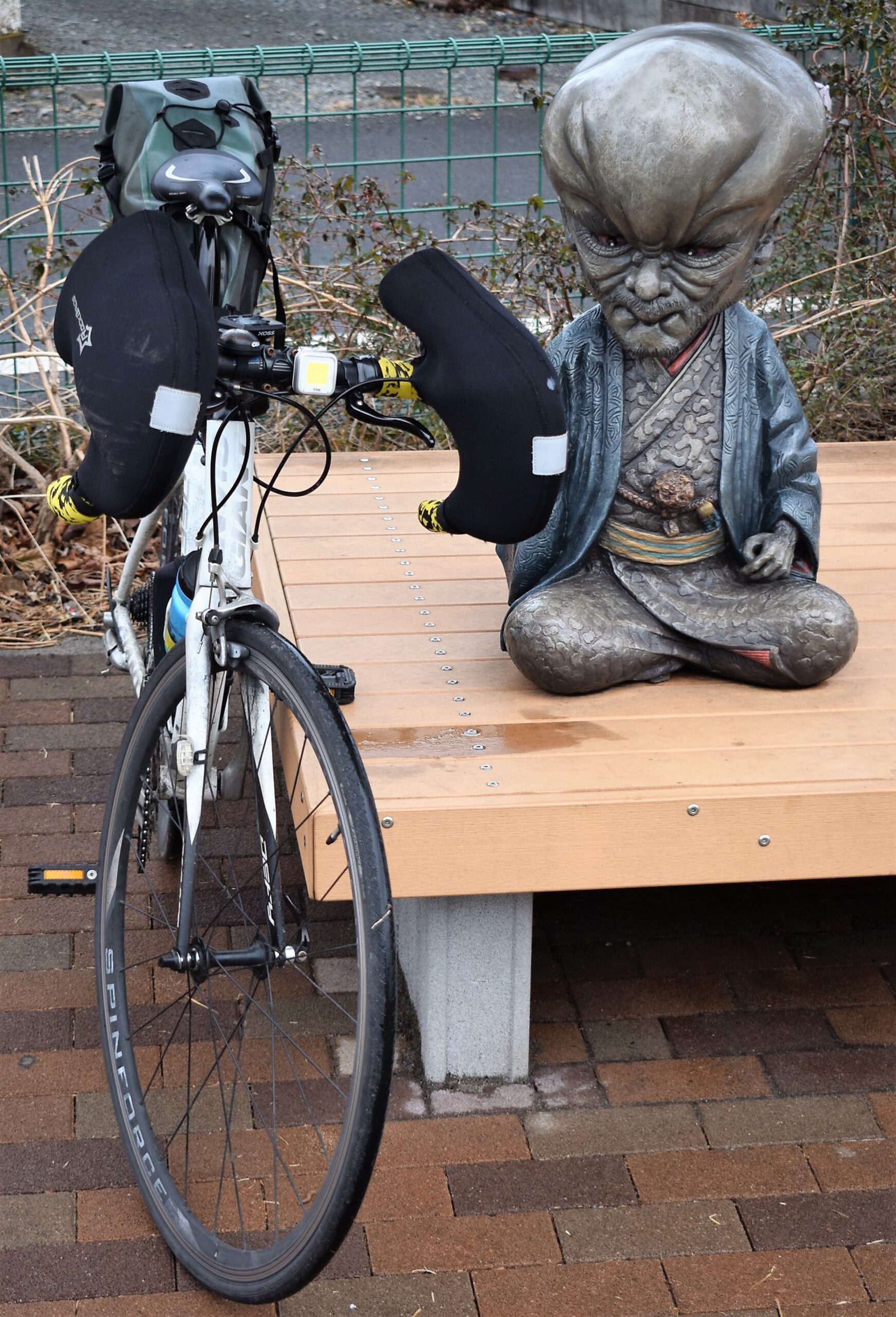
Finally, not far from the ancient temple of Jindaiji, there’s a small park in Chofu dedicated to the animation of Shigeru Mizuki’s famous Gegege no Kitaro, a delightful story of spirit monsters. The film version was produced in Chofu and allegedly set in the area, and the city responded by creating the park, which is hugely popular among the young, and the young at heart.
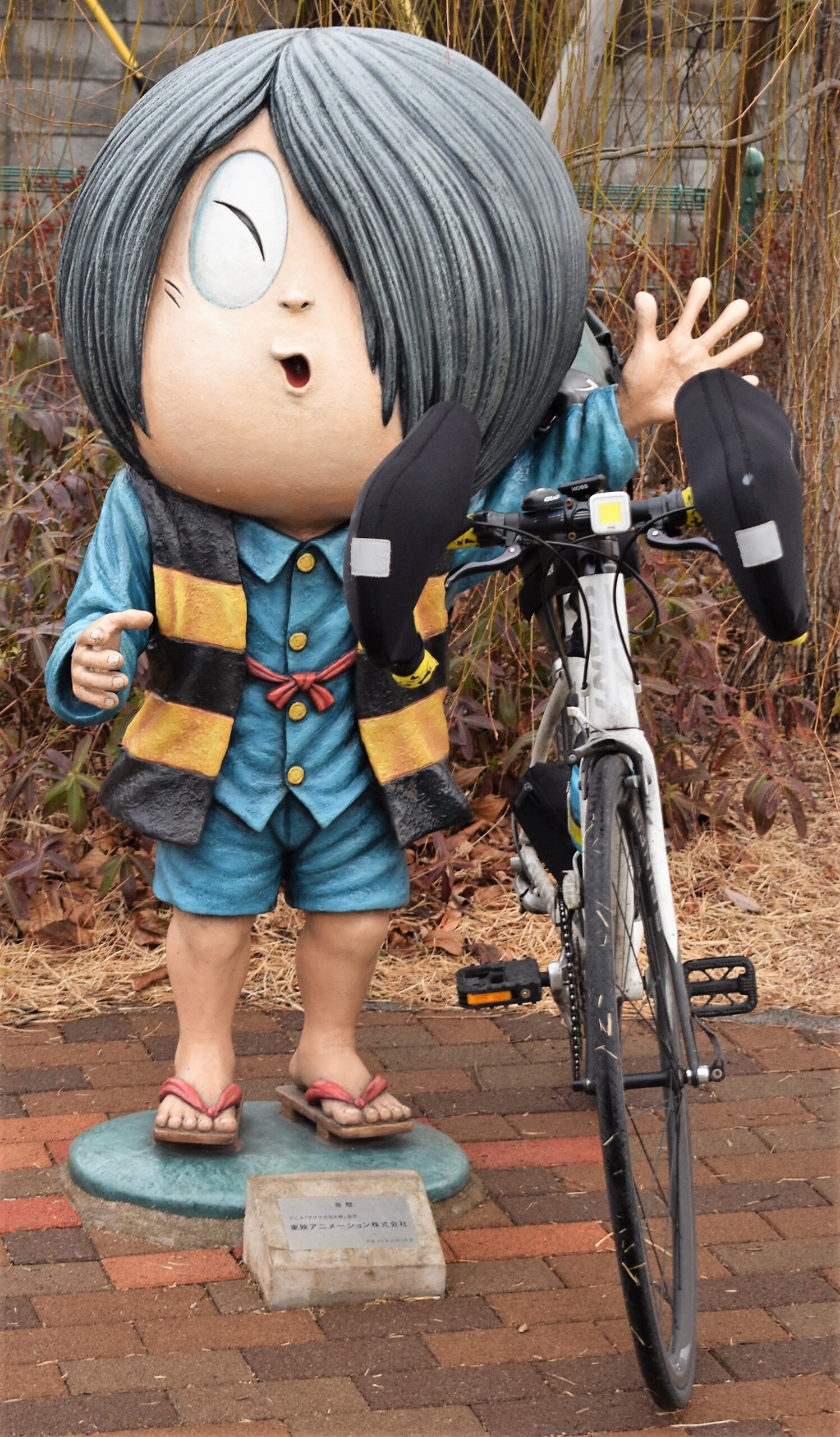
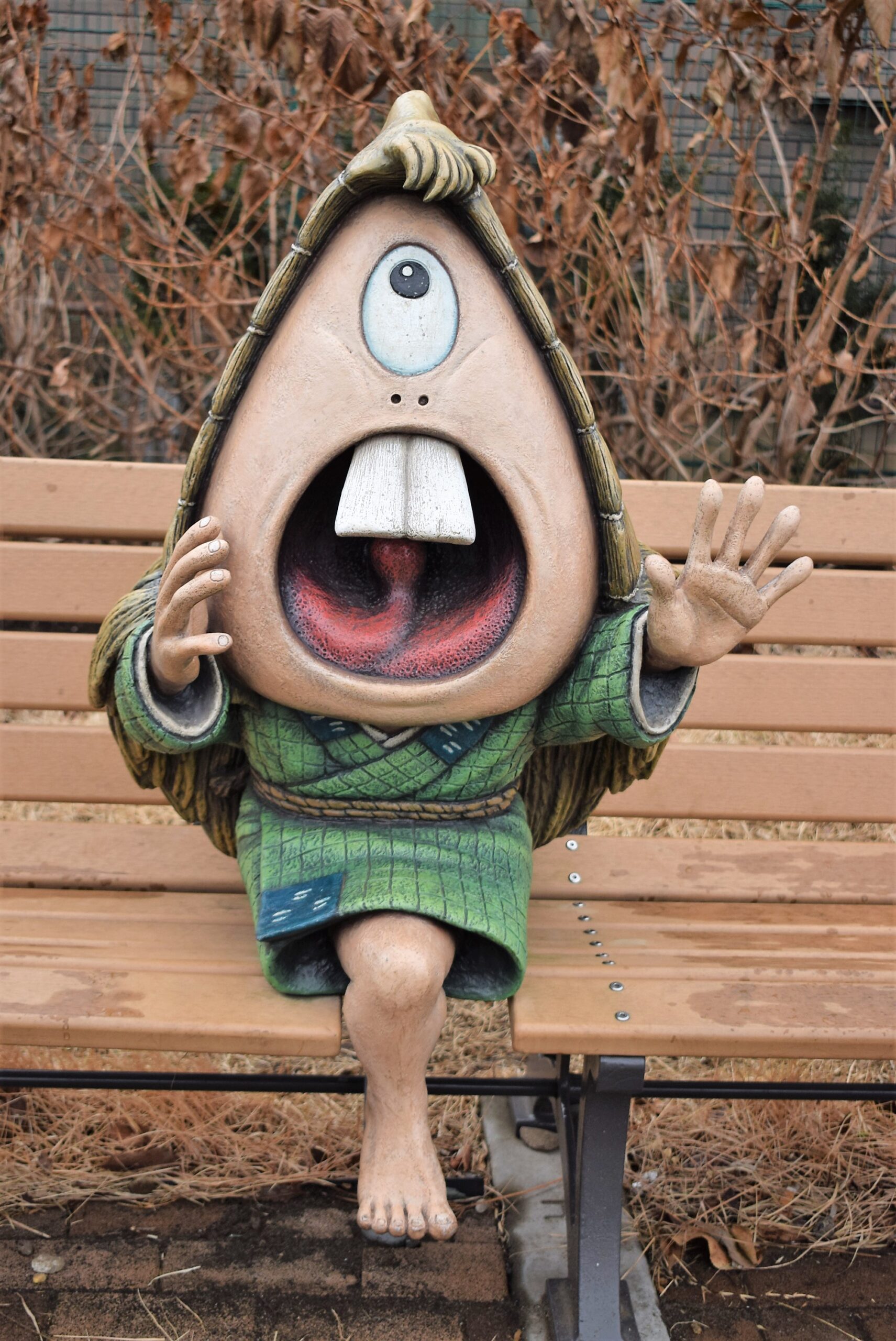
All in all, the Tokyo Monster Ride was a fabulous trip, and could be even more enjoyable if taken along back roads on bike paths instead of the sometimes hairy routes that Kangaeroo rode.
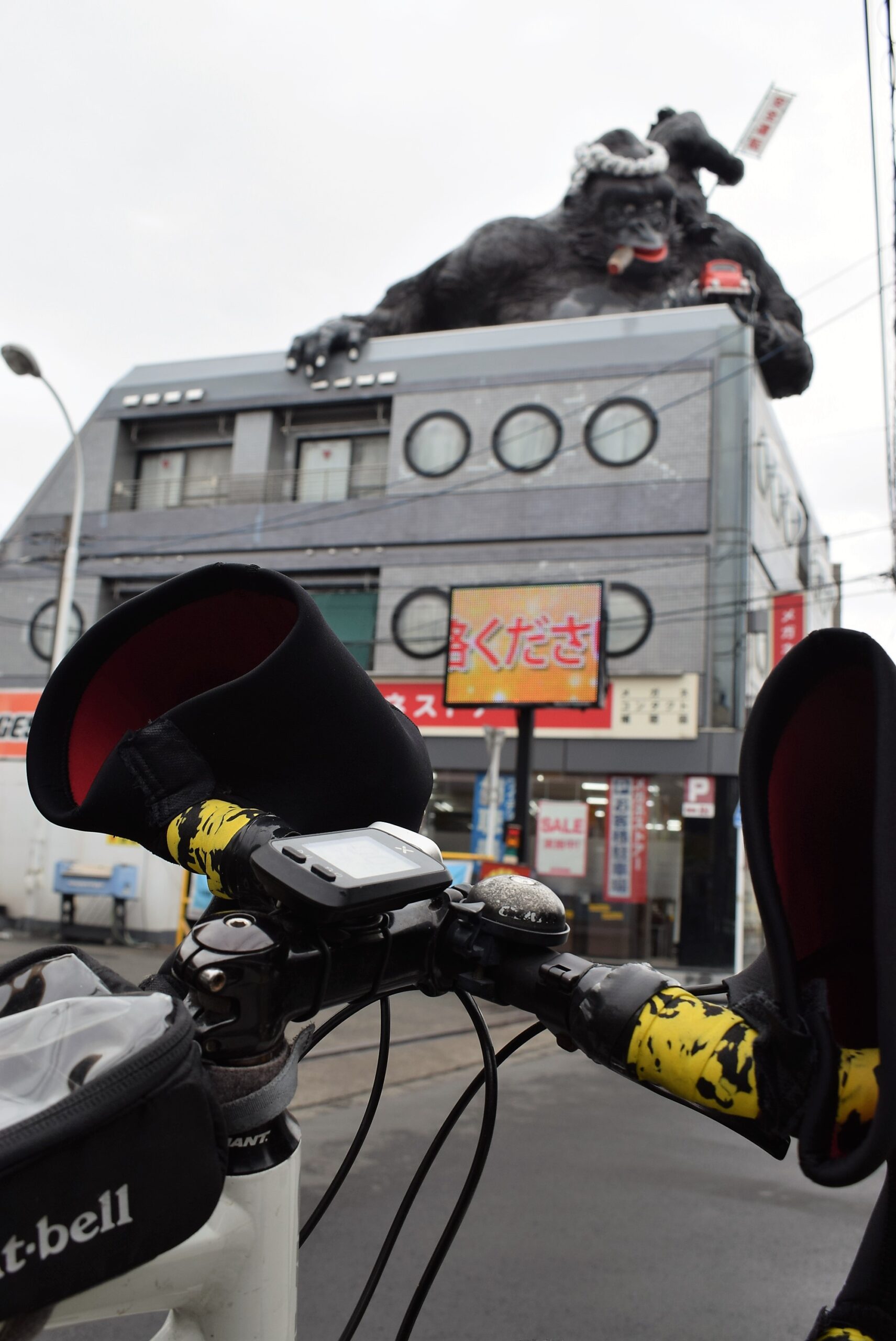
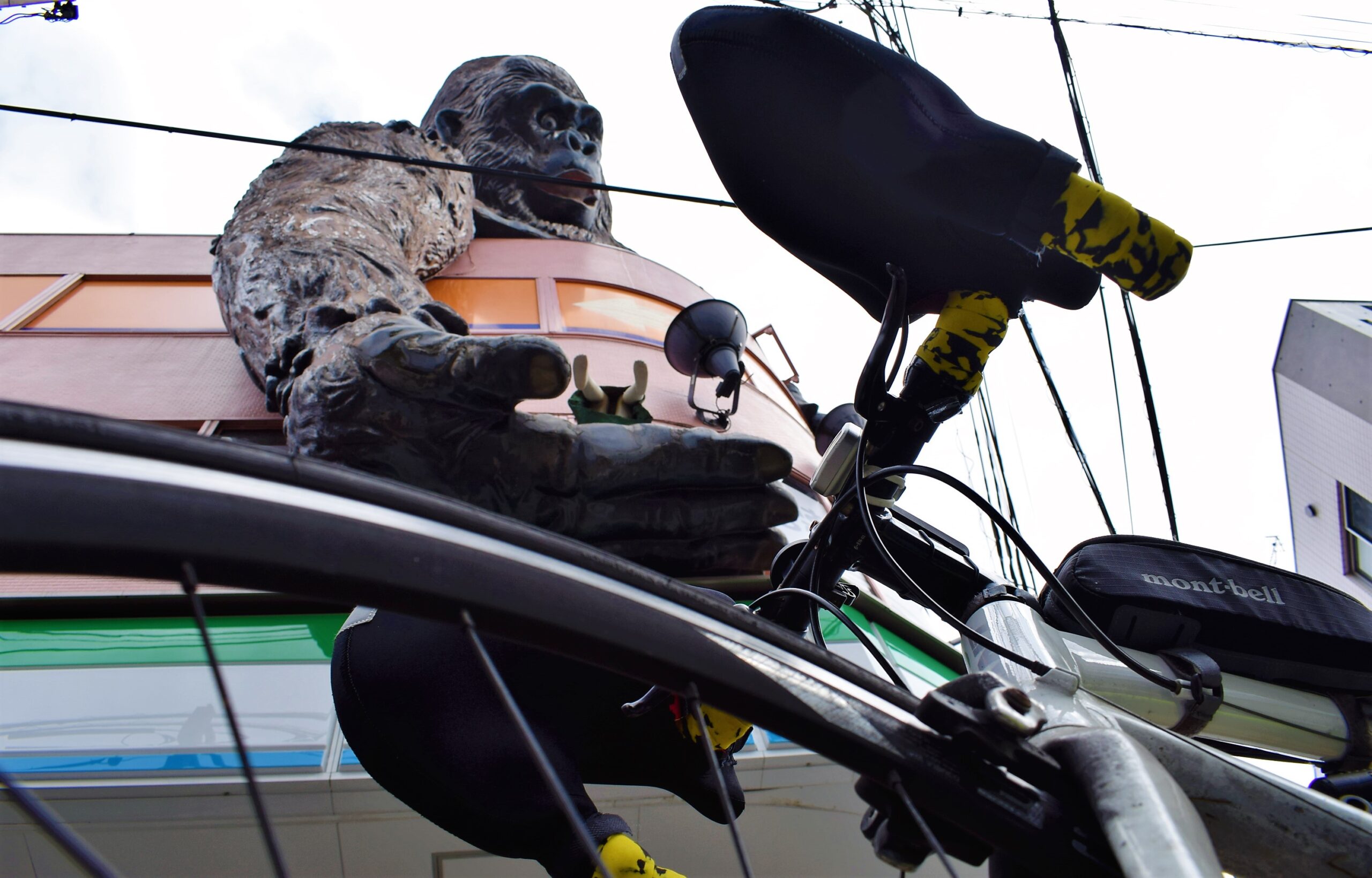
Would love to go around in milder weather. Moreover, there are still plenty of other monsters to find, in addition to live-sized robots and all sorts of kitsch culture in Tokyo. Warmer months could be fun.
Cop A Gander At These Rippers Too...

  • |

    Crafted Kangaroos and Tiger Shoes

    I was delighted to discover an arty ceramic kangaroo being sold at a store near the office, but the asking price put it out of my range despite my desire to possess anything marsupial. I also got to witness the upshot of a drunk driver who rammed into a Shinjuku restaurant, incurring the wrath of another bystander when I took a photo of the carnage (with no human casualties). And a workmate and I crafted a pair of tiger striped shoes! (She did most of the work, and ALL of it that required any dexterity).

  • 巨大カモノハシ「ゴジラ・プラッタプス」が豪で発見

     現代の倍以の大きさだった「ゴジラ・プラッタプス」5百万から1億1500万年の間前に巨大な歯付カモノハシが豪などに生存した、と豪古生物学者が11月発表した。  オーストラリアの数多く独特な動物の中では、カモノハシが最も変わっているかもしれない。  ビーバーの尻尾にモグラの胴体と鴨の鼻・口だけでなく、哺乳類のように母乳を与えながら子供が爬虫類や鳥類など同様に赤ちゃんを卵で産む「単孔目(たんこうもく)」動物である。  この目は、カモノハシとオーストラリアのハリネズミであるechidnaしかないです。  今のカモノハシは歯がなく餌等を圧力で殺して食べるが、「ゴジラ・カモノハシ」は、歯があって、小さな動物や虫類などを噛んで食べた、と同学者がいう。  新しく発見した「ゴジラ・カモノハシ」の本当の名前がObdurodon tharalkooschildだ。身長が約1メートルまで伸ばされ、現代カモノハシの約倍。この大きさの差によって学者たちが「ゴジラ」という名前を冗談で付けた。 Giant toothed platypus roamed Australia

  • | |

    Why Did Aussie Farmers Invest In Japanese Genetics?

    なぜオージーの畜産家は日本の和牛遺伝資源に投資したのか? When Australia’s cattle industry discovered the extraordinary qualities of Japanese wagyu, success was anything but guaranteed. A small group of pioneering Aussie breeders took enormous risks, investing in bloodlines from the other side of the world. Their gamble helped create one of Australia’s most remarkable agricultural success stories. オーストラリアの畜産業が日本の和牛に注目した当時、その成功は決して約束されていませんでした。遠く日本の和牛遺伝資源に投資した少数のオージー畜産家たちの挑戦が、やがて世界的な成功へとつながっていきます。 A Leap Into the Unknown 未知への挑戦 In the early 1990s, premium beef was becoming increasingly important in international markets. While Australia already exported large volumes of beef, a handful of producers believed there was room for something exceptional. Japanese wagyu stood apart from every other breed they had studied. Its extraordinary marbling, eating quality and long-established reputation convinced them that…

  • |

    Bugger me, Bob! 豪州元首相の豪俗語が外交的な事件になりかけた頃

    オーストラリア元総理大臣であったボッブ・ホーク氏は、最近日本から勲章を受けたが、1980年代初来日したオージー英語によっての時激ヤバ「事件」になりかけたこと、と豪州オンライン・ニュースサイトnews.com.auが今週報道した。 今週勲一等旭日大綬章を受章した同氏は、1983年から1991年の間豪首相であり、その間4回も日本を訪問した。  労働組合出身のホーク氏が1回目来日した時当時有名だったオーストラリアの過激的な組合活動について聞かれた。ホーク氏の返事は「騙されんぞ」だった。しかし、当然日本語ではなくオージー英語でその答えを出した。それは「They won’t play funny buggers」という表現だった。  問題はbuggersという言葉だ。オージー英語及びイギリス英語ではbuggerが「やつ」とか「野郎」などの意味がある。しかし、もう一つの意味は英語圏諸国が中心となるコモンロー下の犯罪buggeryを起こす者の意味もある。Buggery罪は、「肛門性交行為」のことだ。  news.com.auによると、ホーク氏の「They won’t play funny buggers」が日本語に通訳された時にオージー英語訳の「騙されんぞ」や「変な振る舞いをする」ではなく本来米語の意味で「面白い男性同性愛者」と訳されたといい、在日オーストラリア大使館がまいていたという。  この話は本当かどうか分からないが考えRoo.comのようなサイトを見ればこのようなオージー英語かストラインのミスがないだろう。

  • Aussie Pair in Contention for one of Japan’s Top Talent Contests

    A pair of Gold Coast teens are among the finalists in the 13th Japan Bishojo Contest, a beauty and talent pageant for young women that has been the launching pad for some of Japan’s top female performers over the past 25 years. Aussie-born Gold Coast residents Ayano Wakayama and Runa Takahashi are among the 21 finalists in the contest to be decided in Tokyo on Aug. 25, 2012. The contest is open to young women aged 13 to 20 who want to become a star. Among the previous prizewinners in the contest who have gone on to become prominent performers in Japan include stars such as Aya Ueto, Ryoko Yonekura…

  • | |

    Nissan Bluebird Oozui: When Australia (Briefly) Exported Cars to Japan

    This year marks the 20th anniversary of Australia’s disastrous foray into exporting cars to Japan. For a brief period from 1989 to 1992, fully imported Bluebird Aussie cars made in Australia went on sale in Japan. The Bluebird Aussie was apparently the result of Nissan Australia’s Matilda Project, which had aimed to make a solely Australian car for Australian conditions, but ended up being a modified bluebird. Australia was, at the time, at the peak of its powers in the enormously fickle Japanese market. Thousands of Japanese tourists were flocking Down Under and Australia was on the verge of overtaking Hawaii (albeit very briefly as it turned out) as the…