
Hopper Gives U.S. Satellite TV Network Viewers a Roo-ed Awakening
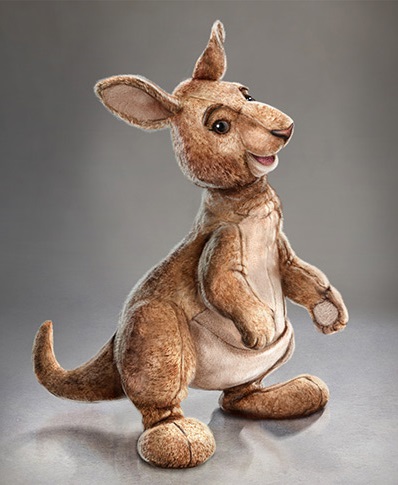
Hopper is the (brilliantly original!) name given to the kangaroo used to promote U.S. satellite TV network Dish.
Hopper was probably at her most prominent in the mid 20-teens as Dish launched a huge campaign to popularize Internet telly.
During the 2014 campaign, Hopper was voiced by portly Strayan actress Rebel Wilson, then at the peak of her career.
The campaign centered on Dish’s universally praised digital video recorder, which is also called Hopper, like the kangaroo that promotes the network.
The line of recorders further extends the kangaroo link by naming the compact version of the DVR, Joey, which is, of course, the name for infant kangaroos.
Incidentally, Rebel is a true Strayan. Her initial breakthrough in show business came when she created and starred in a TV series called Bogan Pride.
Bogan is kind of the modern form of yobbo.


Cop A Gander At These Rippers Too...

  • |

    Music As A Bogan Cultural Element

    Bogan culture has an extremely strong musical component. The canonical soundtrack includes: And here we encounter another great paradox. Some music associated with bogan culture is highly sophisticated musically and enormously influential internationally. AC/DC, for example, isn’t culturally insignificant because bogans love them. Quite the opposite. The music becomes part of a national mythology. Triple J even held a National Bogan Day in 2002, celebrating the stereotype with music including Cold Chisel, Midnight Oil, Rose Tattoo and AC/DC. So “bogan music” isn’t necessarily bad music. It is music that has become culturally associated with unpretentious Australian masculinity and working-class authenticity.

  • The Dark Side Of The Bogan

    It would be a mistake to romanticise the phenomenon completely. “Bogan” can be profoundly classist. It can function as a respectable-sounding way of insulting: And stereotypes associated with bogan culture can also include: But these aren’t inherent characteristics of every person labelled bogan. That’s precisely why the term is so slippery. One academic analysis calls “bogan” a “sticky sign” because it can simultaneously attract contempt, affection, identification and disidentification.

  • | |

    Nissan’s Fine Fragrance From Perfumed Kangaroos

    Automaker Nissan Motor Co. has long used kangaroos in its advertising, particularly in the early 2010s and notably when enlisting the aid of technopop girl group Perfume, which was then at the peak of its popularity. Nissan stylized Perfume’s three members–Kashiyuka, A-chan and Nocchi–as pink kangaroos to promote its Serena, Note and Cube models. Perfume used the opportunity for a cross-promotion of their then-newly released single, Voice, which would go on to reach No. 2 on the Oricon national charts. The campaign aimed to get the attention of a young, pop-loving audience who enjoyed animated characters and prompt them into visiting a Nissan dealership. The ad ran from July 14,…

  • | | |

    Not So Fast, Sonny! Skippy The Bush Kangaroo Has Turned 50!

    Skippy the Bush Kangaroo, probably the most-loved Australian children’s TV program in history, has turned 50 years old. The first episodes screened in Australia in February 1968 and the show remains popular to this day, though only three series comprising 91 episodes were made. The show premiered outside of Australia. Its run in Japan had effectively ended before Skippy showed in Australia, mainly because the series was made in color, which did not arrive in Australia until 1975. Skippy told the story of a grey kangaroo and her best friend, a young boy named Sonny Hammond, played by Garry Pankhurst in his only role of significance in an acting career…

  • The “Bento Bogan”

    Australia’s tourism boom in Japan has produced a new stereotype of the Australian tourist in Japan. Some Australian commentary has started jokingly referring to this phenomenon as the boganisation of Japan. The background is real: Australian arrivals to Japan surged after the pandemic, helped by Australia’s proximity to Japan, favourable exchange rates and Japan’s enormous appeal as a destination. One 2025 report noted that Australian visitors to Japan reached 637,300 between January and September 2024, up 42% on the equivalent record period in 2019. And some Australians have begun joking about a new breed: The Bento Bogan A person who has somehow transported from Bali to Japan the cultural package…