
Buggery Is Australia’s Favourite Place That Doesn’t Exist…Sort Of
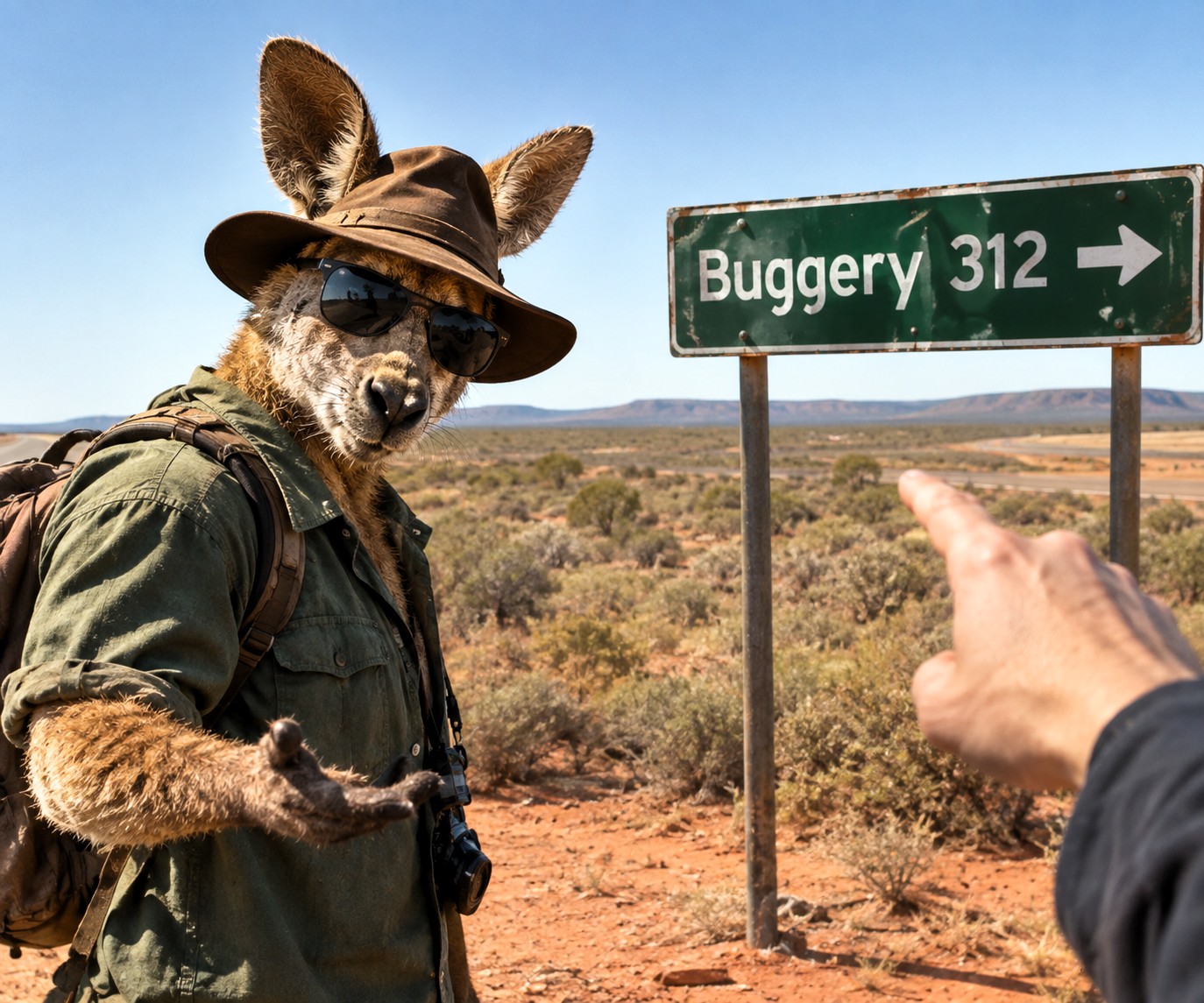
In Strine, “buggery” has two everyday senses that have almost nothing to do with the word’s literal legal meaning (anal intercourse) elsewhere in the English-speaking world: 1) a fictitious, faraway place, roughly equivalent to “the middle of nowhere” or “hell”; 2) an impolite but mild way of telling someone to go away: “go to buggery.”
オージー英語では、”buggery” には日常的な二つの意味があり、他の英語圏で使われる本来の法律用語(男色行為)とはほぼ無関係になっている。①「どこか架空の遠い場所」で、”the middle of nowhere”(何もない場所)や”hell”(地獄)に近いニュアンス。②相手に「消えろ」と言う、やや無礼だが軽い言い方、、、”go to buggery.”
Example
“He can go to buggery for all I care.” (もう知ったこっちゃない、あいつなんて消えちまえばいい。)
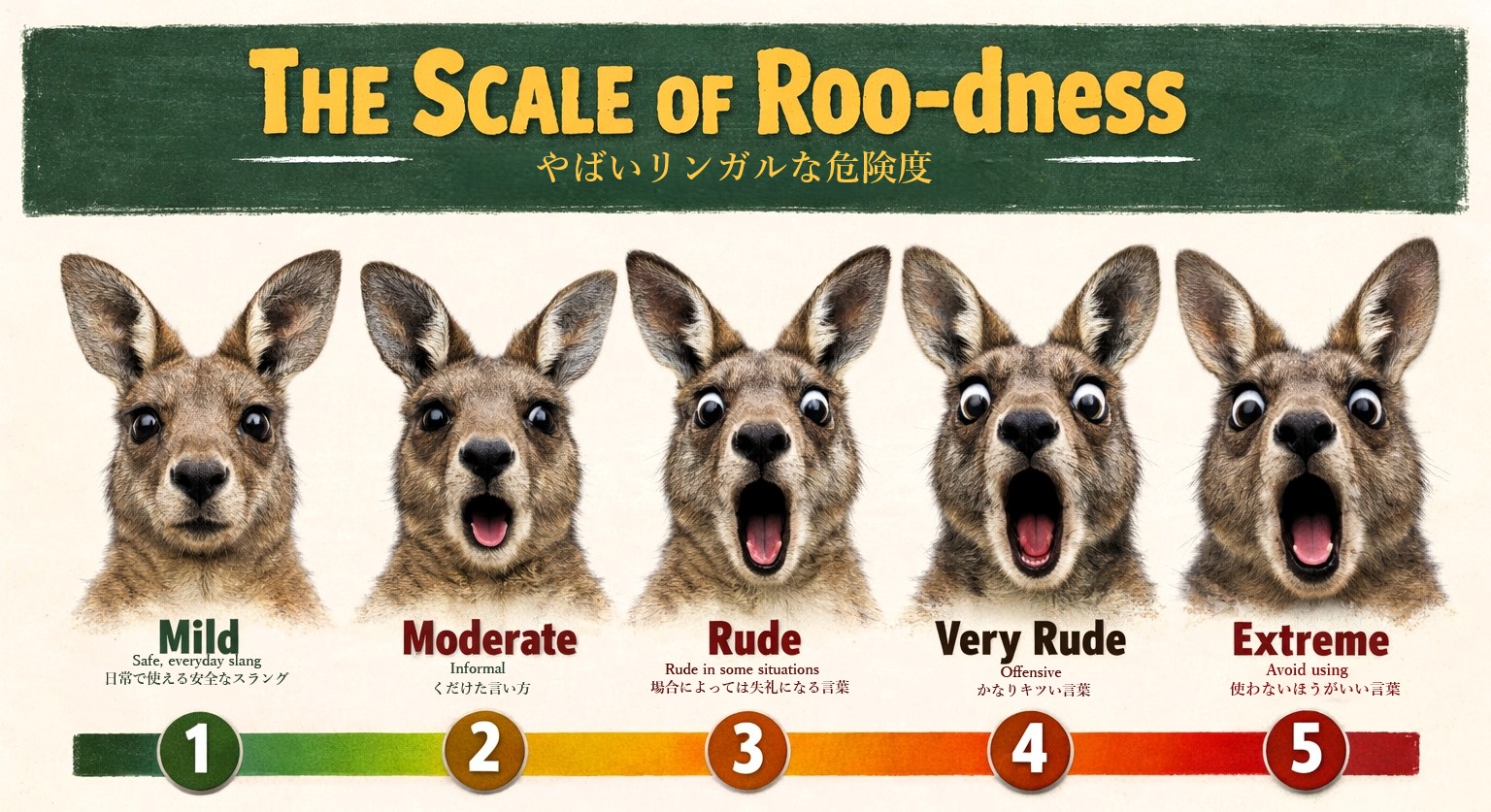
Scale of Roo-dness: 🦘🦘 Moderate

When Aussies Use It
Among friends, family, and even on daytime television — Australia’s ABC ran a comedy panel show literally titled Club Buggery in the 1990s, which is a fair sign of how tame the word is taken to be locally.
友人や家族の間で、さらには昼のテレビ番組でも普通に使われる。実際1990年代、オーストラリアの公共放送ABCは Club Buggery というタイトルのコメディ番組を放送していたほどで、いかにこの言葉が「軽い」ものとして扱われているかがよく分かる。
When NOT To Use It
Outside Australia (and New Zealand, the UK, and South Africa, where it’s similarly mild), the word’s literal legal meaning is often the only meaning people know, so it can land as far cruder or more shocking than intended. Avoid it in formal writing, with strangers overseas, or in any professional context outside Australasia.
オーストラリア(および同様に軽く使われるニュージーランド、イギリス、南アフリカ)以外では、この単語の本来の法律的な意味しか知らない人が多いため、意図した以上に下品・衝撃的に受け取られることがある。フォーマルな文章や、オーストラリア・ニュージーランド以外の見知らぬ相手、仕事上の場面では避けたほうがよい。
日本語での解説
“Buggery” は本来、法律用語として「男色行為」を意味する古い英語だが、オーストラリアでは日常会話の中でその意味がほとんど失われ、「どこか架空の遠い場所」や「消えろ」という軽い悪態として使われている。実在するビクトリア州の山「Mount Buggery」がその象徴で、地名にまで使われるほど「無害化」された言葉である。
Australia–Japan Connection
Japanese has its own set of words that sound shocking translated literally but land as mild in daily use — this gives Japanese learners a useful lesson: never translate Australian swearing word-for-word, because the emotional temperature almost never survives the trip across languages.
日本語にも、直訳すると衝撃的に聞こえるが実際は軽いニュアンスで使われる言葉がある。ここから学べる教訓は、オーストラリアの悪態表現を単語ごとに直訳してはいけないということだ、、、感情の「強さ」は、言語の壁を越えるとほとんど残らない。
Related Terms

There’s a real mountain in Victoria called Mount Buggery. Somewhere, a 19th-century surveyor was having exactly the kind of day this word was invented for. ビクトリア州には実在する「Mount Buggery(バガリー山)」という山がある。19世紀のどこかの測量士が、まさにこの言葉が生まれるにふさわしい一日を過ごしたに違いない。