Buggery Is Australia’s Favourite Place That Doesn’t Exist…Sort Of
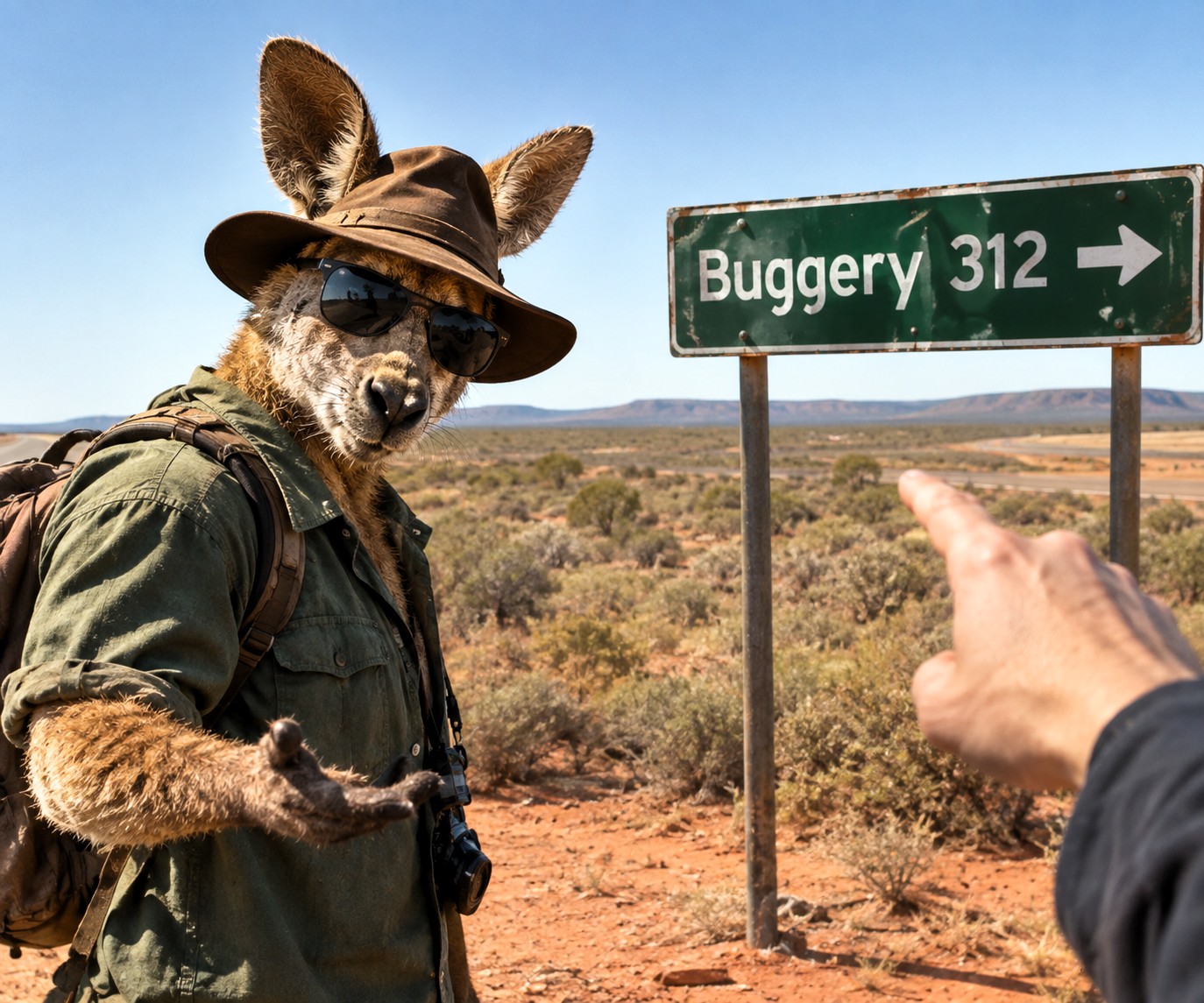
In Strine, “buggery” has two everyday senses that have almost nothing to do with the word’s literal legal meaning (anal intercourse) elsewhere in the English-speaking world: 1) a fictitious, faraway place, roughly equivalent to “the middle of nowhere” or “hell”; 2) an impolite but mild way of telling someone to go away: “go to buggery.”

オージー英語では、”buggery” には日常的な二つの意味があり、他の英語圏で使われる本来の法律用語(男色行為)とはほぼ無関係になっている。①「どこか架空の遠い場所」で、”the middle of nowhere”(何もない場所)や”hell”(地獄)に近いニュアンス。②相手に「消えろ」と言う、やや無礼だが軽い言い方、、、”go to buggery.”

Example

“He can go to buggery for all I care.” (もう知ったこっちゃない、あいつなんて消えちまえばいい。)

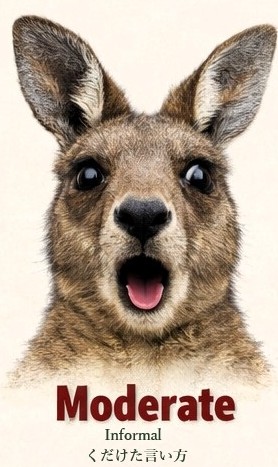
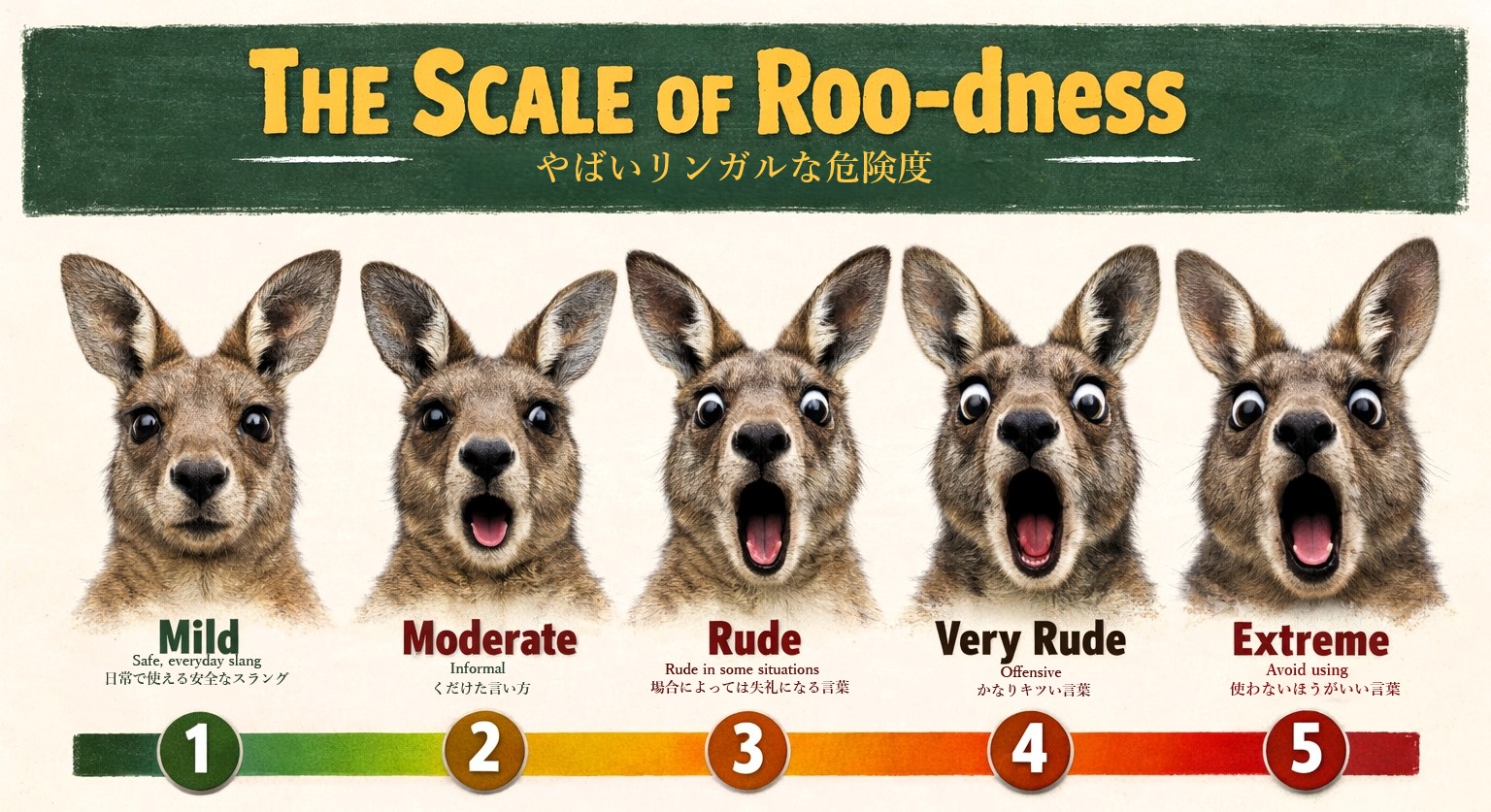
Scale of Roo-dness: 🦘🦘 Moderate
When Aussies Use It

Among friends, family, and even on daytime television — Australia’s ABC ran a comedy panel show literally titled Club Buggery in the 1990s, which is a fair sign of how tame the word is taken to be locally.

友人や家族の間で、さらには昼のテレビ番組でも普通に使われる。実際1990年代、オーストラリアの公共放送ABCは Club Buggery というタイトルのコメディ番組を放送していたほどで、いかにこの言葉が「軽い」ものとして扱われているかがよく分かる。

When NOT To Use It

Outside Australia (and New Zealand, the UK, and South Africa, where it’s similarly mild), the word’s literal legal meaning is often the only meaning people know, so it can land as far cruder or more shocking than intended. Avoid it in formal writing, with strangers overseas, or in any professional context outside Australasia.
オーストラリア(および同様に軽く使われるニュージーランド、イギリス、南アフリカ)以外では、この単語の本来の法律的な意味しか知らない人が多いため、意図した以上に下品・衝撃的に受け取られることがある。フォーマルな文章や、オーストラリア・ニュージーランド以外の見知らぬ相手、仕事上の場面では避けたほうがよい。

日本語での解説

“Buggery” は本来、法律用語として「男色行為」を意味する古い英語だが、オーストラリアでは日常会話の中でその意味がほとんど失われ、「どこか架空の遠い場所」や「消えろ」という軽い悪態として使われている。実在するビクトリア州の山「Mount Buggery」がその象徴で、地名にまで使われるほど「無害化」された言葉である。

Australia–Japan Connection

Japanese has its own set of words that sound shocking translated literally but land as mild in daily use — this gives Japanese learners a useful lesson: never translate Australian swearing word-for-word, because the emotional temperature almost never survives the trip across languages.

日本語にも、直訳すると衝撃的に聞こえるが実際は軽いニュアンスで使われる言葉がある。ここから学べる教訓は、オーストラリアの悪態表現を単語ごとに直訳してはいけないということだ、、、感情の「強さ」は、言語の壁を越えるとほとんど残らない。

Related Terms
考えRoo の考え

There’s a real mountain in Victoria called Mount Buggery. Somewhere, a 19th-century surveyor was having exactly the kind of day this word was invented for. ビクトリア州には実在する「Mount Buggery(バガリー山)」という山がある。19世紀のどこかの測量士が、まさにこの言葉が生まれるにふさわしい一日を過ごしたに違いない。
Cop A Gander At These Rippers Too...

  • Why Do Aussies Call Someone A “No Hoper”?

    「No Hoper」って、そんなにひどい意味? 「見込みがない」は人にも使う? Aussieには、少し耳が痛いこんな表現があります。 “He’s a no hoper.” 直訳すると「希望がない人」。 でも実際には、「成功する見込みがない人」や「どうしようもないヤツ」という意味で使われます。 試合でまったく勝てそうにないチーム、何をやってもうまくいかない人、努力する気がない人などを少し皮肉っぽく表現するときによく耳にするStrineです。 Word no hoper 発音 /ˌnəʊ ˈhəʊpə/ Meaning 見込みのない人。 将来性がない人。 何をやってもうまくいきそうにない人。 必ずしも能力が低いという意味ではなく、「本人にやる気がない」「期待できない」というニュアンスで使われることもあります。 Example Everyone reckons he’s a no hoper, but he keeps trying. 「みんな彼は見込みがないと言うけど、それでも挑戦し続けている。」 日本人ならどう言う? 日本語なら、 などが近いでしょう。 ただし no hoper は、人をレッテル貼りするような響きがあるため、あまり気持ちのいい言葉ではありません。 Aussie × Japan 面白いことに、Aussieは no hoper と呼ばれた人が大逆転する話も大好きです。 スポーツでも、ビジネスでも、「誰も期待していなかった人」が成功すると、みんなで応援します。 だから no hoper は、必ずしも一生そのままという意味ではありません。 Aussieは、人にニックネームを付けたり、少し皮肉を込めて呼んだりする文化があります。 でも、本当に面白いのは、そのあとです。 昨日まで no hoper と言われていた人が、翌日にはヒーローになっていることも珍しくありません。 だから、この言葉を聞いても落ち込む必要はありません。 Aussieは「逆転劇」が大好きなのです。 関連記事

  • Tucker/食事

    Tucker Australian English Food, a meal. A school canteen in Australia is called a “tuckshop,” and a crate in which food is stored is called a “tuckerbox.” Australia’s arguably most legendary dog was one that sat on a tuckerbox in a small town called Gundagai in the state of New South Wales. It has been the subject of numerous songs and there is a statue to commemorate it in the town. 日本語 食べ物。食事。オーストラリアの学校売店は、tuckshopと言い、食べ物を入れる箱のことはtuckerboxだ。また、オーストラリアでの最も伝説的な犬は、ニューサウスウェールズ州の小さな町であるガンダガイでtuckerboxの上に座った。同犬に関して数多くの歌が作詞されるなど、伝説的な存在となり、町の中には祈念彫刻もある。 Plain English Food, a meal. Strine Dictionary

  • Squatterはオージーの王室でしょうか?

    Is The Squattocracy Aussie Royalty? 法律を何十年も破り続けた結果、政府がついに諦めて、その人を大金持ちにしてしまった。それが、オーストラリアの「スクワッター」の物語だ。 Imagine breaking the law so thoroughly, for so long, that the government eventually gives up and makes you rich instead. That is, in short, the story of the Australian squatter. Meaning In the early 1800s, a squatter was a settler who occupied vast tracts of Crown land, often land that belonged to indigenous peoples long before European arrival. They had no legal title, simply stealing the land to graze sheep. By the 1840s, colonial authorities began issuing grazing licences to legitimise these claims. Some squatters became so wealthy and powerful they were nicknamed the “squattocracy,” a play on aristocracy. Today the word more commonly…

  • Feral: The Strine Superword That Puts A Bogan Basement Price On Any Exy Buy

    One word, four completely different insults or compliments depending on who’s using it and where they grew up. Welcome to one of the most shape-shifting words in Strine. 使う人や育った場所によって、まったく異なる意味の褒め言葉にも侮辱にもなる一つの単語。ようこそ、ストラインの中でも特に変幻自在な言葉の世界へ。 Meaning Feral has (at least) four Australian senses: 1) a New Age hippie or radical environmentalist, often with dreadlocks, living communally; 2) someone living outside a normal home environment, such as a street kid; 3) among teenagers, something disgusting or gross (“that’s so feral”); 4) a person behaving wildly or out of control. Feral には(少なくとも)4つの意味がある。①ニューエイジ系のヒッピー、または過激な環境保護活動家。ドレッドヘアで共同生活をしていることが多い。②家を出て路上などで暮らす若者。③ティーンエイジャーの間で「気持ち悪い」「最悪」を意味する言葉。④手に負えないほど乱暴・野生的に振る舞う人。 Example “The blockade was full of ferals living in tree camps.” / “Ugh, that smell is feral.” (封鎖現場には木の上のキャンプで暮らすferalたちが大勢いた。/うわ、あの匂い最悪。) 日本語での解説 “Feral” はラテン語で「野生動物」を意味する “fera” に由来する。オーストラリアでは1980〜90年代、森林伐採への抗議活動(フォレスト・ブロッケード)に参加していたパンク・ヒッピー系の若者たちを指す言葉として広まり、そこから「家出した若者」「乱暴」「気持ち悪い」といった意味にも拡大していった。文脈によって意味が大きく変わるため注意が必要な単語である。 Australia–Japan Connection Japan…

  • Why Do Aussies Say “Fair Enough”?

    なぜオージーは「Fair enough」と言うの? “Fair enough.” You’ll hear Australians say it dozens of times a day. Someone explains why they’re late. “Missed the train.” “Fair enough.” Someone says they’re too tired to go out. “Fair enough.” It isn’t enthusiastic agreement. It isn’t even saying the other person is right. It’s simply a friendly way of saying: “I understand.”“That seems reasonable.” Australians like avoiding unnecessary arguments. Rather than debating every little point, “fair enough” acknowledges the other person’s explanation and lets the conversation move on. Unlike the more Australian expression fair dinkum, which questions honesty or sincerity, fair enough simply accepts what has been said. Vocabulary ExpressionFair enough Pronunciation/feə(r) ɪˈnʌf/ MeaningI understand. That…