
bog words

  • Feral: The Strine Superword That Puts A Bogan Basement Price On Any Exy Buy

    One word, four completely different insults or compliments depending on who’s using it and where they grew up. Welcome to one of the most shape-shifting words in Strine. 使う人や育った場所によって、まったく異なる意味の褒め言葉にも侮辱にもなる一つの単語。ようこそ、ストラインの中でも特に変幻自在な言葉の世界へ。 Meaning Feral has (at least) four Australian senses: 1) a New Age hippie or radical environmentalist, often with dreadlocks, living communally; 2) someone living outside a normal home environment, such as a street kid; 3) among teenagers, something disgusting or gross (“that’s so feral”); 4) a person behaving wildly or out of control. Feral には(少なくとも)4つの意味がある。①ニューエイジ系のヒッピー、または過激な環境保護活動家。ドレッドヘアで共同生活をしていることが多い。②家を出て路上などで暮らす若者。③ティーンエイジャーの間で「気持ち悪い」「最悪」を意味する言葉。④手に負えないほど乱暴・野生的に振る舞う人。 Example “The blockade was full of ferals living in tree camps.” / “Ugh, that smell is feral.” (封鎖現場には木の上のキャンプで暮らすferalたちが大勢いた。/うわ、あの匂い最悪。) 日本語での解説 “Feral” はラテン語で「野生動物」を意味する “fera” に由来する。オーストラリアでは1980〜90年代、森林伐採への抗議活動(フォレスト・ブロッケード)に参加していたパンク・ヒッピー系の若者たちを指す言葉として広まり、そこから「家出した若者」「乱暴」「気持ち悪い」といった意味にも拡大していった。文脈によって意味が大きく変わるため注意が必要な単語である。 Australia–Japan Connection Japan…

  • ボーガン以前のボーガン

    ボーガンという現象は、突然ポンッと現れたわけじゃない。オーストラリアには昔から、 larrikin(いたずら好きの破天荒キャラ)、 ocker(ザ・オージーな粗野キャラ)、 そして各地に散らばる“ちょっとガサツなオーストラリア男性像”が存在していた。つまり、ボーガンはその長い系譜の最新バージョンみたいなもの。「ボーガン」という言葉が全国区になる前は、地域ごとに別の呼び名があった。 地域 以前の現象 Sydneyシドニー Westie Queenslandクイーンズランド Bevan Canberraキャンベラ Booner Hobartホバート Chigga Melbourneメルボルン Bogan やがて“ボーガン”がこれらのローカルな呼び名を飲み込み、全国共通の言葉として定着した。ここがポイントで、 ボーガンは単なる階級ラベルじゃない。もっと言えば、 「オーストラリア的な“ある種のセンス”を語るための言葉」になった。ファッション、趣味、ライフスタイル、価値観—— そういう“文化的な味付け”を説明するための便利な言葉として進化したわけだ。

  • The Bogan Before The Bogan

    The phenomenon didn’t appear from nowhere. Australia already had a long tradition of the larrikin, the ocker and various regional versions of the uncouth Australian male. Before “bogan” became dominant, different parts of Australia had their own labels: Region Earlier stereotype Sydneyシドニー Westie Queenslandクイーンズランド Bevan Canberraキャンベラ Booner Hobartホバート Chigga Melbourneメルボルン Bogan “Bogan” eventually swallowed many of these regional identities and became national. This is important because bogan isn’t simply a class label. It became a way of talking about a particular form of Australian taste.

  • ボーガン罵り言葉のパラドックス

    ボーガン語の中でも特に面白いのが、 オーストラリア人が“罵り言葉を社会的な句読点に変えてしまう”能力。 他の英語圏ならショッキングな単語が、 オーストラリアではこんなふうに使われる。 つまり、 罵り言葉が文法カテゴリーを全部制覇してしまう。もちろん、これはボーガンだけの特徴ではない。 オーストラリア全体の言語文化に根付いている。でも、「ボーガンのステレオタイプは、この“罵り言葉文化”を舞台演劇レベルまで誇張する。

  • ボーガン語という“金鉱脈”

    ボーガン文化は、 驚異的なレベルの言語的クリエイティビティを生み出す。実際に存在する(そして使われる)語彙だけでもこの量だ。 ここまで来ると、 「ボーガン」という語がどれだけ生産力の高い単語なのか」 がよく分かる。研究者たちは、 ボーガンという語は Australian English の中でも特に“派生語を作りやすい単語” だと指摘している。つまり、 オージーはボーガンに何でもくっつけて新語を作る。 そしてそれが文化になる。 ボーガン発音という“音声美学” そして忘れてはいけないのが、 ボーガン的発音(bogan pronunciation)。ステレオタイプでは、 オーストラリア英語の特徴をさらに誇張した形になる。 語尾の子音を落とす、 母音を広げる、 そしてお約束のスラングと罵り言葉。これらは単なる“乱暴な発音”ではなく、 文化的シグナルとして機能する音声スタイルになっている。 ボーガン語は、文化そのもの ここまで見てくると分かるように、 ボーガン語は単なる俗語ではなく、 オーストラリア文化の創造力が爆発する領域だ。語形成、発音、ユーモア、階級、アイデンティティ。すべてがすべてが混ざり合って、 ボーガン語は“国民的言語遊び”のような存在になっている。

  • Bog Words And The Goldmine Of Bogan Language

    Bogan culture generates an astonishing amount of linguistic creativity. The fact that Australians can keep attaching suffixes to bogan is itself linguistically interesting. Researchers describe the word as unusually productive in Australian English. And then there is bogan pronunciation. The stereotype exaggerates features of Australian English: fishing → fishin’going → goin’mate → maaate The dropping of final consonants, broad vowels, swearing and exaggerated informality become part of the performance of bogan identity.

  • The “Bento Bogan”:日本に出現した新種のオージー

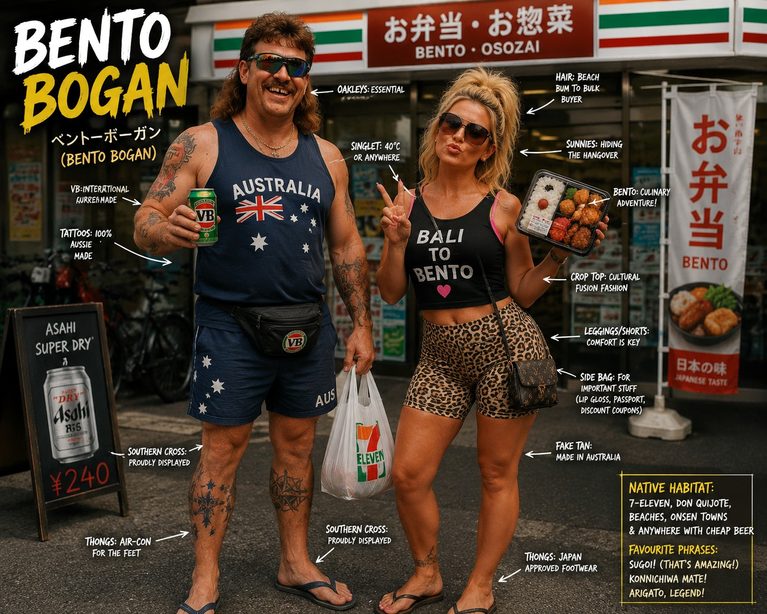
    日本のインバウンドブームが続く中で、 オーストラリア人観光客の“新しいステレオタイプ”が誕生している。オーストラリアの一部では、これを冗談めかして “日本のボーガン化(boganisation of Japan)” と呼び始めている。 背景は本物だ。 これらが重なり、 オージーの日本旅行が過去最高レベルに増加。2025年の報告では、 2024年1〜9月のオーストラリア人訪日客は 637,300人。 これは2019年の記録的期間と比べて 42%増。 そんな中で、オージーの間で冗談として語られ始めた新キャラがある。 The Bento Bogan(ベントー・ボーガン)とは? これは、 “バリでのオージー文化パッケージ”をそのまま日本に持ち込んだ人 を指す軽いジョーク。その文化パッケージとは: これらを全部抱えたまま、 コンビニの唐揚げ棒と駅弁を手に日本を闊歩するオージー像。もちろん、これはあくまで ユーモアとしてのステレオタイプ。でも、 日本の礼儀正しさとオージーの“気楽さ”がぶつかると、 こういう文化的ミックスが自然に生まれるのが面白い。 なぜ“Bento Bogan”が生まれたのか? 理由はシンプル。 これらが重なり、 “日本で自由に楽しむオージー”という新しい文化像が形成された。それが冗談として Bento Bogan と呼ばれているわけだ。 文化的には何が面白い? Bento Bogan は、 オーストラリアのボーガン文化が海外でどう変形するか を観察できる絶好のケース。 これらが日本という全く異なる文化環境で 新しいキャラクターとして再構成される。文化の輸出と変形の好例。

  • The “Bento Bogan”

    Australia’s tourism boom in Japan has produced a new stereotype of the Australian tourist in Japan. Some Australian commentary has started jokingly referring to this phenomenon as the boganisation of Japan. The background is real: Australian arrivals to Japan surged after the pandemic, helped by Australia’s proximity to Japan, favourable exchange rates and Japan’s enormous appeal as a destination. One 2025 report noted that Australian visitors to Japan reached 637,300 between January and September 2024, up 42% on the equivalent record period in 2019. And some Australians have begun joking about a new breed: The Bento Bogan A person who has somehow transported from Bali to Japan the cultural package…

  • Where Did “Bogan” Come From?

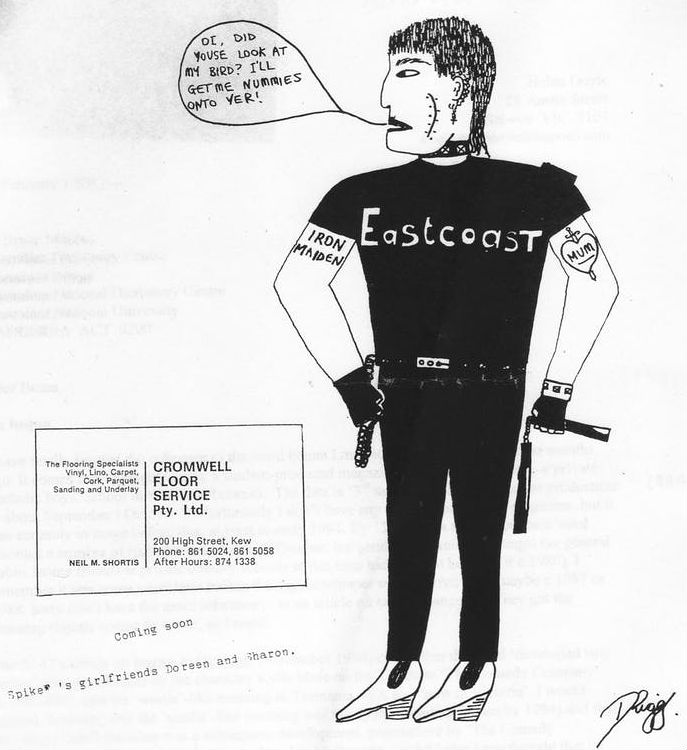
    This is where things get wonderfully murky. The popular theories include: The evidence currently points most strongly toward Melbourne in the early 1980s, although the ultimate etymology remains uncertain. Historian and linguist Bruce Moore found evidence from 1984, in a student magazine at Melbourne’s Xavier College, describing a fictional “bogan doll”. The character already possessed many of the stereotypes we would recognise today: tattoos, long hair, heavy-metal clothing, sleeveless denim, etc. The word then appears in a 1985 issue of Tracks magazine. By the late 1980s it was spreading nationally. By the early 1990s, it was essentially established Australian slang. The really funny part The word may have been popularised…