ボーガン以前のボーガン

ボーガンという現象は、突然ポンッと現れたわけじゃない。オーストラリアには昔から、 larrikin(いたずら好きの破天荒キャラ)、 ocker(ザ・オージーな粗野キャラ)、 そして各地に散らばる“ちょっとガサツなオーストラリア男性像”が存在していた。つまり、ボーガンはその長い系譜の最新バージョンみたいなもの。「ボーガン」という言葉が全国区になる前は、地域ごとに別の呼び名があった。

地域以前の現象
Sydney
シドニー
Westie
Queensland
クイーンズランド
Bevan
Canberra
キャンベラ
Booner
Hobart
ホバート
Chigga
Melbourne
メルボルン
Bogan

やがて“ボーガン”がこれらのローカルな呼び名を飲み込み、全国共通の言葉として定着した。ここがポイントで、 ボーガンは単なる階級ラベルじゃない。もっと言えば、 「オーストラリア的な“ある種のセンス”を語るための言葉」になった。ファッション、趣味、ライフスタイル、価値観—— そういう“文化的な味付け”を説明するための便利な言葉として進化したわけだ。

Cop A Gander At These Rippers Too...

  • |

    やばいリンガル:Westie

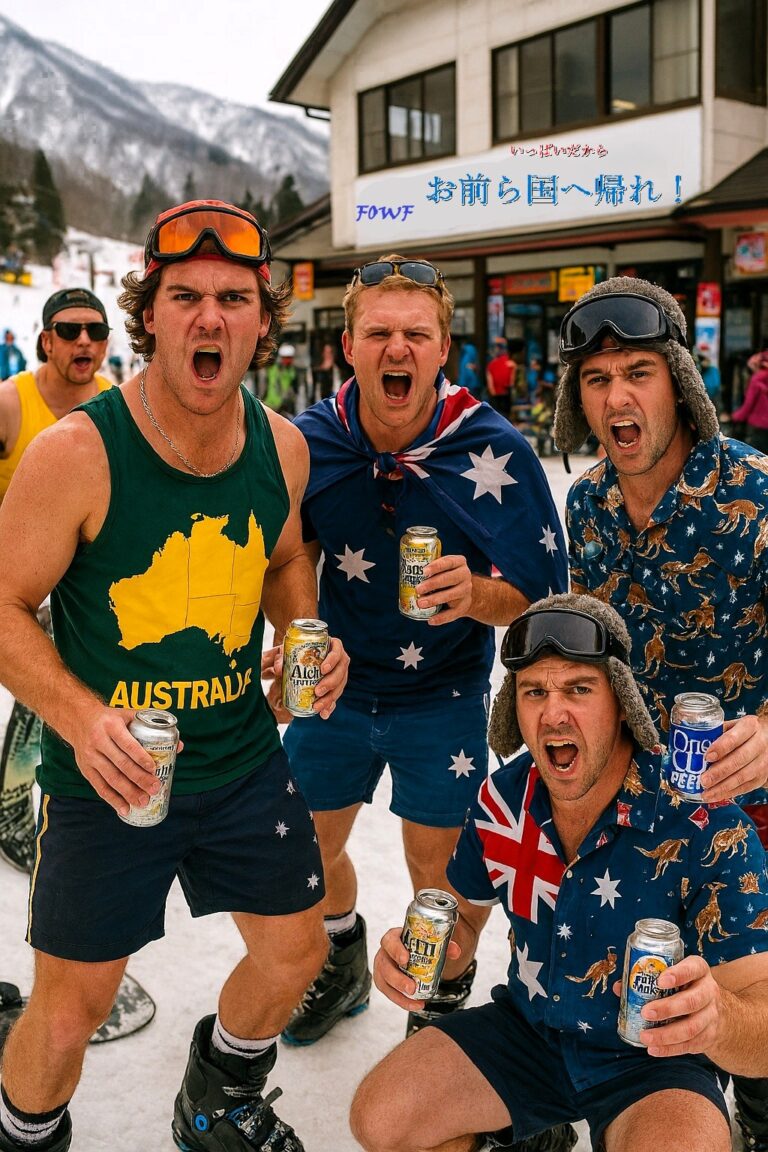
    A westie, at least the version in Strine, is a bogan from the western suburbs of Sydney. A bogan, of course, is a person whose speech, mannerisms, appearance, clothing, behaviour, or attitudes are considered unrefined or unsophisticated. Bogans are often symbolized by a flannie and a mullet. 「Westy」とは、少なくともストライン(オーストラリア英語)における定義では、シドニー西部の郊外出身の「bogan」を指す。言うまでもなく、「bogan」とは、話し方、仕草、外見、服装、振る舞い、あるいは態度が、洗練されていない、あるいは野暮ったいと見なされる人のことだ。ボーガンは、しばしばフランネルシャツとマレットヘアで象徴される。 There are numerous types of bogans, including the snow bogans who swarm to Japan on bogan missiles. And New Zealand English, which is like an emerging version of Strine, also has westies, these being from the western suburbs of Auckland. The Japanese equivalent to the bogan or westie is the yankii. 「Bogan missile」に乗って来日に蔓延している「snow bogans」を含めて、ボーガンには様々なタイプが存在する。また、ストラインの派生版とも言えるニュージーランド英語にも「westy」という言葉があり、こちらはオークランドの西郊外出身者を指す。ボーガンやウェスティに相当する日本の言葉は「ヤンキー」である。

  • Bogan Pride

    Bogan pride is probably the most important cultural development of the bogan culture. Calling someone a bogan used to be essentially saying: “You’re beneath me.” Increasingly, people started saying: “Yep. I’m a bogan. Got a problem with that?” That is classic cultural reclamation. The same process has happened with many supposedly derogatory identities around the world. But Australian bogan pride has a particularly Australian flavour because it overlaps with: Roslyn Rowen’s research specifically links the positive reappropriation of “bogan” with Australian nationalism and the Australian tendency to celebrate the “ordinary” person.

  • |

    Back To The Basics To Take The Strain Out Of Strine

    Kangaeroo.com originally started as a bit of a joke site focused on Strine–the word to describe Australian English that is a play on the word “Australian” as pronounced in a broad Aussie accent. In the earliest years of the site, language played a central role in content. I created categories like やばいリンガル, which was loosely for words that were a little bit on the naughtier side, or yabai, in both English and Japanese. Then we had 豪cabulary that honed in on individual words that are distinctly Australian with the category being a portmanteau of go (豪), the kanji abbreviation used in Japanese for the now virtually archaic name for Australia…

  • |

    Own Your Own Japanese Castle for $100,000

    Aussies can buy an (almost) authentic Japanese castle for only about $100,000, it has been revealed recently on social media. Century21 Japan is selling the 6-story castle (with a restaurant on the second floor) in Akabira, Hokkaido, at a price unimaginable to potential home buyers Down Under. Of course, at that price, there’s bound to be a few catches, but perhaps not as many as some may think, especially considering it comes with a huge garden (over 5,000 m2), a working elevator, restaurant, more than 40 parking spaces and connection to sewage and water mains. Located in Hokkaido, Japan’s northernmost island and home to the cashed-up bogan paradise of Niseko,…

  • |

    Music As A Bogan Cultural Element

    Bogan culture has an extremely strong musical component. The canonical soundtrack includes: And here we encounter another great paradox. Some music associated with bogan culture is highly sophisticated musically and enormously influential internationally. AC/DC, for example, isn’t culturally insignificant because bogans love them. Quite the opposite. The music becomes part of a national mythology. Triple J even held a National Bogan Day in 2002, celebrating the stereotype with music including Cold Chisel, Midnight Oil, Rose Tattoo and AC/DC. So “bogan music” isn’t necessarily bad music. It is music that has become culturally associated with unpretentious Australian masculinity and working-class authenticity.

  • | | |

    Why Did Australians Fall in Love with Niseko?

    なぜオーストラリア人はニセコに魅了されたのか? For many Australians today, Niseko is synonymous with powder snow, winter holidays and a taste of Japan. Yet few realise that Australians played a significant role in introducing this once-quiet corner of Hokkaido to the wider world. The story of Australians and Niseko is not simply about skiing. It is a story of curiosity, cultural exchange and the growing friendship between Australia and Japan. 今日、多くのオーストラリア人にとってニセコは、極上のパウダースノーと冬の休暇を象徴する場所です。しかし、この北海道の静かな地域を世界に知らしめる上で、オーストラリア人が重要な役割を果たしたことはあまり知られていません。 オーストラリア人とニセコの物語は、単なるスキーの話ではありません。好奇心、文化交流、そして日豪の友情の深まりを物語るストーリーです。 A Mountain Hidden in Plain Sight Long before Niseko became an international ski destination, it was primarily known to Japanese skiers. Blessed with abundant snowfall thanks to weather systems crossing the Sea of Japan, the region offered conditions unlike almost anywhere else on…