洗濯物が干せる豪州象徴

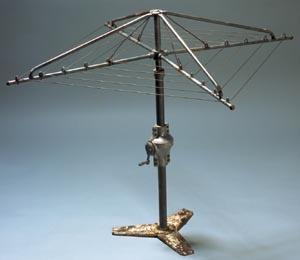
オーストラリアの象徴と言えばカンガルー、コアラ、シドニー・オペラ・ハウス、グレート・バリアー・リーフ、洗濯物が干し台のヒルズ・ホイストなどたくさんある。あら、ちょっと待って!カンガルーなどが分かるが、選択物干し台?いったい何なんだろう?まさか国の象徴じゃないだろう?

Hills Hoist
いや。最初の言ったとおりだよ。ヒルズ・ホイストという選択物干し台が間違いなくオーストラリア国内では国が象徴する物の一つである。日本でのヒルズ族と一味違うヒルズなんだけどね、、、
 ヒルズ・ホイストは19世紀末アデレード近くに発明し、も早オーストラリア・ニュージーランド全国に広がり、今も欧米ではよく見られる。何千万台を売れたらしい。特徴はたくさんある。まずは、高さが調整できる。そして、回転式なので、数が吹くとぐるぐる回り洗濯物が早く乾く。最新モデルは解体可能式であり、使う必要な時意外設置しないでスペースも使わないで済む。おまけ、(親が見ていない間だけど)子供たちの遊び道具にもなることが多い。土地の広いオーストラリア郊外の家のバックヤードに必ずと言っていいほどある。そのため、現代オーストラリアの象徴の一つでもある。
 日本でも販売しているようで、販売元のビデオをぜひ一度見てみたらもっと分かりやすいかもしれない。

Cop A Gander At These Rippers Too...

  • Dob/告げ口

    dob Australian English To tell on someone, to tattletale. It is most commonly used among children. A “dobber” is somebody who “dobs,” or tells tales. 日本語 告げ口をいう。密告する。主に子供たちに間に使われているが、大人が使っても違和感をそれほど感じない。Dobをする人は、Dobberと呼ばれる。 Plain English 1) Tell-tale. 2) Snitch. 3) Tell on. Strine Dictionary

  • |

    Oops! Austrian textbook error sparks online calls for Japanese to boycott Aussie Beef

    Japan’s feisty online community briefly urged a boycott of Aussie Beef — arguably Australia’s best-known export to Japan — after an Austrian school textbook referred to the Sea of Japan as the “East Sea,” a Korean label aimed at helping it forget its past as a Japanese colony, according to a June 28 report from online Japanese news site J-Cast. Australia, which uses Sea of Japan in its school materials and official documents, had nothing to do with the textbook. Among the comments posted online were “That Australian mob are simple and will fall for anything,” “Why’s Australia calling it the East Sea if it’s not to their east?” and…

  • ウルルを登れなくなる

     オーストラリアの象徴のひとつでもあるウルル(昔はエアーズロックと呼ばれている一枚岩)を岩登りが出来なくなる。  ウルルは、オーストラリアの先住民にとって聖地であり、岩登りが観光活動の一つとなったことはウルルの所有権者であるアナング族にとって昔からの痛みでもあった。  アナング族は、多くの観光客がウルルを尊敬しないで、聖地でありながら汚しているため、所有権が返還された1980年代から岩登りを禁止しようとしていた。  今月、「ディズニーランドじゃないよ」と言いながら、アナング族がやっと岩登りを禁止することを宣言した。  禁止命令が執行するのは2年後となる。 Why we are banning tourists from climbing Uluru ウルルの英語版ウィキペディア(日本語版のページが間違っている情報を掲載している) Uluru climbing ban: A history of disrespect atop the rock

  • | |

    (Costumed) Kangaroo Stars In The “Worst Sports Movie Ever Made”

    Matilda has been described online as “the worst sports movie ever made.” Kindly, as it turns out.Matilda was a dreadful, alleged comedy about a boxing kangaroo that challenges for the world heavyweight champion title.The movie was made in 1978, when Muhammad Ali was probably at his most widely popular (and the reigning world champion), and starred Elliot Gould, who was then still not too far off the peak of a career that continues going strong today.Co-starring was another A-lister, Robert Mitchum, so it’s hard to argue that the cast and circumstances surrounding the movie didn’t pack a punch.Unfortunately, the kangaroo featured in the film was clearly a bloke in a…

  • | |

    Japan’s Mobs Of Macropod Motifs Missing Marsupials In Masterpieces

    Something strikes me about kangaroos in Japan, where companies like Seino and Nikko Kanko have made the marsupials highly visible. Kangaroos are possibly even higher profile than their native Australia, where Qantas uses the national symbol in its logo, but the macropod is a somewhat uncommon sight elsewhere in the corporate sector. I wouldn’t go so far as to say kangaroos are a ubiquitous presence in the Japanese retail or corporate sector, but it would be no exaggeration to claim they are a daily presence. Far more so, actually, than they are in Australia. That got me to thinking about the presence of kangaroos in the Japanese art world, which…