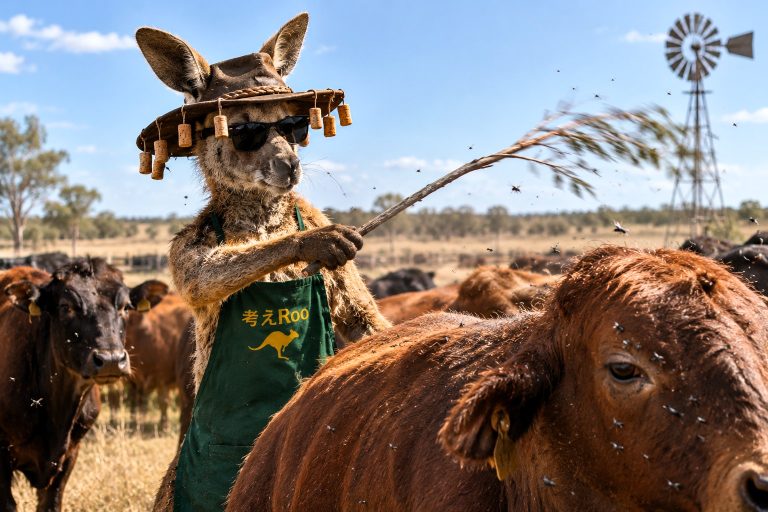
Shear Fluke! A Rare Aussie Cultural Hit in Japan
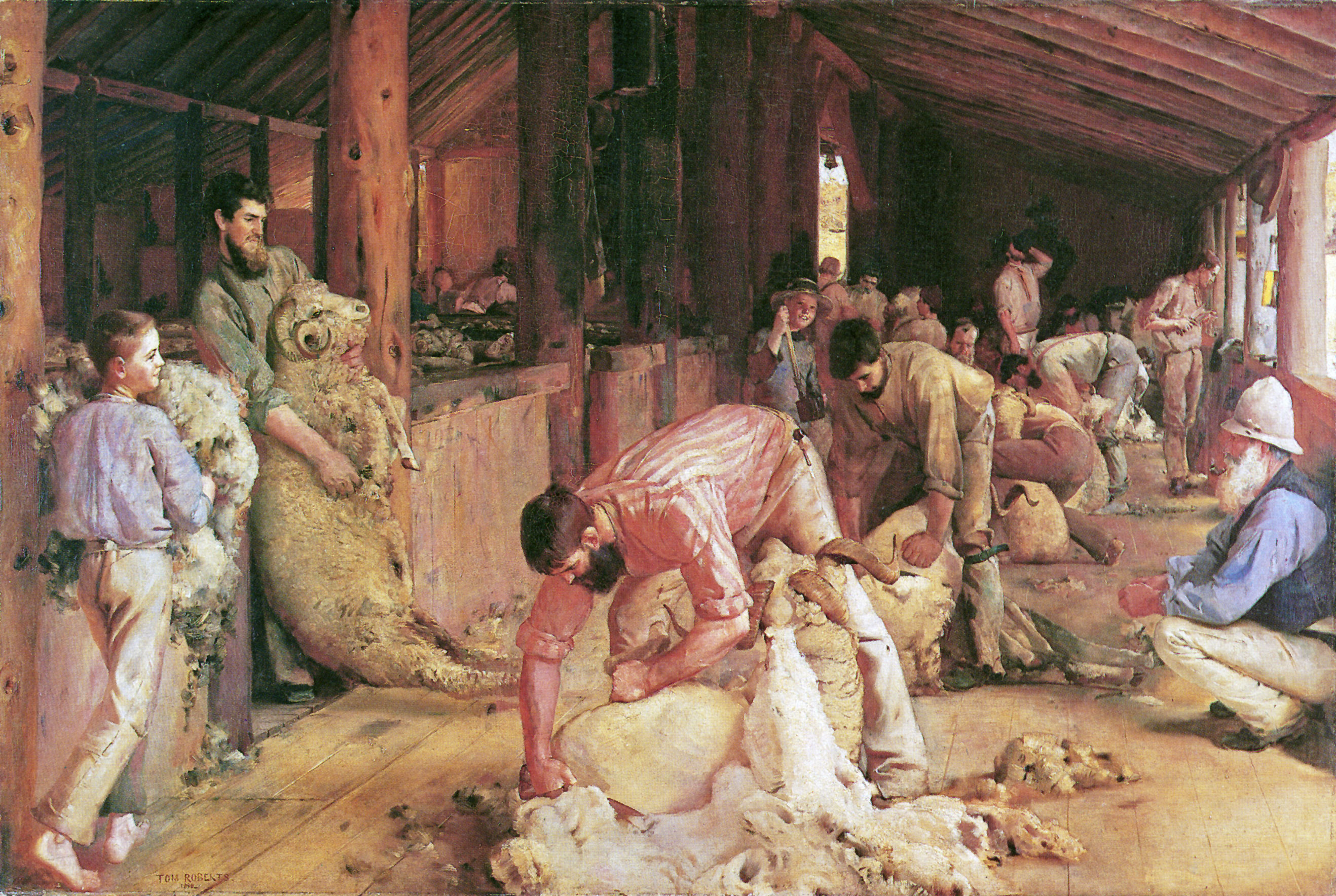
“Shearing of the Rams” is an iconic Australian painting by Tom Roberts
Australia’s impact on Japanese society is visible in numerous areas, but in the cultural sphere, Australian influence has been negligible at best.
オーストラリアは日本社会に対してあらゆる分野で与えた影響が見えるが、文化の面ではオーストラリアのインパクトがほぼないといって良いところだ。
Apart from a literal honeymoon period in the early 1990s when cashed-up newlyweds made Down Under their favored destination, the odd hit movie during the Australian New Wave cinema of the 1970s and 1980s, notably the Mad Max and Crocodile Dundee series, and the even rarer hit song — by artists most Japanese normally regarded as coming from the United States, anyway — Aussie cultural influence has largely been limited to sporadic moments of faddishness.
バブル経済効果がまだ残っていた1990年代前半で「ハネームーン・ブーム」によってオーストラリアがハワイを抜いて新婚旅行地1位となり、マッド・マックスクロコダイル・ダンディなどのオーストラリア・ニュー・ウェーヴ映画やためにアメリカ人と見なされた歌手がヒット曲を出した時に除けば、オーストラリアが日本に対して文化的な影響が一時的な流行以外はない。
It’s fair to say that Australia has hardly been, well, Big in Japan.
オーストラリアは「ビッグ・イン・ジャパン」と決して言えない。
There is one major exception, though, and it may come as a surprise to some.
しかし、重大な例外がひとつある。それも、驚かす人もいるかもしれない。
From at least the late 1960s through to the mid-1980s and possibly even on to today in some areas, Japanese primary school children across the country learned how to belt out a song called Choshi wo Soroete Kurikku Kurikku Kurikku, which English-speakers will know as Click Go the Shears.
1960年代後半から少なくとも1980年代半ば頃かもしかして今でも、「調子をそろえてクリック、クリック、クリック」という曲を日本各地の小学生が学び、歌った。オージーはこの曲が「Click Go the Shears」として知っている。

* Sung here by Hitomi Ishikawa/ここで歌えるのは石川ひとみ
Peggy Hayama, a Japanese jazz singer active from the late 1940s onward (through to today as she nears 80!) is entirely responsible for this development. Hayama traveled to Australia in 1961, during which time she learned Click Go the Shears and Waltzing Matilda, then brought both back to Japan, composed lyrics for both traditional Australian folk songs and scored a hit with the former, which was soon adopted by lessons at primary schools across Japan.
As shown below, Hayama’s lyrics translate into roughly the same meaning as the original song’s tale of a veteran shearer putting in a hard day’s work and then going out and getting sozzled, although numerous verses have been cut from the original.
この展開は、日本人ジャズ歌手であり、1940年代以降活躍する(今でも78歳で現役)ペギー葉山さんによって行われた。葉山は1961年にオーストラリアに訪問し、オーストラリア民謡である「調子をそろえてクリック、クリック、クリック」と「ワルツイング・マチルダ」を知り、帰国したら両曲を日本語の替え歌にし、前方ではちょっとしたヒットとなった。その後、日本の小学校でよく使われるようになった。下記のように、葉山さんの歌詞が大体元の曲と一致し、結局一日中羊の毛を刈った人が夜になったら飲むという物語を上手く伝わっている。
Ironically, Hayama’s hit was reclaimed by the Taylor Sisters, a duo best known for working as a support act for “Australia’s Elvis,” Johnny O’Keefe on his 1960s TV show, Sing, Sing, Sing. The Taylor Sisters recorded Choshi wo Soroete Kurikku Kurikku Kurikku and released the Japanese version of Click Go the Shears in Australia, but met with little success (though it’s unlikely their almost unintelligble Japanese was the reason for this.)
 皮肉的に、葉山のヒットがオーストラリアに逆輸入することになったが、歌ったのはテイラー・シスターズだった。テイラー・シスター
ズの最も有名となった理由が豪州版プレスリーと呼ばれたジョニー・オキーフのテレビ番組での助演だった。テイラー・シスターズが日本語版の「調子をそろえてクリック、クリック、クリック」を発表したが、ヒットしなかった(彼女たちの日本語が分かりづらいが恐らくそれがオーストラリアでコケタ理由に貢献しなかったと思う!)

調子をそろえてクリック・クリック・クリック/
Choshi wo Soroete Kurikku Kurikku Kurikku/
Click Go the Shears (Japanese)

Kyo mo asa kara ichi nichi ju, Hasami no oto mo karuyaka ni, hitsuji karu sono shigotoba ni, Yama nasu shiroi sono makige
今日も朝から一日中、鋏の音も軽やかに羊刈るその仕事場に 山なす白いその巻毛。
I’ll be working all day today, clipping away skillfully with the shears on the sheep in my workplace and forming a pile of wool.

Choshi soroete click, click, click. Hasami no oto mo karuyaka ni. Jiman no sono te de azayaka ni. Sora tachi machi hitsuji wa maruhadaka
調子をそろえてクリック・クリック・クリック、鋏の音も 軽やかに、自慢のその手で あざやかに、ソラ、たちまち羊は 丸はだか。
Get everything in order, click, click, click. The light clicking of the shears. Those skills I’m so proud of will be on display. And that sheep’ll be bare in an instant.

Jiman janai ga kono hasami, Wakaimono ni wa makesenu, Kore to niranda hitsuji nara, Mura ichiban no sono ude de.
自慢じゃないがこの鋏 若いものには負けはせぬ、これとにらんだ羊なら 村一番のその腕で。
I’m not bragging, but with these shears I won’t lose to any of those young’uns. Give me that sheep I’m staring at and I’ll show you why I’m the best shearer in town.

Choshi soroete click, click, click. Hasami no oto mo kurayaka ni. Jiman no sono te de azayaka ni. Sora tachi machi hitsuji wa maruhadaka
調子をそろえてクリック・クリック・クリック、鋏の音も 軽やかに、自慢のその手で あざやかに、ソラ、たちまち羊は 丸はだか。
Get everything in order, click, click, click. The light clicking of the shears. Those skills I’m so proud of will be on display. And that sheep’ll be bare in an instant.

Ichi nichi no shigoto wo oete bokujo wo ato ni machiruda kata ni, Iku wa najimi no izakaya ka, koyoi tomoni hai wo
一日の仕事を終えて 牧場を後にマチルダ肩に、行くはなじみの居酒屋か いざ今宵ともに盃を。
Work’s over now and I leave the farm behind, slinging my matilda over my shoulder and heading into my favorite pub, where I’ll spend the night in my cups.

The Full Original English Lyrics for Click Go the Shears

Cop A Gander At These Rippers Too...

  • Lucky Country, the

    lucky country, the Australian English Australia. The term was coined by historian Donald Horne in irony. He argued that Australia was lucky as it became a rich land only because of its natural resources instead of the cleverness or effort shown by other nations. Instead of being shocked by the term, Australians adopted “the Lucky Country” to use as a favorable synonym to describe their land. 日本語 オーストラリアのこと、ラッキーな国。もともと歴史学者ドナルド・ホーン氏が1964年に「ラッキーな国」を皮肉たっぷりに使った表現だ。同氏は、オーストラリアがほかの先進国と違って、知恵や努力で発展したではなく、資源豊富さだけで豊かとなって、とても「ラッキーな国だ」と言った。しかし、多くのオーストラリア人がホーンの本来の意味を無視、今一般に自国名をいい風に表現できる同義語として使うようになった。 Plain English Australia. Strine Dictionary

  • | |

    感激!同性婚保安可決に豪国会内「合唱団」が豪州人統一感の歌を

    オーストラリアが長年の対立の末、12月7日にようやく同性結婚を合法化し、法案が可決した瞬間国会傍聴席で「皆同じオーストラリア人」という歌を歌い出し、国会議員も一緒に歌ったという感激なハプニングが起こった。  オーストラリアに同棲が多く、同棲の政治力が強いが同性婚反対である保守派が長い間権力を握った。  青年でカトリック神学校の信心深い生徒だった2013年~2015年の間総理大臣だったトニー・アボット氏が同性婚を強く対抗し、認める措置を全面的に却下したが、現首相マルコム・ターンブル氏が同性婚支持者で知られた。  ターンブル氏が与党である(補修派の)自由党内や宗教団体などの反対に対して先月国民投票の実施まで導いた。歴史的に成功率が極めて低かった国民投票では有権者の6割以上の人が同性婚に賛成した。  その結果をもって、ターンブル氏が国会に同性婚認可法案を提出した。国会下院・上院でも圧倒的に指示された。結局、反対したのはわずか4議員。  議席内の同性婚が圧倒的に指示されているにもかかわらず、アボット元総理をはじめ数人の議員が棄権した。豪国会では、法案が圧倒的に支持されている場合、表を数える必要がなく、同性婚についての投票がそのケースだった。  法案が可決し採択されたら、同性婚が合法化された瞬間傍聴席から「我々がオーストラリア人」という曲が一斉歌えるようになった。一緒になった議員もいた。  その曲が元々1960年代日本でもヒットした「ザ・シーカーズ」が作曲し、「非公式な国歌」と見る人が多い。同曲の歌詞は、オーストラリアの歴史の歴史をちなみ、色々な違いがあっても皆が同じオーストラリア人であることを強調し、対等性や平等や統一感を訴える曲であり、オーストラリア人の間に広く愛されている。 Australian parliament breaks into song after passing same-sex marriage law

  • | |

    Did Japan Inspire Australia to Choose National Living Treasures?

    日本の「人間国宝」はオーストラリアの「リビング・トレジャーズ」に影響を与えたのか? Australia’s National Living Treasures celebrate remarkable Australians. Japan’s Living National Treasures protect traditional masters. The two honours are different—but they may be connected by an idea that travelled across the Pacific. オーストラリアの「ナショナル・リビング・トレジャーズ」は優れた人物をたたえる制度です。一方、日本の「人間国宝」は伝統技術の継承者を守る制度です。両者は異なりますが、その背景には海を越えて受け継がれた一つの考え方がありました。 Japan Had the Idea First 最初に制度を作ったのは日本 After the Second World War, Japan faced an urgent question. How could traditional arts survive in a rapidly modernising society? The answer was to recognise exceptional craftspeople and performers as Living National Treasures, helping preserve skills that might otherwise disappear. 最初に制度を作ったのは日本 戦後の日本は、急速な近代化の中で伝統文化をどう守るかという課題に直面しました。 そこで生まれたのが「人間国宝」の制度です。 卓越した技術を持つ職人や芸能家を顕彰し、その技を未来へ伝える仕組みとなりました。 Australia Took a Different Path オーストラリアは独自の形へ When Australia’s National Trust introduced its National Living Treasures in 1997, the goal was different. Instead of recognising only traditional artists,…

  • It Would be Roo-d Not to Include…

    Having looked at the emu, one of the stars of the Australian coat of arms in our previous post, it would be rude not to look at the other half of the emblem, the kangaroo. Roos are also the national animal of Australia. And here’s a gallery of greys to help make your day. (Of course, we shouldn’t forget that kangaroos are also the inspiration for this site, kangaeroo, the thinking kangaroo.

  • |

    Oz Act Pretty Bleak Turns Summer Supersonic

    There’s nothing ironic about the fact that one of Japan’s top music festivals is being brightened by Pretty Bleak. 今年25周年を迎える「SUMMER SONIC 2026」には、オーストラリア勢も登場します。 Aug. 14-Aug. 20, 2026 THIS WEEKEND! SUMMER SONIC 2026: AUSTRALIA GOES SONIC サマーソニック2026:オーストラリア勢が登場! Summer Sonic turns 25 this year, and the three-day festival has a distinctly Australian flavour. Two Australian acts are on the bill: Melbourne indie-rockers PRETTY BLEAK perform in Tokyo on Saturday, 15 August, while Sydney-based R&B singer BOY SODA takes the stage in Tokyo on Sunday, 16 August. BOY SODA is also scheduled for the Osaka festival on Friday, 14 August. PRETTY BLEAK are part of the Saturday lineup at the Sonic Stage, alongside Steve…

  • Bringing a Western Beat to Japan

    For some reason, Japanese artists covering Western songs has also held something of a fascination for me. I’m not really attuned to hit charts, nor really have been. And music isn’t one of my great loves, though I have an appreciation for pretty much any type of tune. Perhaps my liking for the out-of-the-ordinary stems from the Aussie DNA, which seems to have a likeness for the novelty song, with national and international No. 1 hits during my lifetime Down Under including the likes of I’ve Been Everywhere, A Pub with No Beer, A Redback on the Toilet Seat, Tie Me Kangaroo Down, Sport, Rak Off Normie, The Newcastle Song,…