Kangaroos Have a Proud History Adorning Japanese Marushi Bicycles
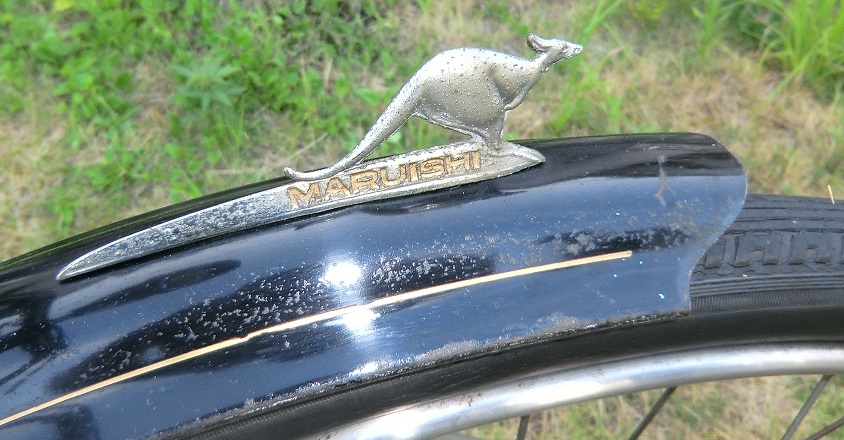
Maruishi mudguard kangaroo ornament
Maruishi Cycle Ltd. is a prestigious bicycle manufacturer perhaps best-known today for its vintage models that until late in the 20th century also included penny farthings. Maruishi continues to make fine touring bikes in Japan. The company’s history dates back to 1894, though it has been Chinese-owned since 2006.
Of greatest interest for Kangaeroo readers, though, is that Maruishi’s symbol throughout its history has been a kangaroo!
Why Maruishi chose a kangaroo remains a mystery, though its cycles are renowned for their luggage-bearing capability, which probably goes some way toward providing an explanation.
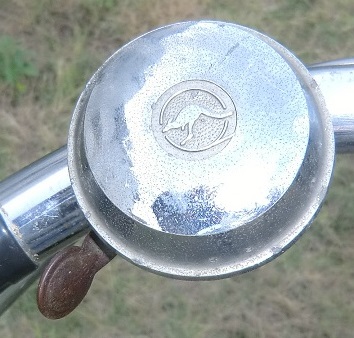
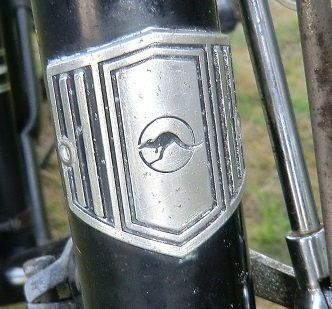
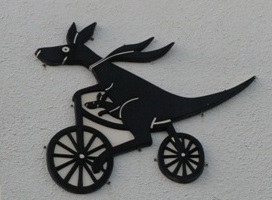
Although current Maruishi kangaroo displays appear largely limited to bicycle decals and store signage, marsupial images once adorned mudguards in the form of ornaments, frame plates, cranks and bells.
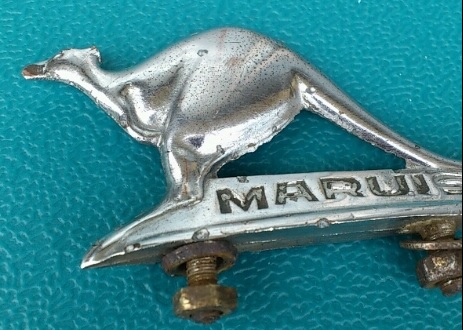
Maruishi kangaroo mudguard ornament

Maruishi kangaroo bell

Maruishi kangaroo plate

Official Maruishi logo

Marushi store signage

Cop A Gander At These Rippers Too...

  • A Kangaroo Saves The World!

    A kangaroo in a space suit saves the world in the most amazing Chinese movie, which I have just learned about. King Kong Roo is one of the heroes in Moon Man, the delightfully hilarious 2022 movie about Yue, a guy stranded on the moon with humanity apparently obliterated by an asteroid shower slamming into the planet. King Kong Roo is a kangaroo that had been left in a moon base research lab. He forms an unlikely friendship with Yue and they strive to return to the earth. The kangaroo ends up a hero, reverred around the world. The film is an adaptation of South Korean illustrator Cho Seok’s webcomic…

  • |

    How A Kangaroo Helped Japanese Game Shows Get Charitable

    Tokyo Broadcasting System ran the very successful TBS Kangaroo Fund from 1976 to 2010, first to help children orphaned by traffic accidents, people with disabilities and the elderly before moving to help other social causes. TBS never publicly explained its choice of a kangaroo to symbolize the fund, but the marsupial infers a friendly, protective image with its pouch equating to encompassing care, which signalled that donations would carry and protect vulnerable children The TBS Kangaroo Fund collected viewer donations and corporate gifts and channelled grants to vetted charities and disaster relief. TBS used on-air drives, dedicated donation numbers and tie-ins such as using cash for quiz and game shows…

  • |

    Putting The Limp Into Olympics

    Japan did the most amazing job of hosting the Olympic Games under the mostr trying of circumstances, and I would argue there probably isn’t a country on earth that could have done it nearly as well. But the big question is: Why? We held the Games behind closed doors. Only the most privileged of guests were able to see the athletes do their thing, and I’m sure the quarantining rules were broken for many. Personally, I got to see almost nothing. I saw none of the downtown Tokyo events, but did get to perform an errand near Horse Park, where the equestrian events were held. The park was surrounded by…

  • | | |

    How Did A 19th Century Kangaroo Spark Japan-Australia Ties That Now Seem A Perfect Match?

    カンガルーが火をつけた日豪交流 ― まさに“マッチ”した関係の始まり? Long before Australia became one of Japan’s closest partners, Japanese manufacturers had been using kangaroos to promote their products. The earliest documented reference to the commercial use of a kangaroo in Japan came from 1884, when a misemono traveling curiosity show advertised that it would feature a fukuro nezumi, literally a pouch mouse, at the Tenmangu Shrine grounds in Osaka. オーストラリアが日本の最も親しいパートナーの一つとなるはるか以前、日本のメーカーはすでにカンガルーを商品の宣伝に活用していました。 現在確認されている日本におけるカンガルーの最初期の商業利用は、1884年に大阪・天満宮境内で開かれた見世物興行の広告です。そこには、カンガルーが「袋鼠(ふくろねずみ)」として紹介されていました。 A Kangaroo on a Matchbox マッチラベルに描かれたカンガルー Japan first enacted a trademark registration system in June 1885, and Kobe-based match manufacturer Seisuisha registered its first trademark on Oct. 11 of that year. It was a matchbox featuring a lion. The lion was part of a series…

  • | | | |

    Kangaroo Cooking…Roo Meat: It’s Tasty if Ya Cook It!

    Japanese have been legally eating kangaroo for longer than most Australians. Kangaroo meat was imported to Japan and being served in Tokyo restaurants from 1988, five years before meat from the national symbol was legalized for consumption by Australians in all states other than South Australia, where kangaroo could be eaten legally from 1980. (Indigenous Australians had continued eating kangaroo, a traditional food, regardless of the ban.) Despite the head start, kangaroo meat never really kicked on in Japan, despite its reputation for being a healthy, high-protein, low-fat alternative to beef or pork. RooMeat was promoted in Japan as being a preferred choice of athletes and models, but the “stars”…

  • |

    Mall Marsupial Puts Kangaroo In The Bag

    Kangaroo-do K.K. has bagged itself a position as a position as a mall retailer mainly in regional areas, but also in some shopping centers. It shouldn’t really come as a surprise because Kangaroo-do’s business is bags, which it sells from low price offerings to quality accessories from brands such as Porter and Dakota. Kangaroo-do hasn’t offered a public statement about why it chose to use a marsupial for its company name and logo, but it’s pretty obvious considering the link between its business items and pouches. Kangaroo-do is a retail chain that also sells wallets, travel luggage and small leather goods. It operates mall and specialty-shop outlets across Japan and…