When Did Japan Get Its Own Math Kangaroo?
いつから日本に「マスカンガルー」がやってきた?
Japan has plenty of unusual competitions for children, but few can be as wonderfully odd as a mathematics contest called the Kangaroo.
日本には子ども向けの変わったコンテストがたくさんありますが、「カンガルー」という名前の算数・数学大会ほど面白いものは、そう多くないでしょう。2026年、日本でも「マスカンガルー日本大会」が始まりました。そこで、考えRooらしい疑問が浮かびます。そもそも、なぜ算数・数学の大会が「カンガルー」なのでしょうか?答えをたどっていくと、オーストラリアからフランスを経て、そして日本へとつながっていきます。
In 2026, Japan got its own Math Kangaroo competition. And that raises a very Kangaeroo question. Why is a mathematics competition called a kangaroo in the first place? The answer takes us from Australia to France and, eventually, to Japan.
It Started In Australia
オーストラリアで始まった
The story begins with an Australian mathematics competition. In 1978, Australian mathematician and educator Peter O’Halloran and his colleagues launched the Australian Mathematics Competition. The idea was rather different from the sort of mathematics test many people might associate with the word “competition.”
The competition used multiple-choice questions and was designed so that large numbers of students could take part. Computerised marking helped make that possible. The Australian Mathematics Competition grew into a major national mathematics event. The international Kangaroo story, however, was still to come.
物語の始まりは、オーストラリアの数学コンテストです。1978年、オーストラリアの数学者・教育者ピーター・オハロランらが、Australian Mathematics Competition(オーストラリア数学コンペティション)を始めました。その発想は、一般的に「数学コンテスト」と聞いて想像するものとは少し違っていました。大会では選択式の問題が使われ、多く
の生徒が参加できる仕組みがつくられました。コンピューターによる採点も、大規模な大会を可能にする重要な要素でした。Australian Mathematics Competitionは、その後、オーストラリアを代表する大規模な数学大会へと発展していきました。しかし、ここではまだ「カンガルー」は登場しません。
Then The Kangaroo Hopped To France
そしてカンガルーはフランスへ

In 1991, two French mathematics educators, André Deledicq and Jean-Pierre Boudine, took inspiration from the Australian competition and organised a similar contest in France.
1991年、フランスの数学教育者アンドレ・デレディックとジャン=ピエール・ブーディーヌが、オーストラリアの大会に触発され、フランスで同様のコンテストを始めました。
And this is where the kangaroo came in.
ここで、ようやくカンガルーの登場です。
The French organisers called their competition the Mathematical Kangaroo in tribute to its Australian origins and colleagues.
フランスの主催者たちは、オーストラリアで生まれた大会と、そのオーストラリアの仲間たちへの敬意を込めて、この大会を「Mathematical Kangaroo」と名付けました。
The Association Kangourou Sans Frontières — Kangaroo Without Borders — subsequently developed the international competition.
その後、Association Kangourou Sans Frontières(国際マスカンガルー協会、AKSF)が国際的な大会を発展させていきました。
The kangaroo therefore isn’t simply a cute mascot that somebody attached to a maths test.
つまり、このカンガルーは、誰かが数学大会に「かわいいから」という理由で付けたマスコットではありません。
It is a reference to where the whole idea came from.
大会そのもののルーツを示す名前なのです。
A Kangaroo Without Borders
国境を越えたカンガルー
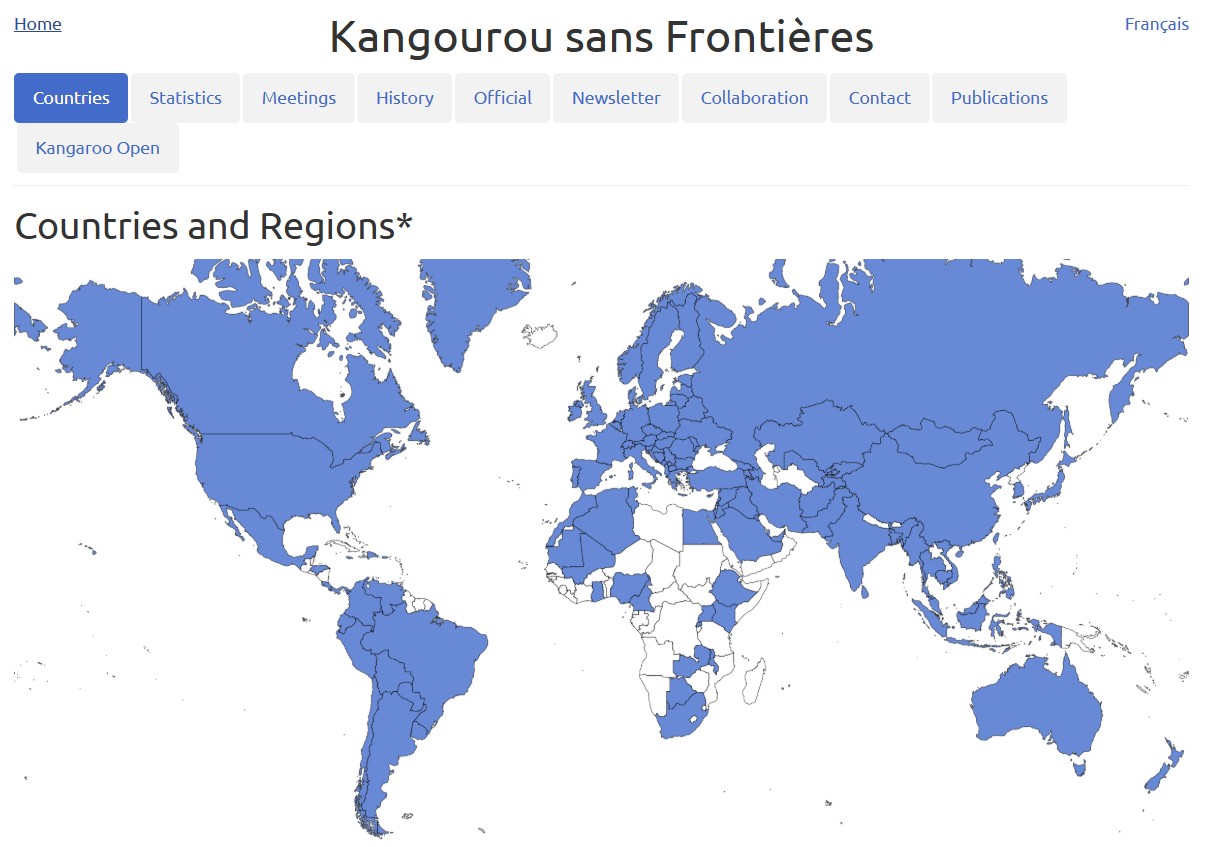
The French competition spread rapidly. According to the international organisation’s historical account, 120,000 junior students took part in the first French competition in 1991. By 1993, the number had reached 500,000. In 1993, organisers from several European countries met in Paris to discuss cooperation.
That led to the creation of the Association Kangourou Sans Frontières, officially established in Paris in 1995. The name was remarkably appropriate. A kangaroo had started in Australia and was now bounding across national borders.
フランスの大会は急速に広がりました。国際組織の歴史資料によると、1991年のフランスでの第1回大会には12万人のジュニア部門の生徒が参加し、1993年には50万人に達しました。1993年には、ヨーロッパ各国の大会主催者らがパリに集まり、協力について話し合いました。
その流れからAssociation Kangourou Sans Frontièresが設立され、1995年にパリで正式に発足しました。この名前は、実にぴったりでした。オーストラリアで生まれたカンガルーが、国境を越えて世界へ跳び出していったわけです。

And Then It Hopped Into Japan
そして日本にもやってきた
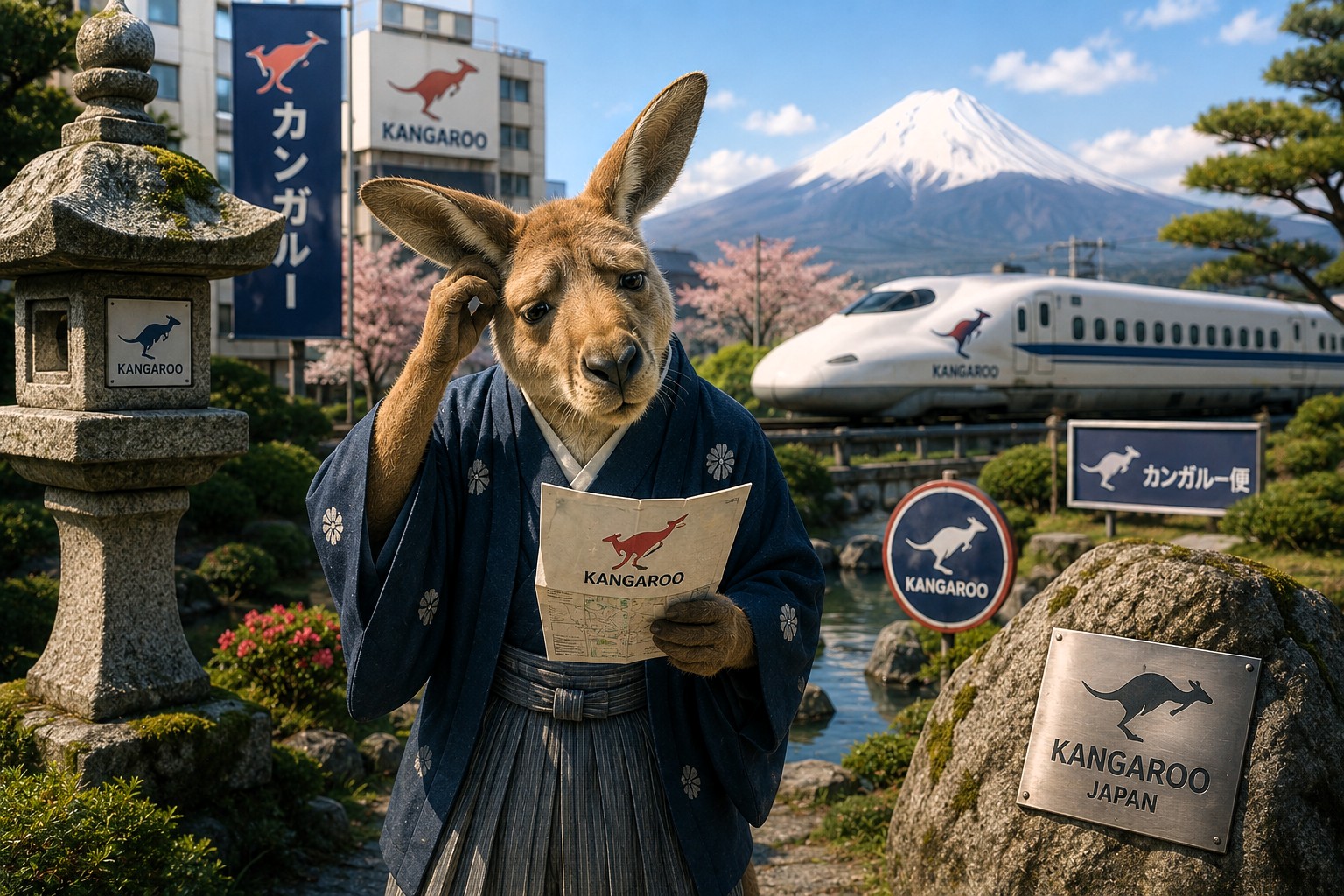
Japan joined the story in 2026. The Japanese competition is organised by the Mathematics Olympiad Committee, the organisation behind Japan’s long-running 算数オリンピック. The committee says it agreed to hold Math Kangaroo in Japan in response to a request from the Association Kangourou Sans Frontières. The Japanese competition is called マスカンガルー日本大会. And there is one particularly nice Japanese twist.
そして2026年、日本もこの物語に加わりました。日本大会を実施するのは、長年にわたって「算数オリンピック」を運営してきた算数オリンピック委員会です。算数オリンピック委員会によると、国際マスカンガルー協会(AKSF)からの要請を受け、日本でマスカンガルーを実施することになりました。日本での大会名は、そのまま「マスカンガルー日本大会」です。そして、ここには日本ならではの面白い特徴があります。
Japanese Or English?
日本語、それとも英語?
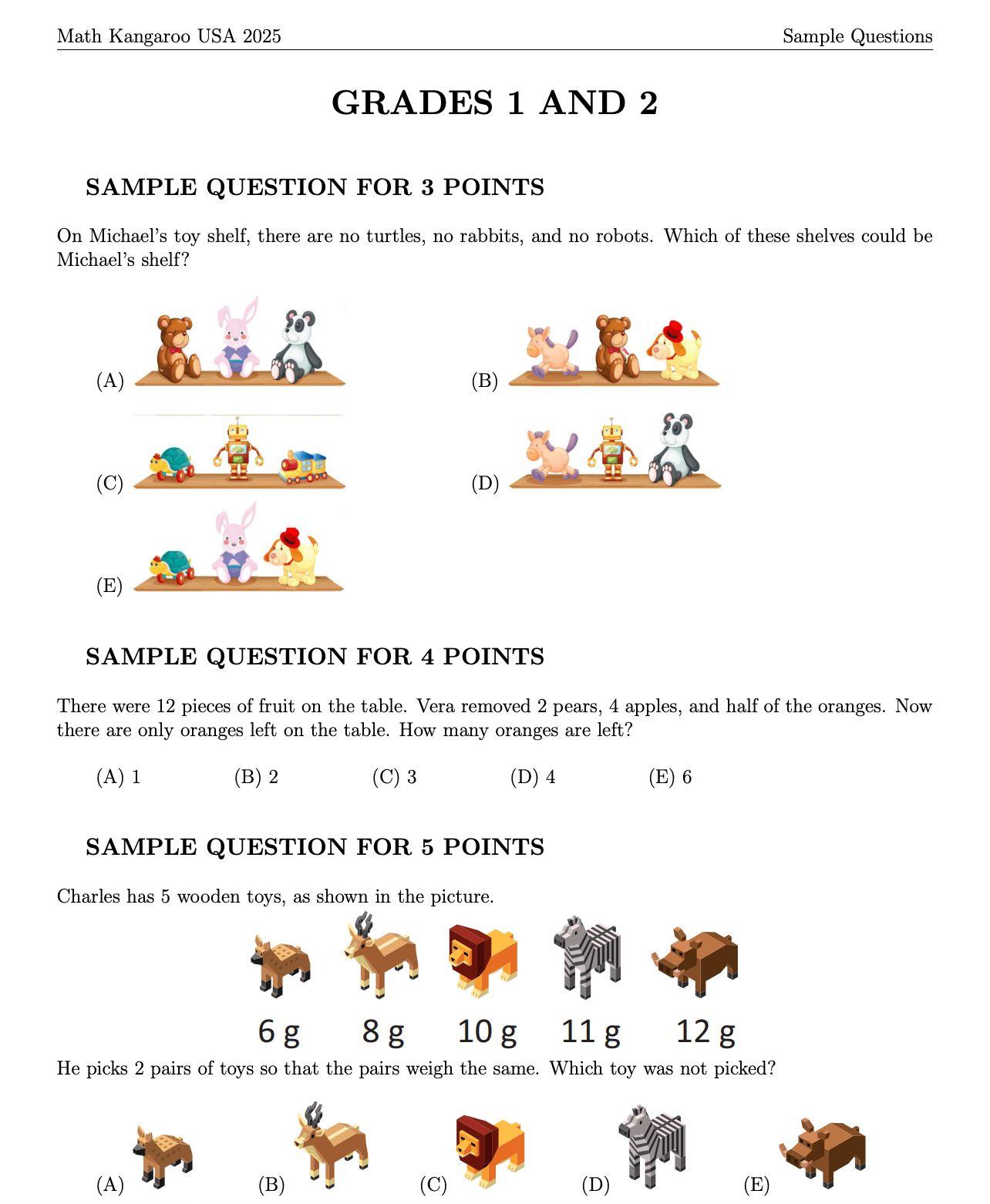
The 2026 Japanese competition allowed participants to choose whether they wanted to receive the questions in Japanese or English. That is rather fitting for a competition whose entire history has crossed linguistic and national borders. The Japanese competition was open to children from kindergarten senior year through sixth grade. There were three levels: Pre-Ecolier for kindergarten seniors and first- and second-graders, Ecolier for third- and fourth-graders, and Benjamin for fifth- and sixth-graders. Each test lasted 90 minutes and consisted of multiple-choice questions. The youngest two levels had 24 questions, while Benjamin had 30.
2026年の日本大会では、問題の出題言語を日本語または英語から選ぶことができましたpants to choose whether they wanted to receive the questions in Japanese or English. That is rather fitting for a competition whose entire history has crossed linguistic and national borders. The Japanese competition was open to children from kindergarten senior year through sixth grade. There were three levels: Pre-Ecolier for kindergarten seniors and first- and second-graders, Ecolier for third- and fourth-graders, and Benjamin for fifth- and sixth-graders. Each test lasted 90 minutes and consisted of multiple-choice questions. The youngest two levels had 24 questions, while Benjamin had 30.
国や言語の境界を越えてきた大会だけに、これはなかなか面白い仕組みです。日本大会の対象は、年長から小学6年生まででした。部門は、年長・小学1~2年生対象のPre-Ecolier(プレエコリエ)、小学3~4年生対象のEcolier(エコリエ)、小学5~6年生対象のBenjamin(ベンジャミン)の3部門です。いずれも試験時間は90分で、5つの選択肢から答えを選ぶ方式でした。Pre-EcolierとEcolierは24問、Benjaminは30問でした。
This Isn’t Just About Doing Sums
ただ計算するだけではない
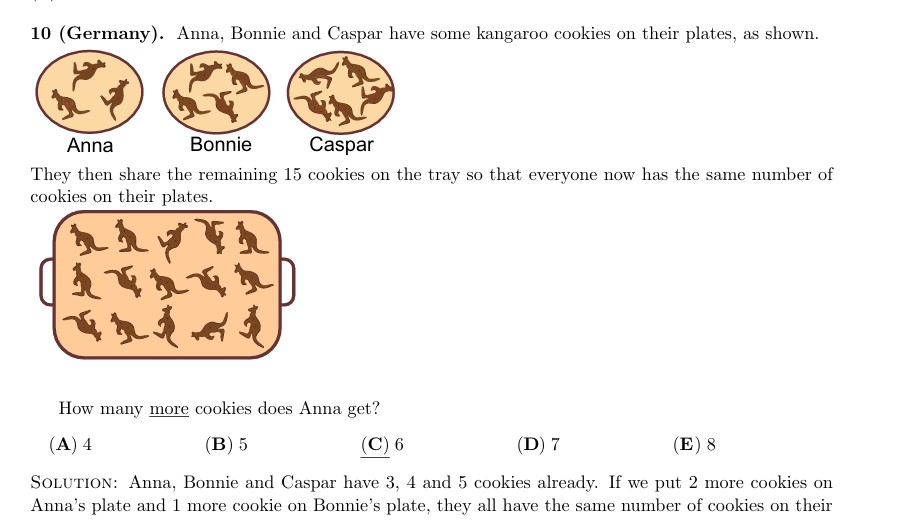
The Japanese organisers describe the questions as being more like puzzles than standard textbook exercises. The competition aims to stimulate ideas while testing things including imagination, creativity, perseverance, basic calculation skills and logical thinking. And the actual questions certainly look more playful than the sort of arithmetic worksheet that might send a child fleeing for the nearest screen. For example, one published sample question features Kenny the Kangaroo jumping between a school, a zoo and a series of houses according to a set of directional instructions. In other words, even the kangaroo gets to do the maths. And that seems fair enough.
日本の主催者は、問題について、一般的な教科書の問題というよりも「パズル」のような思考力を問うものだと説明しています。問題を通して、アイデアを刺激しながら、想像力、創造力、忍耐力、基本的な計算力、論理的思考力などを問うことが目的とされています。実際の問題を見ても、ただ計算問題を解き続けるようなものではありません。たとえば公開されている過去問題には、Kenny the Kangarooというカンガルーが、学校から動物園、そして家々へ、指定された方向にジャンプしていく問題があります。つまり、カンガルー自身が数学をやっているわけです。まあ、それくらいはカンガルーにもやってもらいましょう。
Japan’s First Jump
日本での最初のジャンプ
The 2026 Japanese competition was held on March 21. Unlike many mathematics competitions, it was not necessary to travel to an examination hall. The Japanese organisers sent the examination materials to participants’ homes, and children completed the 90-minute test at home before submitting their answers online. The entry fee was ¥1,980. The results are now also available from the Japanese organisers. For each school year, Japanese participants were ranked and gold, silver and bronze medals were awarded to the top three.
2026年の日本大会は3月21日に実施されました。一般的な数学コンテストとは違い、会場まで出かける必要はありませんでした。主催者から問題冊子などが各家庭に送られ、参加者は自宅で90分間の試験に取り組み、オンラインで解答を送信する方式でした。参加費は1,980円でした。現在は日本大会の結果も公開されています。各学年について日本国内の参加者の順位が決められ、1位、2位、3位にはそれぞれ金・銀・銅メダルが贈られました。
So Why A Kangaroo?
それで、なぜカンガルー?
This is the bit I like most. The kangaroo isn’t there because mathematics involves jumping. It isn’t there because mathematicians particularly like Australian wildlife. It is there because the international competition traces its ancestry to an Australian mathematics competition. The Australian connection was important enough to the French organisers in 1991 that they deliberately chose the kangaroo as a tribute. And from there, the kangaroo kept hopping. Australia. France. Europe. And now Japan.
ここが、考えRooとして一番面白いところです。カンガルーが数学と関係するから「ジャンプ」という意味で付けられた名前ではありません。数学者がオーストラリアの動物を特に好きだったからでもありません。この名前が付いているのは、国際大会のルーツがオーストラリアの数学コンテストにあるからです。1991年にフランスで大会を始めた人々にとって、そのオーストラリアとのつながりは、それを象徴するカンガルーを名前に選ぶほど重要だったのです。そして、そのカンガルーはそのまま跳び続けました。オーストラリア。フランス。ヨーロッパ。そして今、日本です。
From A Sydney Idea To A Japanese Living Room
シドニーの発想から日本の家庭へ
There is something wonderfully Australian about the whole story. An idea developed for a national competition in Australia became a French tribute to Australian mathematics, became an international organisation, and eventually arrived in Japanese homes as a Japanese-language mathematics competition. The kangaroo has travelled a long way. And it turns out that its pouch isn’t the only thing it can carry. It has been carrying a little bit of Australian mathematical history along with it.
この物語には、どこか実にオーストラリアらしいところがあります。オーストラリアの国内大会から生まれた発想が、フランスでオーストラリアへの敬意を込めた大会となり、国際組織へと発展し、そして最終的には日本の家庭で日本語の算数・数学大会として行われるようになりました。カンガルーはずいぶん遠くまで跳んできました。そして、カンガルーが運べるのは、袋の中の子どもだけではなかったようです。オーストラリアの数学史まで、一緒に運んできたのです。

A kangaroo turning up in a Japanese maths competition makes me wonder what else is hiding in plain sight. No mystery. The kangaroo is there because of Australia. 日本の算数大会にカンガルーが登場する。「ほかにも、気づかないところにカンガルーが潜んでいるんじゃないか」と考える。答えは謎ではありません。カンガルーがいる理由は、オーストラリアです。
More About Math Kangaroo
- Math Kangaroo Competition in Japan
- Association Kangourou Sans Frontiéres
- How It All Began Down Under
- Math Kangaroo USA