Why Did Japan Fall In Love With The Frill-necked Lizard?
なぜ日本はエリマキトカゲに夢中になったのか?
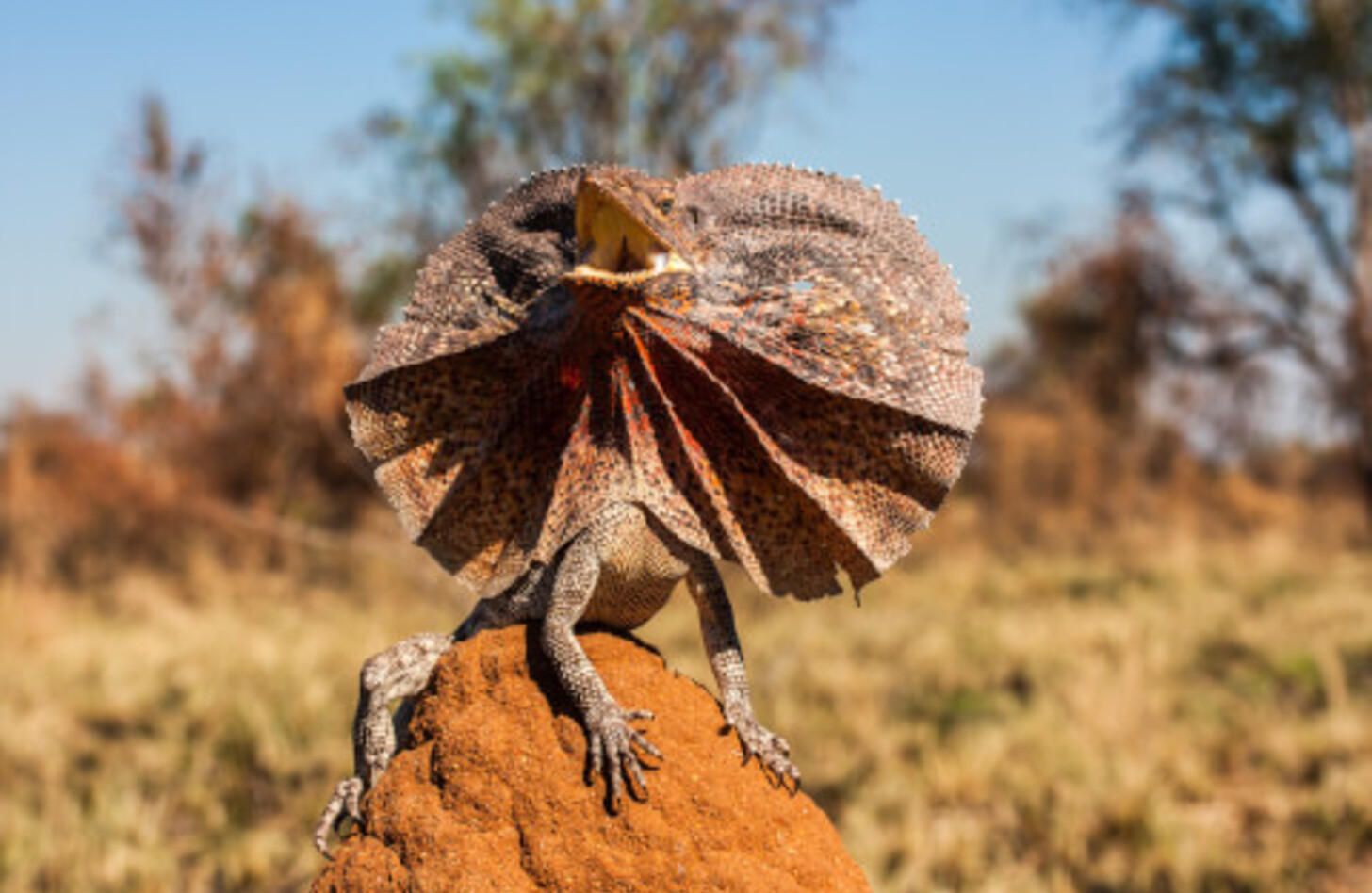
Few Aussie animals have captured Japan’s imagination quite like the frill-necked lizard. For a brief moment in the 1980s, this remarkable reptile became one of Japan’s biggest stars. But why did one unusual Australian lizard become a household name nearly 7,000 kilometres from home?
オージーの動物の中でも、1980年代に日本中を熱狂させた存在があります。それがエリマキトカゲです。なぜ、この少し変わったトカゲが遠く離れた日本で国民的人気を集めたのでしょうか。
An Unusual Aussie
ちょっと変わったオージー
Australia is famous for unusual wildlife.
Kangaroos hop.
Koalas sleep.
But the frill-necked lizard does something completely different.
When threatened, it spreads the large frill around its neck, opens its mouth wide and dashes away on its back legs.
It’s one of nature’s most unforgettable displays.
ちょっと変わったオージー
オーストラリアには、不思議な動物がたくさんいます。
カンガルーは跳び、コアラは眠り続けます。
しかし、エリマキトカゲはまったく違います。
危険を感じると首の大きな襟を広げ、口を大きく開け、後ろ足だけで走ることがあります。
一度見たら忘れられない姿です。
The Commercial That Changed Everything
すべてを変えたテレビCM
In 1984, a Japanese television commercial introduced millions of viewers to the frill-necked lizard.
Its dramatic display fascinated audiences almost overnight.
Children wanted to see one.
Toy makers rushed to produce merchandise.
Zoos suddenly found themselves welcoming crowds eager to meet Australia’s newest celebrity.
すべてを変えたテレビCM
1984年、日本で放送されたテレビCMによって、エリマキトカゲは一躍有名になりました。
その印象的な姿は、多くの人々を驚かせました。
子どもたちは本物を見たがり、おもちゃが次々と発売され、動物園には多くの来園者が訪れるようになりました。
More Than a Passing Craze
一時的なブームでは終わらなかった
Like many popular crazes, the excitement eventually faded.
Yet the frill-necked lizard never disappeared from Japanese popular culture.
People who grew up during the 1980s still smile when they hear its name.
For many Japanese, it remains one of the first Australian animals they ever learned about.
一時的なブームでは終わらなかった
ブームそのものはやがて落ち着きました。
それでも、エリマキトカゲは日本人の記憶から消えませんでした。
1980年代を過ごした世代にとって、その名前を聞くだけで懐かしい思い出がよみがえります。
オーストラリアの動物を初めて知るきっかけになった人も少なくありません。
A Cultural Ambassador
小さな文化大使
The frill-necked lizard probably never realised it had become an ambassador.
Yet it helped introduce millions of Japanese people to Australia’s extraordinary wildlife.
Long before social media, one remarkable reptile inspired curiosity about a country many people had never visited.
小さな文化大使
エリマキトカゲ自身は、自分が「親善大使」になったことなど知る由もありません。
それでも、この小さな爬虫類は何百万人もの日本人にオーストラリアの自然の魅力を伝えました。
SNSもインターネットもない時代、一匹の動物が遠い国への興味を育んだのです。
More Than Nostalgia
懐かしさだけではない
Today, Australia’s wildlife continues to inspire Japanese travellers.
Many visitors still hope to see animals they first encountered in childhood.
For some, that journey began not with a kangaroo or a koala—
but with a little lizard wearing an enormous frill.
懐かしさだけではない
現在も、多くの日本人旅行者がオーストラリアの野生動物との出会いを楽しみにしています。
子どもの頃に憧れた動物に会いたいという人も少なくありません。
そのきっかけは、カンガルーでもコアラでもなく、
大きな襟を広げる一匹のトカゲだったのかもしれません。
An Unknown Nichigo Story
「知られざる日豪交流」の物語
The frill-necked lizard never signed a treaty.
It never gave a speech.
Yet it introduced Australia to an entire generation of Japanese children.
Sometimes, international friendship begins in the most unexpected ways.
「知られざる日豪交流」の物語
エリマキトカゲは条約を結んだわけでも、演説をしたわけでもありません。
それでも、一世代の日本人にオーストラリアを紹介しました。
国と国との友情は、ときに思いもよらないところから始まるのです。
Did You Know?
The Japanese name エリマキトカゲ (erimaki tokage) literally means “frilled-collar lizard.” During the 1984 boom, it became one of Japan’s most recognisable Australian animals, appearing in toys, books, magazines and television.
豆知識
「エリマキトカゲ」という名前は、「襟巻きをしたトカゲ」という意味です。1984年の大ブームでは、おもちゃや本、雑誌、テレビなど、さまざまな場面で人気者となりました。
Sources
- National Film and Sound Archive of Australia
- Australian Museum
- Museums Victoria
- Encyclopaedia of Australian Animals (CSIRO Publishing)