
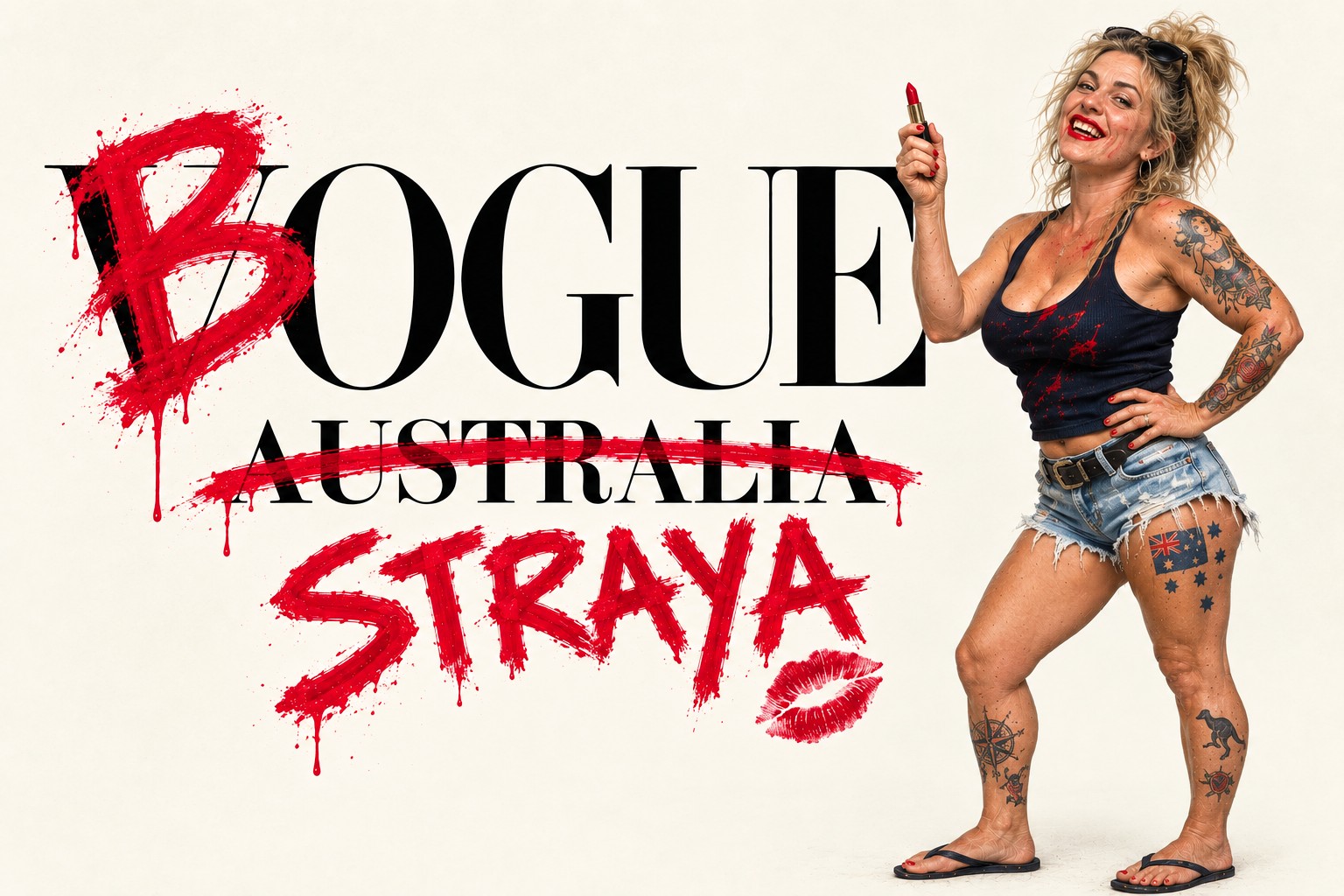
ボーガンフェミニズム

伝統的なボーガン像が大きく見落としているのが、 男性ばかりにフォーカスしてしまう偏り。実際には、 しっかりとした“女性ボーガン”のアーキタイプ(典型像)が存在する。

思い浮かべてほしいのはこんなスタイル。

  • デカすぎるサングラス
  • レギンス
  • セルフタン(フェイクタン)
  • 巨大ハンドバッグ
  • アクリルネイル
  • ブロンドヘア
  • レオパード柄
  • フッティ(ラグビー)愛
  • リアリティ番組
  • 大声での自信満々トーク
  • 高度に発達した“バカ見抜き力(bullshit detection)”

つまり、 ボーガン女性は“強さ・派手さ・実用性・ユーモア”のミックス。

“Sheila”の文化的復活とボーガン・フェミニズム

最近興味深いのが、 “sheila(女性)”という言葉の再評価。かつては軽い俗語だったこの言葉が、 現代では一部の論者によって “ボーガン・フェミニズム” の象徴として語られている。

これは何かというと——

  • タフさ
  • オーストラリアらしさ
  • 労働者階級のアイデンティティ
  • 気取らない強さ
  • 自分の価値を自分で決める姿勢

こうしたものを女性が堂々と再主張する動き。つまり、 ボーガン女性は“粗野なステレオタイプ”ではなく、 オーストラリア文化の中で独自の強さを持つ存在として再評価されている。

ボーガン女性は文化の“もうひとつの心臓部”

男性ボーガンが車・音楽・マレットで文化を動かすなら、 女性ボーガンはファッション・テレビ文化・日常のユーモアで文化を動かす。どちらも、 オーストラリアの“普通の人”のリアルな姿を映す鏡。

The sheila is returning to Australian culture, riding on a new wave of ‘bogan feminism’
Cop A Gander At These Rippers Too...

  • Bogan Feminism

    One thing traditional bogan imagery gets wrong is its obsession with men. There is a substantial female bogan archetype. Think: And there is currently an interesting cultural revival around “sheila”, with commentators describing a contemporary “bogan feminism” that reclaims toughness, Australianness and working-class identity. The sheila is returning to Australian culture, riding on a new wave of ‘bogan feminism’
  • |

    Gangnam Bogan Style! K-Pop大ヒットの豪ダサイ風パロディ版が注目を浴びている

    今、韓国K-PopアーティストPSYの「江南スタイル」が世界中に大ヒットが、数多くのパロディ版も発表され、その中オージーのダサイ文化を称える「ボーガン」風のMelbourne Styleが注目を浴びている。 K-Pop artist PSY may have scored a massive global hit with his catchy Gangnam Style, but he’s also inspired plenty of parodies, including Gangnam – Melbourne Style!, a version that celebrates Australia’s bogan culture of the unfashionable. ちなみに、元の「江南スタイル」がこうだ。 Incidentally, the original Gangnam Style is here.  ビデオの独特なダンスがヒットの原因一つとしているが、日本のネット社会では日本のカー用品販売「イエローハットCMのパックリだ」という声も上がっている。そのビデオがここにある。どう思う? The dance mimicking a lasso-wielding horse-rider in Gangnam Style is often cited as a source of the hit’s success, but some among Japan’s Net community say PSY has ripped off moves from an ad produced here years ago by Yellow Cab, a car accessories seller. That video is here. What do you reckon?

  • |

    Hopper Gives U.S. Satellite TV Network Viewers a Roo-ed Awakening

    Hopper is the (brilliantly original!) name given to the kangaroo used to promote U.S. satellite TV network Dish. Hopper was probably at her most prominent in the mid 20-teens as Dish launched a huge campaign to popularize Internet telly. During the 2014 campaign, Hopper was voiced by portly Strayan actress Rebel Wilson, then at the peak of her career. The campaign centered on Dish’s universally praised digital video recorder, which is also called Hopper, like the kangaroo that promotes the network. The line of recorders further extends the kangaroo link by naming the compact version of the DVR, Joey, which is, of course, the name for infant kangaroos. Incidentally, Rebel…

  • Feral: The Strine Superword That Puts A Bogan Basement Price On Any Exy Buy

    One word, four completely different insults or compliments depending on who’s using it and where they grew up. Welcome to one of the most shape-shifting words in Strine. 使う人や育った場所によって、まったく異なる意味の褒め言葉にも侮辱にもなる一つの単語。ようこそ、ストラインの中でも特に変幻自在な言葉の世界へ。 Meaning Feral has (at least) four Australian senses: 1) a New Age hippie or radical environmentalist, often with dreadlocks, living communally; 2) someone living outside a normal home environment, such as a street kid; 3) among teenagers, something disgusting or gross (“that’s so feral”); 4) a person behaving wildly or out of control. Feral には(少なくとも)4つの意味がある。①ニューエイジ系のヒッピー、または過激な環境保護活動家。ドレッドヘアで共同生活をしていることが多い。②家を出て路上などで暮らす若者。③ティーンエイジャーの間で「気持ち悪い」「最悪」を意味する言葉。④手に負えないほど乱暴・野生的に振る舞う人。 Example “The blockade was full of ferals living in tree camps.” / “Ugh, that smell is feral.” (封鎖現場には木の上のキャンプで暮らすferalたちが大勢いた。/うわ、あの匂い最悪。) 日本語での解説 “Feral” はラテン語で「野生動物」を意味する “fera” に由来する。オーストラリアでは1980〜90年代、森林伐採への抗議活動(フォレスト・ブロッケード)に参加していたパンク・ヒッピー系の若者たちを指す言葉として広まり、そこから「家出した若者」「乱暴」「気持ち悪い」といった意味にも拡大していった。文脈によって意味が大きく変わるため注意が必要な単語である。 Australia–Japan Connection Japan…

  • ボーガン以前のボーガン

    ボーガンという現象は、突然ポンッと現れたわけじゃない。オーストラリアには昔から、 larrikin(いたずら好きの破天荒キャラ)、 ocker(ザ・オージーな粗野キャラ)、 そして各地に散らばる“ちょっとガサツなオーストラリア男性像”が存在していた。つまり、ボーガンはその長い系譜の最新バージョンみたいなもの。「ボーガン」という言葉が全国区になる前は、地域ごとに別の呼び名があった。 地域 以前の現象 Sydneyシドニー Westie Queenslandクイーンズランド Bevan Canberraキャンベラ Booner Hobartホバート Chigga Melbourneメルボルン Bogan やがて“ボーガン”がこれらのローカルな呼び名を飲み込み、全国共通の言葉として定着した。ここがポイントで、 ボーガンは単なる階級ラベルじゃない。もっと言えば、 「オーストラリア的な“ある種のセンス”を語るための言葉」になった。ファッション、趣味、ライフスタイル、価値観—— そういう“文化的な味付け”を説明するための便利な言葉として進化したわけだ。

  • Boganism And The Aussie Class System

    This may actually be the deepest subject behind the whole phenomenon. Australia traditionally likes to imagine itself as an egalitarian society where the wealthy and working class can sit together in the pub and have a beer. Consequently, Australians have historically been uncomfortable talking explicitly about class. “Bogan” provides a sneaky alternative. Instead of saying: “That person is working class.” people can say: “They’re a bit bogan.” Instead of saying: “I dislike their cultural tastes.” they can say: “That’s bloody bogan.” Sociologists Steve Threadgold and Jessica Gerrard have argued that figures such as the bogan and the hipster function as proxies for class in Australian public culture. The bogan represents…