オージー版かんちょうのDackingはどうなる?

What’s So Risky About A Dacking?

とにかく、dackingは誰が隙間を見ていきなりズボンなどを下すことだから危険だ!言葉として全く問題ないだが、行為自体がやばい。しかし、特に若者の間、学校など公の場でふざけながらよくあること。

Every Australian schoolyard has a story about it. Someone runs past, a quick tug, and suddenly a classmate is standing in the yard in their undies while everyone else falls about laughing. Australians have a single word for this act of mild social terrorism: dacking.

オーストラリアのどの学校にも、この話が一つはある。誰かが走り抜けざまに サッと引っ張ると、クラスメートが下着姿で校庭に立たされ、周りは大爆笑——。 オーストラリア人は、このちょっとした社会的テロ行為を一語で表す。それが “dacking”だ。

Meaning

To “dack” someone means to pull their trousers down, usually as a prank, usually in public, and usually to great embarrassment. It’s the verb form of “daks” (trousers).

“dack”とは、誰かのズボンを引っ張って下ろすこと。たいていはいたずらとして、 たいてい人前で行われ、たいてい本人を大いに赤面させる。これは「daks」 (ズボン)という名詞の動詞形である。

Example

“Watch out for Macca at footy training — he’ll dack you in front of the whole team if you’re not careful.”

「フッティの練習ではマッカに気をつけろ。油断すると、チーム全員の前で パンツを下ろされるぞ」

When Aussies Use Dacking

Almost exclusively in casual, same-age social settings — school playgrounds, footy training, mates larking about at the beach. It’s told as a story after the fact far more often than performed live, and it’s always framed as something done between equals who can laugh about it together.

When NOT To Use It

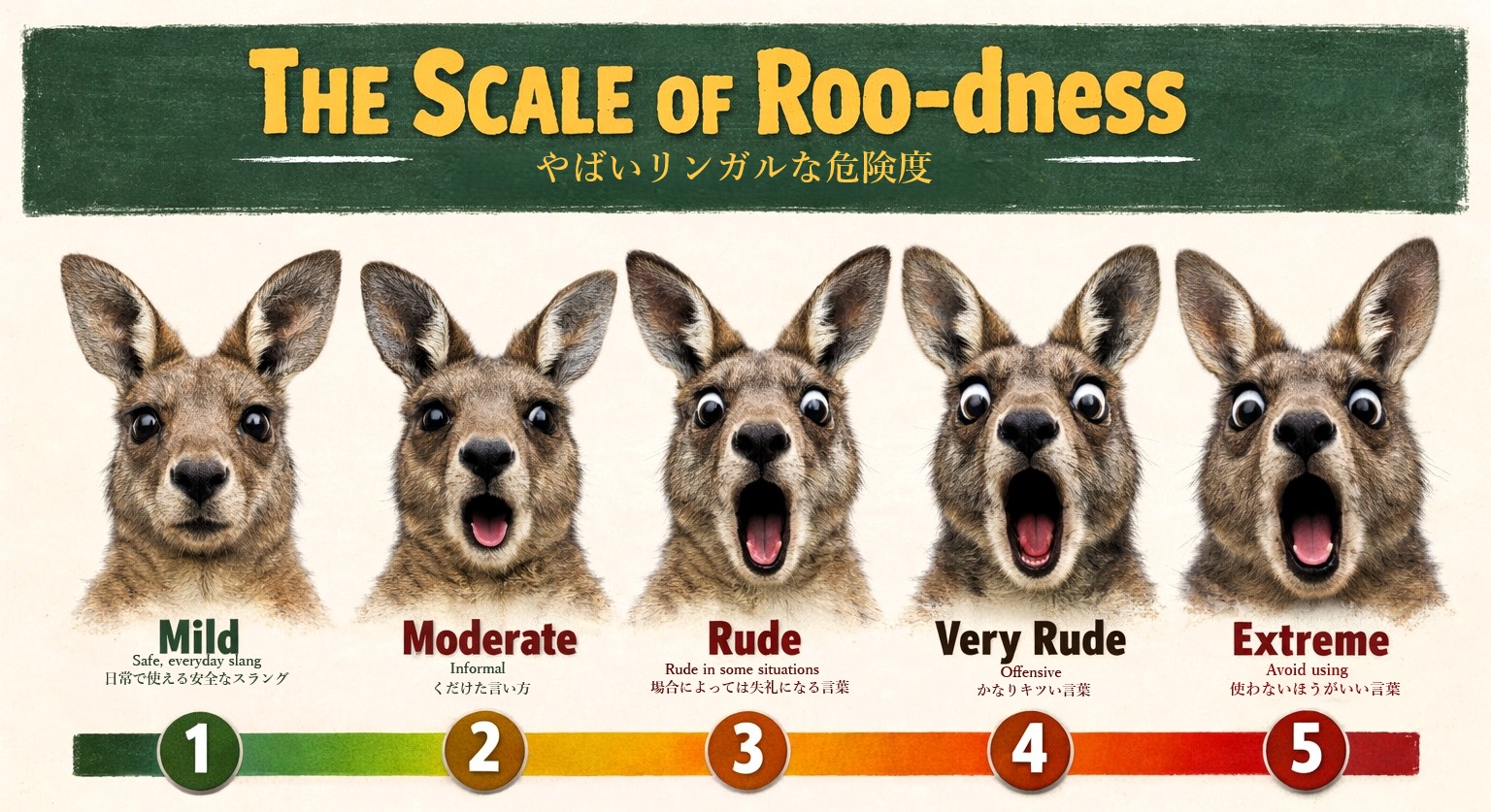
Never in a workplace, never across any power imbalance, and never without full, enthusiastic consent from everyone involved — what reads as larrikin fun in one context is straightforwardly humiliation or assault in another. 考えRoo does not encourage anyone to actually dack anybody.
日豪関係

Japan has its own infamous schoolyard prank with a strikingly similar shape — kancho (かんちょー), the finger-poke prank. Both countries, it turns out, developed a specific piece of playground mischief built entirely around catching a friend off guard and off balance. Readers who grew up dodging kancho will recognise exactly the energy behind “dacking.”

日本にも、これとよく似た悪名高い悪ふざけがある:「かんちょー」だ。 両国とも、友達の不意を突いて驚かせるという、まったく同じ発想の 悪ふざけを独自に生み出していたことになる。かんちょーを避けながら育った 読者なら、”dacking”の背後にある空気感が、きっとよく分かるはずだ。

Related Links

Cop A Gander At These Rippers Too...

  • |

    「やばいリンガル」 Flog (鞭打ちする)

    米・英語では誰かをflogすると鞭打ちするという意味だ。しかし、オージー英語では何かをflogするという意味になる。まさか鞭打ちしっぱなしじゃないよね?どのように違うのか見よう。 To flog someone in English as it is spoken in most countries would mean to whip them. But in Strine, the word also has additional meanings. Read on to find out what they are.

  • やばいリンガル:Funnel Web Spider

    オーストラリアは猛毒生物の宝庫として知られているが、弁護士、政治家、鉱山王、フィッシュ&チップス屋の連中という強力なライバルを押しのけて、最凶の座をかろうじて勝ち取っているのが「ジョウゴグモ(funnel web spider)」だ。 そして驚くべきことに、このちっこいクモが主に生息しているのは、シドニー:昔から “Sin City(罪の街)” と呼ばれてきた街の周辺である。 Australia is known for its deadly fauna and despite fierce competition from lawyers, politicians, mining magnates, fish and chip shop operators, just scraping in as the most venomous of all of Australia’s creepy crawlies is the funnel web spider. Perhaps not surprisingly, this tiny spider is found mostly in and around Sydney, Australia’s self-professed Sin City. 体長はせいぜい5センチほどだが、毒は潜在的に致命的。ただし1981年に抗毒素が開発されて以来、ファンネルウェブスパイダーの咬傷で亡くなった人は一人もいない。 Though it only grows to a maximum of 5 cm, its venom is potentially fatal, though no funnel web spider bite has killed anyone since 1981, when an anti-venom was developed.

  • Chook Is One Of The Great Strine Words

    庭の鶏を見て、”Look at those chooks!”と言うAussieがいます。「Chickenじゃないの?」もちろんChickenでも通じます。でもAussieの日常生活では、”chook” がとても自然な言葉です。 Meaning 鶏、ニワトリを意味します。生きた鶏にも、料理された鶏にも使われます。 Example “We’re having roast chook for dinner.” 「夕食はローストチキンだよ。」 日本語での解説 “Chook” はAussie英語を代表する単語のひとつ。Australian National Dictionary Centreによると、英国の方言 chuck や chucky に由来し、19世紀にAustralian Englishへ定着しました。さらに “chook raffle” という、鶏を景品にする昔ながらのくじ引きもあります。 Australia-Japan Connection 日本でも「ニワトリ」と「チキン」を場面によって使い分けます。Aussieでは “chook” が、その日常的な呼び方になっています。 “Chook” は短くて、親しみやすくて、いかにもAussie。こういう何気ない単語こそ、教科書では出会えないAussie英語の楽しさを教えてくれます。

  • What Does “Dodgy” Mean?

    やばいリンガル: 「Dodgy」はどういう意味? オーストラリアで何かを見て、”That looks a bit dodgy.” と言われたら、あまり良い意味ではありません。 Dodgy は、「怪しい」「信用できない」「なんだか危なそう」という意味で使われる、とても便利なオージー英語です。 中古車が dodgy。 ネットショップが dodgy。 工事の出来が dodgy。 天気まで dodgy と言われることがあります。 つまり、「何かがおかしい」「安心できない」と感じたときに使える万能単語なのです。 One word. Hundreds of uses. A used car can be dodgy. A business deal can be dodgy. The weather can look dodgy. Even your stomach after questionable seafood can feel dodgy. That’s why Australians love the word. At its heart, dodgy means something isn’t quite right. Maybe it’s dishonest. Maybe it’s unreliable. Maybe it just feels suspicious. Unlike stronger insults, dodgy is often playful. Australians use it every day to describe almost anything that causes doubt. 意味 怪しい、信用できない、いい加減な 危険度 🟢 ★☆☆☆☆ 日常会話で普通に使われる表現です。 例文 That website looks a bit dodgy. 「そのサイト、ちょっと怪しいね。」…

  • Derro Is Merely The Start Of Derogatory

    Derro is Strine (Australian English) for a derelict or homeless person. Dero can also describe a run-down urban area. ストライン日本語の意味Derro はホームレスや荒れた地域を指すストラインです。 ExplanationDerro is informal and sometimes considered rude. It reflects rough urban slang in Australia. 日本語での解説やや失礼な言い方で、スラングです。 都市の荒廃を表すこともあります。 Example“That old building is full of derros.”「あの古い建物にはホームレスがいる。」 Strine CulchaStrine slang can be blunt and socially reflective. オージー文化メモストラインは社会の現実を直接表現します。 Related Terms