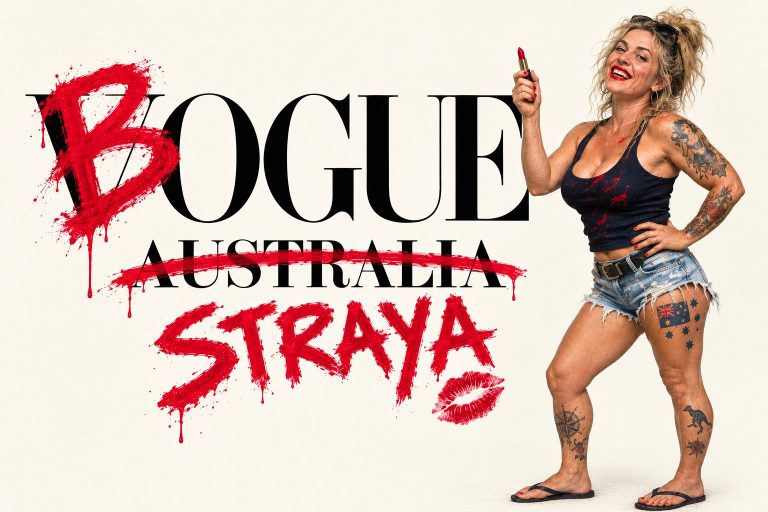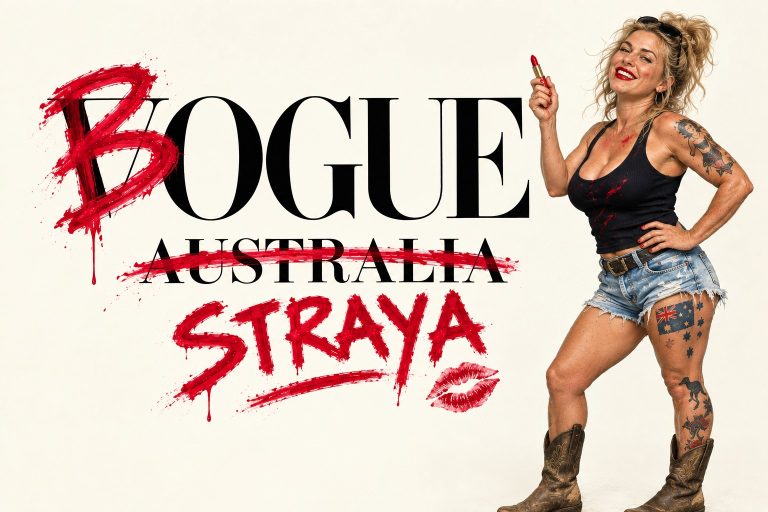
The Great Bogan Aesthetic

The visual language is almost a complete design system.

Hair

The mullet is probably the supreme bogan symbol. Business at the front. Party at the back. And, increasingly, deliberate cultural signalling.

The mullet has moved far beyond its original association with rough Australian masculinity and has become a self-conscious Australian cultural icon. Mullet competitions have become an actual spectacle, with categories such as “extreme”, “grubby”, “everyday” and “ranga”.

There are even children’s mullet competitions in Australia in 2026.

That is an extraordinary example of a hairstyle moving from social stigma → joke → nostalgia → fashion → identity.

Clothing

The classic wardrobe includes:

  • flannelette shirts;
  • singlets;
  • footy jerseys;
  • footy shorts;
  • work shorts;
  • thongs;
  • Ugg boots;
  • enormous sunglasses;
  • high-vis workwear;
  • denim;
  • cheap branded clothing;
  • deliberately unpretentious clothing.

But again, the interesting thing is that bogan fashion has escaped the bogan. Fashion-conscious people can now dress “bogan” without actually belonging to the social group originally being described.

Cop A Gander At These Rippers Too...

  • | | |

    Is Niseko Still Australia’s Ski Town?

    ニセコは今も「オーストラリア人のスキーの町」なのか? Walk through Niseko today and you’ll hear conversations in Japanese, English, Mandarin, Korean and many other languages. The resort that Australians helped introduce to the world has become one of Asia’s most international winter destinations. Visitors now arrive from across the globe, while investment comes from many countries. So, after more than three decades, is Niseko still Australia’s ski town? 現在のニセコを歩くと、日本語だけでなく英語、中国語、韓国語など、さまざまな言語が聞こえてきます。 かつてオーストラリア人が世界に紹介したスキーリゾートは、今ではアジアを代表する国際的なウィンターリゾートへと成長しました。 では、30年以上が経った今でも、ニセコは「オーストラリア人のスキーの町」と言えるのでしょうか。 The Pioneer Years There was a time when Australians dominated Niseko’s international tourism scene. From the mid-1990s through the early 2000s, Australian visitors arrived in growing numbers, opening cafés, ski schools, accommodation businesses and tour companies. Their enthusiasm encouraged more travellers to discover Hokkaido’s famous powder…

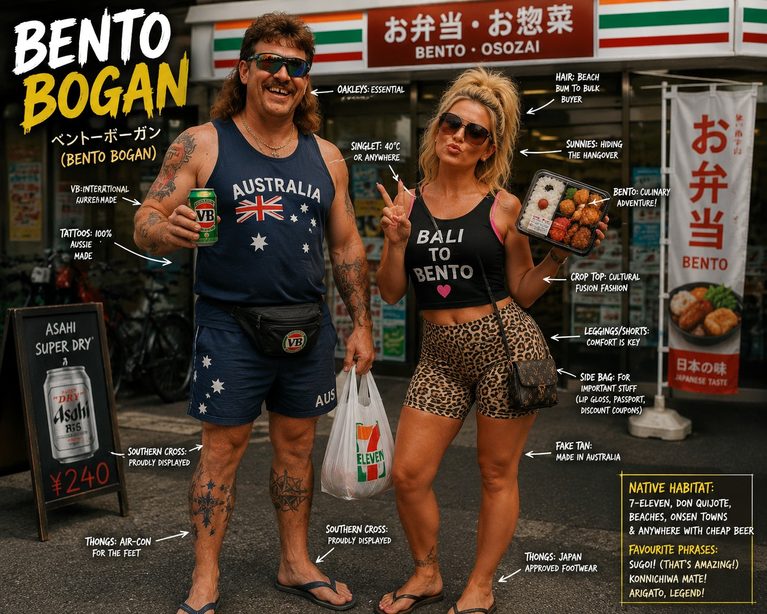
  • The “Bento Bogan”:日本に出現した新種のオージー

    日本のインバウンドブームが続く中で、 オーストラリア人観光客の“新しいステレオタイプ”が誕生している。オーストラリアの一部では、これを冗談めかして “日本のボーガン化(boganisation of Japan)” と呼び始めている。 背景は本物だ。 これらが重なり、 オージーの日本旅行が過去最高レベルに増加。2025年の報告では、 2024年1〜9月のオーストラリア人訪日客は 637,300人。 これは2019年の記録的期間と比べて 42%増。 そんな中で、オージーの間で冗談として語られ始めた新キャラがある。 The Bento Bogan(ベントー・ボーガン)とは? これは、 “バリでのオージー文化パッケージ”をそのまま日本に持ち込んだ人 を指す軽いジョーク。その文化パッケージとは: これらを全部抱えたまま、 コンビニの唐揚げ棒と駅弁を手に日本を闊歩するオージー像。もちろん、これはあくまで ユーモアとしてのステレオタイプ。でも、 日本の礼儀正しさとオージーの“気楽さ”がぶつかると、 こういう文化的ミックスが自然に生まれるのが面白い。 なぜ“Bento Bogan”が生まれたのか? 理由はシンプル。 これらが重なり、 “日本で自由に楽しむオージー”という新しい文化像が形成された。それが冗談として Bento Bogan と呼ばれているわけだ。 文化的には何が面白い? Bento Bogan は、 オーストラリアのボーガン文化が海外でどう変形するか を観察できる絶好のケース。 これらが日本という全く異なる文化環境で 新しいキャラクターとして再構成される。文化の輸出と変形の好例。

  • テレビが“ボーガン”をキャラクター化した

    オーストラリアのテレビは、 ボーガンという侮蔑語を“文化キャラクター”へと変換するうえで決定的な役割を果たした。 いくつかの重要な番組を見てみよう。 The Comedy Company 1980年代後半、 キャラクター Kylie Mole が登場し、 ボーガンという言葉の特定の使われ方を全国に広めた。ティーン文化、郊外文化、ちょいダサさ—— その全部をコミカルにパッケージした存在だった。 Kath & Kim これはオーストラリア史上もっとも鋭い “郊外の願望(suburban aspiration)”研究と言っていい。 Kath と Kim は単に「貧しい」わけではない。彼女たちは、見た目、消費、ステータス、ファッション、セレブやライフスタイルに異常なほど執着している。つまり、ボーガン的“願望”を体現している。「背伸びしたい郊外のオージー」を、 笑いと愛情を込めて描いた作品。 Bogan Pride Rebel Wilson が 2008年に SBS で制作したシリーズ。ここではボーガン文化が 完全にコメディとして前面に押し出され、 “ボーガン・プライド(誇り)”という概念がメインストリームへ進出した。侮蔑語だったはずの言葉が、 「誇り」として再解釈される瞬間をテレビが後押しした。 Upper Middle Bogan これは知的にもっとも面白い作品かもしれない。設定はこうだ。 “ごく普通の中流家庭が、自分たちの生物学的家族がボーガンだったと知ったらどうなる?” このジョークが、 階級・趣味・お金・教育・アイデンティティ といったテーマを深く掘り下げる装置になる。笑いながら、 オーストラリア社会の階級構造を観察できる秀逸なシリーズ。 テレビは、 ボーガンを侮蔑語から文化キャラクターへ、 そして国民的アイコンへと変換した最大のメディア。

  • |

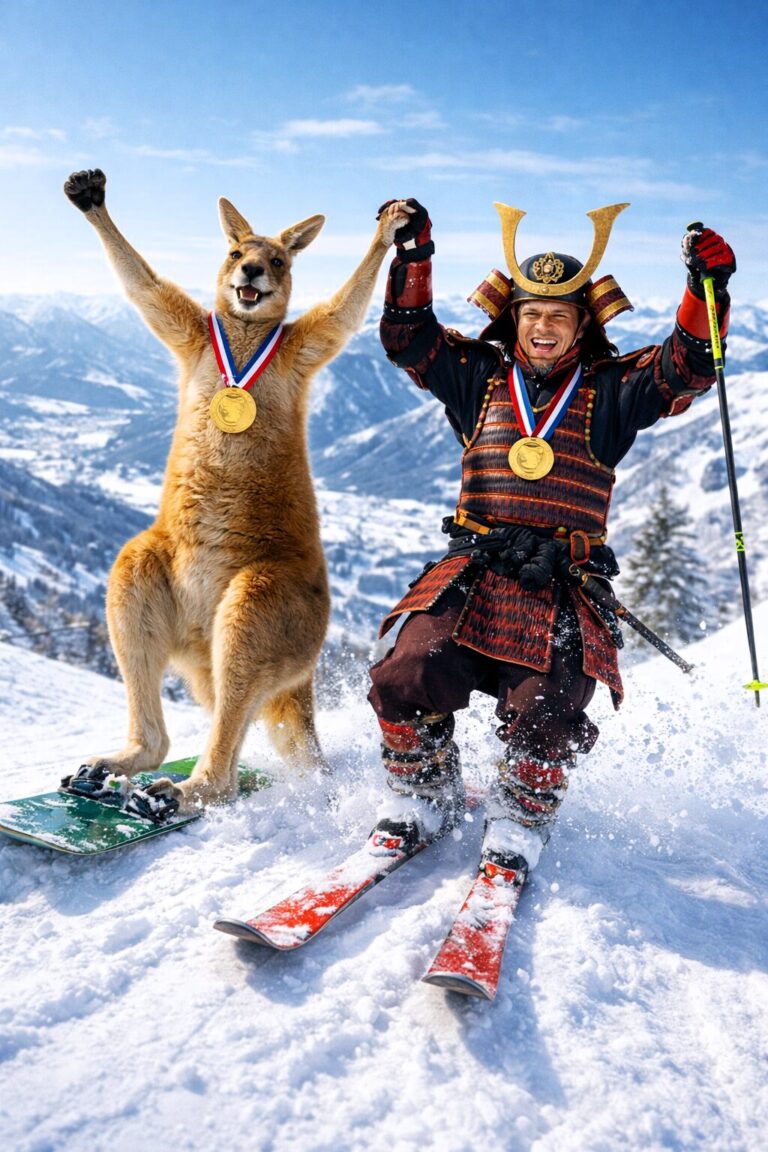
    Japan’s ‘Japow’ Transforms Australia Into A Winter Sports Force

    For most of the 2026 Winter Olympic Games in Milano and Cortina, Australia occupied a prominent position on the medal tally. In fact, that land famous for its searing heat, blistering sunshine and water games outranked countries like Canada, where snow sports are a part of daily life from birth, and recent Winter Olympic Games powerhouses like China and Korea. And Japan, itself one of the top Winter Olympics performers, has much to do with Australia’s success. Australia has taken part in every Olympic Winter Games since 1936. But it didn’t win a medal until 1994, and a woman didn’t pick up one until 1998. That year, the Winter Games…

  • Bogan Pride

    Bogan pride is probably the most important cultural development of the bogan culture. Calling someone a bogan used to be essentially saying: “You’re beneath me.” Increasingly, people started saying: “Yep. I’m a bogan. Got a problem with that?” That is classic cultural reclamation. The same process has happened with many supposedly derogatory identities around the world. But Australian bogan pride has a particularly Australian flavour because it overlaps with: Roslyn Rowen’s research specifically links the positive reappropriation of “bogan” with Australian nationalism and the Australian tendency to celebrate the “ordinary” person.