Television Created The Bogan

Australian television has been extraordinarily important in turning the bogan from a social insult into a cultural character.

Some important examples include:

The Comedy Company

The character Kylie Mole helped popularise a particular version of the word in the late 1980s.

Kath & Kim

Probably one of Australia’s greatest cultural studies of suburban aspiration. Kath and Kim are interesting because they aren’t simply “poor.” They are obsessed with appearance, consumption, status, fashion, celebrity and lifestyle. In other words, they demonstrate bogan aspiration.

Bogan Pride

Rebel Wilson‘s 2008 SBS series explicitly turned bogan identity into comedy and helped push the idea of bogan pride into mainstream culture.

Upper Middle Bogan

This may be the most intellectually interesting of all.

The premise essentially asks:

What happens when an apparently respectable middle-class family discovers that their biological family is bogan?

The joke becomes a study of class, taste, money, education and identity.
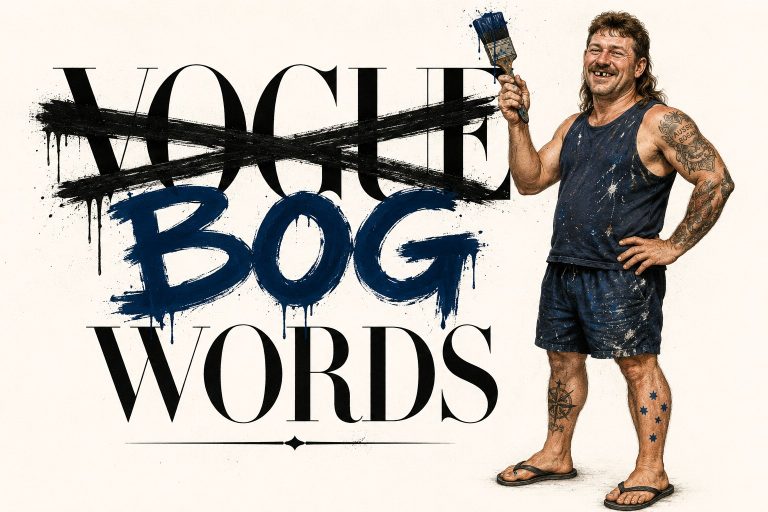
Cop A Gander At These Rippers Too...

  • ボーガン語という“金鉱脈”

    ボーガン文化は、 驚異的なレベルの言語的クリエイティビティを生み出す。実際に存在する(そして使われる)語彙だけでもこの量だ。 ここまで来ると、 「ボーガン」という語がどれだけ生産力の高い単語なのか」 がよく分かる。研究者たちは、 ボーガンという語は Australian English の中でも特に“派生語を作りやすい単語” だと指摘している。つまり、 オージーはボーガンに何でもくっつけて新語を作る。 そしてそれが文化になる。 ボーガン発音という“音声美学” そして忘れてはいけないのが、 ボーガン的発音(bogan pronunciation)。ステレオタイプでは、 オーストラリア英語の特徴をさらに誇張した形になる。 語尾の子音を落とす、 母音を広げる、 そしてお約束のスラングと罵り言葉。これらは単なる“乱暴な発音”ではなく、 文化的シグナルとして機能する音声スタイルになっている。 ボーガン語は、文化そのもの ここまで見てくると分かるように、 ボーガン語は単なる俗語ではなく、 オーストラリア文化の創造力が爆発する領域だ。語形成、発音、ユーモア、階級、アイデンティティ。すべてがすべてが混ざり合って、 ボーガン語は“国民的言語遊び”のような存在になっている。

  • |

    豪キャブラリー:Bogan Band

     Bogan bandは、一般的に若者のboganが好んでする髪型で、髪の縁に沿って細い帯状に髪を金髪にブリーチしたもの。通常、幅は約1cmで、長さは3~4cmを超えることはない。  後ろ髪が長くて上が短髪なMulletやラットテイルヘアという特に細長い部分が特徴的な毛髪のスタイルを指しますボーガンがよく選ぶ髪型ほど人気に及んでいないが、21世紀型ボーガン髪型になりつつ。 Strine Dictionary | 考えRoo

  • Bogan Pride

    Bogan pride is probably the most important cultural development of the bogan culture. Calling someone a bogan used to be essentially saying: “You’re beneath me.” Increasingly, people started saying: “Yep. I’m a bogan. Got a problem with that?” That is classic cultural reclamation. The same process has happened with many supposedly derogatory identities around the world. But Australian bogan pride has a particularly Australian flavour because it overlaps with: Roslyn Rowen’s research specifically links the positive reappropriation of “bogan” with Australian nationalism and the Australian tendency to celebrate the “ordinary” person.

  • ボーガン罵り言葉のパラドックス

    ボーガン語の中でも特に面白いのが、 オーストラリア人が“罵り言葉を社会的な句読点に変えてしまう”能力。 他の英語圏ならショッキングな単語が、 オーストラリアではこんなふうに使われる。 つまり、 罵り言葉が文法カテゴリーを全部制覇してしまう。もちろん、これはボーガンだけの特徴ではない。 オーストラリア全体の言語文化に根付いている。でも、「ボーガンのステレオタイプは、この“罵り言葉文化”を舞台演劇レベルまで誇張する。

  • The Bogan Before The Bogan

    The phenomenon didn’t appear from nowhere. Australia already had a long tradition of the larrikin, the ocker and various regional versions of the uncouth Australian male. Before “bogan” became dominant, different parts of Australia had their own labels: Region Earlier stereotype Sydneyシドニー Westie Queenslandクイーンズランド Bevan Canberraキャンベラ Booner Hobartホバート Chigga Melbourneメルボルン Bogan “Bogan” eventually swallowed many of these regional identities and became national. This is important because bogan isn’t simply a class label. It became a way of talking about a particular form of Australian taste.