Where Can You Find Australia’s Japanese War Memorials?
オーストラリアのどこに日本人戦没者慰霊碑があるのか?
In Why Does Australia Have So Many Japanese War Memorials?, we explored why Australia has so many Japanese war memorials and the remarkable spirit of remembrance and reconciliation behind them.
This time, we travel across Australia to discover some of the places where these memorials stand today. Each tells a different story, but together they reflect a friendship that grew from one of history’s most difficult chapters.
第1回では
「Why Does Australia Have So Many Japanese War Memorials?」では、なぜオーストラリアに多くの日本人戦没者慰霊碑があるのか、その背景にある追悼と和解の精神について紹介しました。
今回は、オーストラリア各地に残る慰霊碑や墓地を訪ね、それぞれの場所に刻まれた歴史と、それを大切に守り続ける地域の人々の思いを見ていきます。
Cowra, New South Wales
ニューサウスウェールズ州カウラ
Cowra is home to the largest Japanese war cemetery in the Southern Hemisphere.
More than 500 Japanese prisoners of war who died during the Cowra Breakout in August 1944 and in Australian prisoner-of-war camps are buried here. Today, the beautifully maintained cemetery stands alongside the Cowra Japanese Garden and Cultural Centre, symbolising reconciliation rather than conflict.
Every year, Australians and Japanese gather here to remember those who lost their lives and to celebrate the friendship that followed the war.
南半球最大の日本人戦没者墓地があるのがカウラです。
1944年8月のカウラ捕虜収容所脱走事件や、オーストラリア国内の捕虜収容所で亡くなった500人以上の日本人がここに眠っています。
現在では、美しく整備された日本人墓地とカウラ日本庭園が並び、対立ではなく和解の象徴となっています。
毎年、日豪両国の人々がここに集い、亡くなった人々を追悼するとともに、戦後に築かれた友情を確認しています。
Darwin, Northern Territory
ノーザンテリトリー準州ダーウィン
Darwin’s Japanese cemetery tells a different story.
Many of those buried here were not prisoners of war. They were members of the Imperial Japanese Navy and Air Force who died during the bombing of Darwin in 1942, together with others who lost their lives in northern Australian waters.
The cemetery is carefully maintained and remains an important place of remembrance for visiting Japanese families.
ダーウィンの日本人墓地は、また別の歴史を伝えています。
ここには捕虜だけでなく、1942年のダーウィン空襲などで亡くなった日本海軍や陸海軍航空隊の関係者、北部オーストラリア周辺で命を落とした人々が眠っています。
墓地は現在も丁寧に管理され、日本から訪れる遺族にとって大切な追悼の場となっています。
Broome, Western Australia
西オーストラリア州ブルーム
Long before the Second World War, Japanese divers travelled to Broome to work in the town’s famous pearling industry.
Many never returned home.
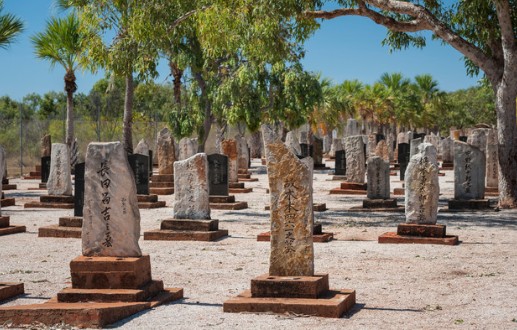
The Japanese Cemetery at Broome contains hundreds of graves dating from the late nineteenth and early twentieth centuries. It reminds visitors that Australia’s relationship with Japan began long before the war.
ブルームと日本とのつながりは、戦争よりもずっと前から始まっていました。
真珠採取産業で働くため、多くの日本人ダイバーがこの町へ渡りました。
ブルーム日本人墓地には、19世紀末から20世紀初頭に亡くなった人々の墓が数多く残っています。
この場所は、日豪交流の歴史が戦争以前から続いていたことを教えてくれます。
Thursday Island, Queensland
クイーンズランド州サーズデー・アイランド
Thursday Island also preserves an important chapter of Japanese history in Australia.
Many Japanese pearl divers settled in the Torres Strait during the late nineteenth century. Some married locally and became part of the community.
The island’s Japanese memorial reflects both the dangers of the pearling industry and the lasting contribution Japanese migrants made to northern Australia.
サーズデー・アイランドにも、日本人の足跡が今も残っています。
19世紀後半、多くの日本人真珠採取ダイバーがトレス海峡へ渡り、地域社会の一員として暮らしました。
慰霊碑は、危険な仕事に命を落とした人々を追悼するとともに、日本人移民が北部オーストラリアの発展に果たした役割を伝えています。
More Than Places of Remembrance
慰霊の場を超えて
These memorials are not museums of war. They are places where Australians and Japanese remember the past together. Local volunteers care for many of these sites, while visitors from Japan continue to pay their respects each year. Together, they demonstrate how remembrance can help build understanding between former enemies.
これらの慰霊碑は、戦争を語るためだけの場所ではありません。過去を共に見つめ、未来へ平和をつないでいく場所です。地域のボランティアが墓地を守り続け、日本からも多くの人々が毎年訪れて祈りを捧げています。そこには、追悼を通じて築かれた日豪の信頼関係を見ることができます。
Next Time…
次回予告
The memorials themselves tell only part of the story. In How Did Former Enemies Become Partners in Remembrance?, we’ll discover how Australians and Japanese worked together after the war to restore cemeteries, care for graves and transform places of tragedy into symbols of friendship.
慰霊碑そのものは、物語の一部に過ぎません。
最終回の「敵国だった日豪は、どのように共に慰霊する関係になったのか?」では、戦後、日本人とオーストラリア人がどのように協力して墓地を整備し、悲劇の場所を友好の象徴へと変えていったのかを紹介します。
Sources
- Australian War Memorial
- Commonwealth War Graves Commission
- Department of Veterans’ Affairs
- Japanese Ministry of Health, Labour and Welfare
- Cowra Japanese Garden and Cultural Centre
- Broome Historical Society
- Torres Strait Historical Society