‘You’re Not Taking the Kingswood’…But Japan Did for a Little While
On this day 70 years ago, Australia launched a domestic automaking industry at Fishermen’s Bend in Melbourne to produce Holden cars.

Not many outside Australia that the Great Southern Land once produced cars, and perhaps even fewer still are aware that Oz exported some models to Japan.

These weren’t cars assembled in Australia and shipped to the world’s then second-largest car market (as would happen in the late 1980s and 1990s, notably with the Subaru Outback).
They were cars made with the intent of attracting Japanese consumers.

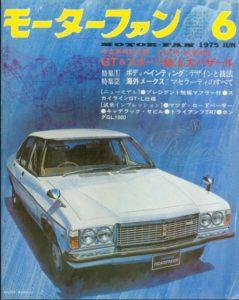
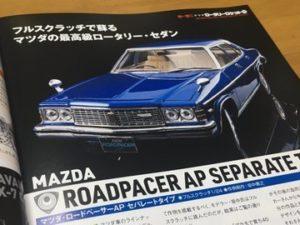
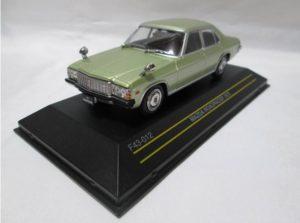
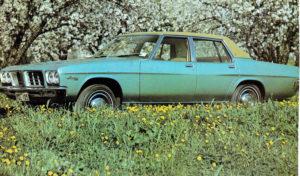
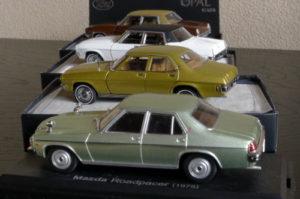
Ironically, one of the cars marketed was the Mazda Roadpacer, a car slightly adapted from an iconic Australian car, the Holden Kingswood.

Holden would make the cars in Australia and export them as Holden Premiers, the luxury version of the Kingswood, to Japan, where they would be given even further added attractions.
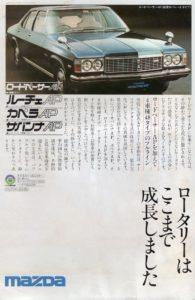
The car was supposed to be used by high-ranking government officials, but the timing of the enterprise could hardly have been worse.

The gas-guzzling Kingswood-derivative was first sent to Japan in 1975.

Sales weren’t ever as good as hoped for, however, and were not aided by the oil shock, which sent petrol prices skyrocketing throughout the 1970s.

After selling only 800 units in two years, Mazda withdrew the Kingswood from the Japanese market.
The main character of the show, Ted Bullpitt, routinely derided Japanese cars during the program’s run from 1980 to 1984, using such terms as “Datsun deviant” for drivers of Nissan vehicles.

Ironically, the Kingswood would soon become an even bigger icon in its home country with the debut of Kingswood Country, a TV comedy about a bigoted suburban Australian man and his family whose great pride and joy was owning a Kingswood.
But it wasn’t just Kingswoods, either, that Australian automakers (well, Holden) were sending to Japan.

Arguably the premiere Australian vehicle, the Statesman de Ville, had also gotten a run in the Land of the Rising Sun a couple of years earlier and uncannily left an almost identical record.

The de Ville, also made by Holden, had been added to the Isuzu lineup of passenger vehicles for 1973-4.
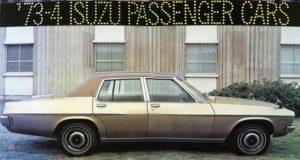
It retailed at a then hefty 3.48 million yen (when starting wages were just over 60,000 yen per month).

Though car enthusiasts and critics were generally upbeat about the de Ville, it failed to touch a nerve with consumers despite golf superstar Jack Nicklaus being used to plug the car in Japan.
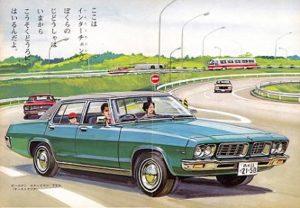
The de Ville was removed from the Isuzu range in 1975 after having sold fewer than 250 cars in the then still booming Japanese auto market.

Alas, despite the best efforts of Australian workers, the Oz automaking industry would ultimately suffer the same ignominious fate as its luxury car exports to Japan had seen: humiliating ends.
Buffered by considerable protection into the 1980s, the Australian car manufacturing industry coughed and spluttered its way through the final decade of the 20th century and into the first years of the new millennium.

But by the second decade of the 21st century it was clear that Australian automakers had priced themselves out of the market, mostly by overpaying C Suite types, but also by being unable to compete with countries that did not pay workers a fair wage.
Holden and Toyota Australia were the last automakers to maintain manufacturing plants in Australia, but both closed in 2017.

Holden and Ford Australia still have design and development facilities operating in Australia, so the country is still theoretically capable of producing cars.

Jack Nickalus advertising the Holden Statesman de Ville in Japan

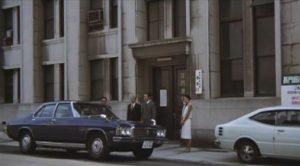
An Australian-made Statesman de Ville featuring in a 1979 Japanese TV cop drama.

Japanese report on the Roadpacer (Kingswood)

Automotive Industry in Australiaオーストラリア製アメ車に13B搭載!?マツダ・ロードペーサーAPはセンチュリーより高級だった?
豪州生まれのいすゞ車!? 贅沢すぎるクルマ、ステーツマン デ・ビル 驚きの価格とは?

Cop A Gander At These Rippers Too...

  • | | |

    モー、、十分か?牛関係のBig Thingsでもオーストラリアに盛ん

     オーストラリア経済にとって乳製品・肉食関係などがいずれも重要な分野であり、国及び国民のほとんどに欠かせない存在である。  なので、オーストラリアでの生活になんらかな不思議な影響がある「Big Things」も当然牛などと関連するものも多数。  多分、背景が最も面白いのがビクトリア州のバーチップにあるBig Mallee Bull。  Malleeという言葉をオージー英語でたくさん意味があるが、主に地域や木の種類に使われている。  そして、fit as a mallee bullという表現は、独特なオージー英語であり、どんな豪州人でも分かるはずだ。直訳すると「マリー地域の雄牛並みの体が鍛えられている」で、意味が「極めて壮健だ」。  それに因んでビクトリア州のマリー地域にあるバーチップが街のど真ん中に巨大な雄牛を称える。  問題は、実際にmallee bullという牛が元々存在しない。  でも、それを別においておいて、他も見てみよう。  まずは、北部のクイーンズランド州から始まろう。  南回帰線にあることで有名な町ロックハンプトンは元々ビーフ産業が栄えている地域である。  それを称えるため地域の象徴である牛3頭の「Big Things」を町のあっちこっちに設置されたが、一つが朽ち果てたようで現在2頭のBig Bullしか残っていないらしい。  そう遠く離れていないのが同州ヤンディナ。  ロックハンプトン同様、この地域も牛産業が重要であり、牛の「Big Things」が作られた。  もう一つの特徴がしょうが農家が多い。  決してイヤンディナという地域について「しょうがない、な~」と言い難い。  実にしょうがだらけだ。  はい、くだらないギャグをやめよう。  ニューサウスウェールズ州海岸添え北部の町ワーチョープは元々「Big Things」があった町。  だが、そこにあったBig Bullは、老化で約5年前撤去されたようだ。  オープンした当時お土産屋やビーフに関する展示があったようだったが、集客力があまりなかった見たい。  同州南部海岸添えの方へ行くとボダラという町がある。  ボダラは牛が有名というよりチーズをはじめ乳製品が有名だ。  そこで同町に巨大なチーズ像がある。  だが、上記Big Bullと同じようにこれも老朽化し、今一般人がなかなか近づかないようになっているようだ。  しかし、ハイウェイから良く見えるらしいし、写真も撮れる。  そして、他の牛などに関連する「Big Things」は、以前に考えRooで取り上げられているものだ。  今週、話に触れたばかりのBig Cowsがある。  これらが他数件と一緒にビクトリア州の「Big Things」都であるフィリップ島にある。  同島のニューヘーブンという町にある。  (皮肉的にカウズ<牛の複数形>でありながらカウズという町がとなりにあってにもかかわらずそこで立てられなかった。)  そして、ほぼオーストラリア全国に渡って西オーストラリア州へ。  ここにはCow on the Cornerという巨大な牛がある。  このデカイ牛はブランズィック・ジャンクションという町にあってにも関わらず、日本と深い関係がある。  日本で発売されているLady Bordenアイスクリームが元々この地域に作られて1990年代以降輸出された。 Birchip (includes Big Mallee Bull footage)

  • Why Has Kumi Taguchi Become One Of Australia’s Most Important Bridges To Japan?

    なぜクミ・タグチ氏はオーストラリアと日本を結ぶ大切な架け橋になったのでしょうか? Australian journalist Kumi Taguchi has spent decades helping Australians understand Japan—not through stereotypes, but through thoughtful storytelling and her own bicultural experience. オーストラリアのジャーナリスト、クミ・タグチ(田口久実)氏は、長年にわたり自身のルーツと取材を通して、日本を固定観念ではなく「人」の物語としてオーストラリアへ伝えてきました。 Australia’s trusted Japanese-Australian voice オーストラリアで信頼される日系ジャーナリスト Many Australians know Taguchi as the calm, thoughtful presenter of SBS’s Insight. Before that she fronted ABC News and Compass, becoming one of Australia’s best-known journalists. Few viewers realise her Japanese heritage has quietly shaped her career and the stories she tells. Taguchi is, for me, an incredible presence on Insight. The program encourages people to bare their souls about aspects of their lives that make them extremely vulnerable. Having the ability to coax those emotions from people takes an immeasurable…

  • |

    Rainbow Over Allah And Putting A Tiger In The Tank

    Work slowed down and it was a little easier to enjoy life, which allowed for stopping to smell the roses and capturing such opportunities as a rainbow shining above the Tokyo Mosque and beefing up Bargearse the bike. Mrs. Kangaeroo and I also got to visit an exhibition by the delightful Kyoichi Tsuzuki, who has been chronicalling Japan’s quirky side for decides. He was showing displays from hihokan, the now vanishing but once almost ubiquitous sex museums across Japan. Bargearse, meanwhile, my erstwhile fat bike, got an upgrade with tiger decorations, taking over from a predecessor pedallar that piqued my interesting in pedalling.

  • | |

    A Symbol Of Japan That Fits Australia Like A Shoe

    Given the powerful pull of the surf culture in Australia, a link with Katsushika Hokusai‘s The Great Wave Off Kanagawa that immediately conveys an image of Japan was almost inevitable, but also symbolizes the strong ties between the two countries almost made for each other. Countless Australian companies, organizations, entrepreneurs, artists and others utilize or have utilized directly or derivatively the iconic Japanese work forming one of Hokusai’s Thirty-six Views of Mount Fuji. Even though the Great Wave is an instantly recognizable image that embodies the essence of Japanese spirit, particularly with the inclusion of Mount Fuji, Australia has long recognized the work as a shared connection between the countries….

  • Osaka’s Touch of Australia’s Great Wave

    The 1970 Osaka World Expo was a boon for Japan’s second-largest city, then, like the rest of the country, enjoying the postwar boom that propelled Japan from the brink of destruction to being the No. 2 economic power in the world. 1970年に行われた大阪万国博覧会は、当時高度成長期真っ最中商業地域であり日本第二都市である大阪にとって世界に披露する機会を与え、思い切ってその素晴らしさを見せた。 Australia, too, was still enjoying unprecedented prosperity in 1970, and it showed with its amazing pavilion at the Osaka showcase. 当時、オーストラリアも景気が良かったし、万博で見せたご立派な「オーストラリア館」もその証拠と言えるだろう。 The pavilion, modeled on Katsushika Hokusai‘s The Great Wave at Kanagawa, was at the end of the Expo donated to Yokkaichi, Mie Prefecture, which is Sydney’s sister city. It was supposed to be a symbol of the “eternal” friendship between Japan and Australia. 北斎の「神奈川沖浪裏」をモチーフにした同館は、万博終了後シドニーの姉妹都市である三重県四日市市に移動し、日豪友情の「永遠シンボル」として博物館などとして使われた。 After almost 45…