
No Flies On Why Sharp Aussies Never Sit Still
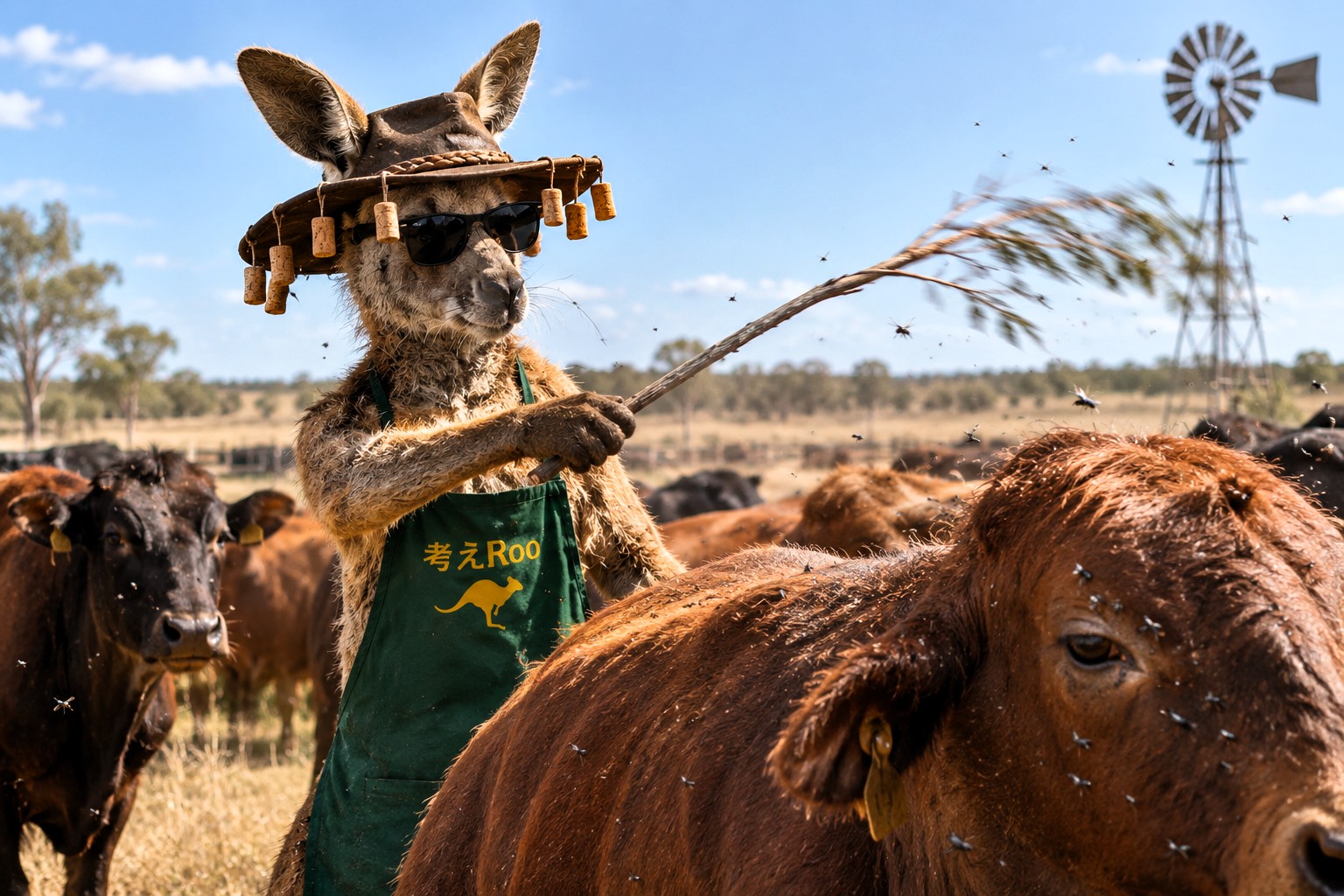
Why would Aussies compliment someone’s intelligence by talking about insects that aren’t there?
なぜオーストラリア人は、そこに「いない」虫の話で相手の賢さを褒めるのだろうか?
In the paddocks of 1840s colonial Australia, stockmen noticed something about their cattle: the laziest, slowest animals attracted swarms of flies, while the sharp, active ones moved around too much for any fly to settle on them. From that simple bit of bush observation came one of Australia’s oldest surviving slang phrases, and it was exporting itself to the U.S. and Britain within a few decades.
1840年代、植民地時代のオーストラリアの牧場で、牧夫たちは牛について面白いことに気づいた。動きの鈍い牛にはハエがたかるが、活発に動き回る牛にはハエがとまる暇がない、というのだ。この素朴な観察から生まれたのが、オーストラリアに現存する最古のスラングのひとつであり、数十年のうちにアメリカやイギリスにも輸出されていった。
Meaning
“No flies on [someone]” means that person is sharp, alert, and not easily fooled — the exact opposite of a “drongo.” It’s almost always used as a compliment.
「No flies on〜」は、その人が賢く、油断がなく、簡単には騙されないことを意味する。ちょうど “drongo“(愚か者)の対義語のような表現で、ほぼ常に褒め言葉として使われる。
Example
“She spotted the scam straight away — there’s no flies on her.”
(彼女はすぐに詐欺だと見抜いた。まったく隙がない人だ。)
日本語での解説
“No flies on him/her” は直訳すると「彼/彼女にはハエがいない」だが、実際の意味は「油断がない」「賢くて騙されない」。牛が活発に動き回るほどハエがとまれない、という牧場の観察がそのまま比喩になった珍しい表現で、1840年代のオーストラリアで生まれ、19世紀後半にはアメリカやイギリスにも広まった。
Australia–Japan Connection
Japanese has its own animal-based compliments for sharpness (think of idioms built around foxes or hawks), so “no flies on” offers a fun cross-cultural comparison point: both languages reach for the natural world when English or Japanese speakers want to describe someone too quick to be caught out.
日本語にもキツネやタカなど動物にたとえて「抜け目のなさ」を表す慣用句がある。”no flies on” はそれと比べる面白い題材になる。英語話者も日本語話者も、「隙のない人」を表現するときには自然界のたとえに頼るという共通点が見えてくる。
Related Terms

The compliment is 180 years old and the joke still works: nobody wants flies on them, and nobody wants to be one either. この褒め言葉は180年も前からあるのに、今でも通用する。誰だってハエにたかられたくはないし、誰だって「ハエにたかられる側」にはなりたくないのだ。