TBSの「The世界遺産」は今週オーストラリア特集
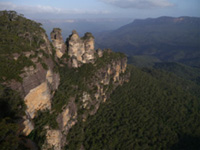
詳細は以下の通り。
6月10日(日) 午後6時
グレーターブルーマウンテンズ地域
6月17日(日) 午後6時
ニンガルー・コースト
「The世界遺産」
「The世界遺産」オーストラリア特集ページ
THE 世界遺産(TBSテレビ)(フェースブック)
詳細は以下の通り。
6月10日(日) 午後6時
グレーターブルーマウンテンズ地域
6月17日(日) 午後6時
ニンガルー・コースト
「The世界遺産」
「The世界遺産」オーストラリア特集ページ
THE 世界遺産(TBSテレビ)(フェースブック)
大事な時、正念場、大切な行事などをオージー英語ではbiggyとして表現する。おそらくbig moment (大きな瞬間)の省略だろう。オージー英語ではよく使われる表現だ。
今からちょうど39年前のことだったが、1974年12月25日、クリスマスの日、「サンタがダーウィンに行き届けなかった日」とされている。 同日強力な暴風であるサイクロン・トレーシーがオーストラリア北部にある同都市を直撃して、市全体約9割を破壊し、住民の80%をホームレスにして、71人の命を奪った豪史上最低な災害だった、とされていた。 熱帯雨林地に位置しているダーウィンは、よくサイクロンを直撃されるので、「トレーシー」についての警報を普通以上に警戒しなかったという。 しかし、サイクロンが24日の夜から翌日のクリスマスの日にかけて都市を直撃して、焼野原のようにした。再建は数年かけて今でも同市住民の心に深く彫り込まれている事件だ。 以降、「Santa Never made it into Darwin」というクリスマス曲がヒットして、テレビドラマにもなったのでクリスマス事件としてオージーに深い影響があったと言える。 「サイクローン・トレージー」テレビドラマについて
「ファースト・オーストラリアンズ」(英語)は、2008年作のドキュメンタリー。先住民の視野からオーストラリアの歴史を記録する。必見だ! 今日は6作目5部中4部目。

Australia provided an (admittedly unacknowledged) touch to Monster Prince (怪獣王子), one of Japan’s most popular TV shows in the late 1960s. Monster Prince told the story of Takeru Ibuki, a boy left stranded on a tropical island while a baby when his family is caught in a volcanic eruption and subsequently raised by dinosaurs living there. Together with his brontosaurus friend, Nessie, Takeru defends the island, and by extension the Earth, from invading aliens. And that’s where the Australian touch comes in…Takeru’s weapon of choice is a boomerang! The show ran for two series and was made by Nihon Tokusatsu Kabukikaisha. The role of Takeru was shared by twins, Yoshinori…
Rightoは、は気軽く相手に対して同意を示している言葉であり、おそらくall rightの省略でありながらもうひとつのオージー英語の特徴である言葉の最後に「o」という母音を付け加えた形になっている。二つのオージー英語特徴を示しているという意味は、ちょっと特別な言葉かもしれないね。 Rightoも、何らかの行動を起こす前に自分自身にいう言葉として使う場合もあり、沿いう時は日本語の「よっしゅ」と同じような感覚で使う。 Righto, then, let’s check out the table to see how “righto” comes up in other forms of English and in Japanese.
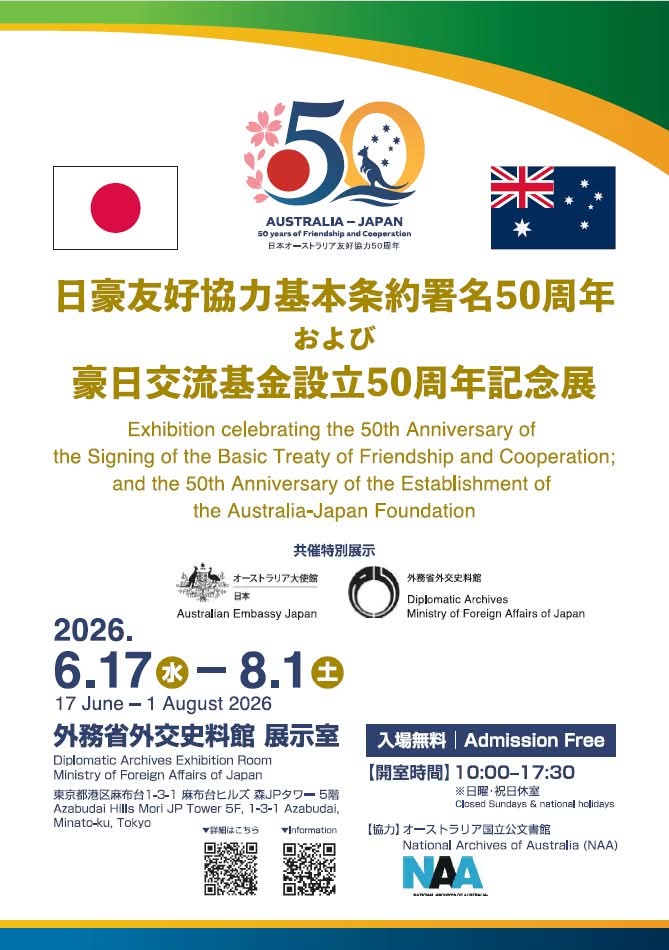
July 31-Aug. 6, 2026 Australia’s cultural presence in Japan remains strong this week, with internationally acclaimed sculpture, award-winning theatre, progressive rock at Fuji Rock, and a special exhibition celebrating 50 years of Australia–Japan friendship. THIS WEEKEND! Last Chance! 日豪友好本約50周年および豪日交流基金50周年記念展 6月17日から8月1日までの間、外務省と駐日駐日オーストラリア大使館との共催で特別展示「日豪友好協力基本条約署名50周年および豪日交流基金設立50周年記念展」を開催いたします。会場は外務省外交史料館展示室。〒106-0041 東京都港区麻布台1-3-1、麻布台ヒルズ森JPタワー5階電話:03-3589-0369開催期間:令和8年6月17日(水曜日)~8月1日(土曜日)(日曜日、国民の祝日を除く)開館時間:午前10時~午後5時30分(最終受付:午後5時) VenueDiplomatic Archives Exhibition Room Dates17 June – 1 August 2026 AdmissionFree ONGOING EVENTS OR COMING SOON GUNK Down Under GUNK is Tokyo underground royalty. Featuring members of legendary Japanese punk rock bands, GUNK brings together decades of blood, sweat and rock’n’roll from the heart of Tokyo’s underground scene…They are touring Victoria in August 2026. GUNKは東京アンダーグラウンド界の“ロイヤルティ”とも言うべき存在だ。 伝説的な日本のパンクロック・バンドのメンバーが集結し、東京アンダーグラウンドのど真ん中で何十年も積み重ねてきた血と汗とロックンロールを一つに凝縮したバンド――それがGUNK。 2026年8月、彼らはヴィクトリア州ツアーを敢行する。 Tokyo Punk Rock legends GUNK Oz Tour! LOUIS NOWRA’S “THE GOLDEN AGE” ON…
We use cookies to improve your experience on our site. By using our site, you consent to cookies.
Websites store cookies to enhance functionality and personalise your experience. You can manage your preferences, but blocking some cookies may impact site performance and services.
Essential cookies enable basic functions and are necessary for the proper function of the website.
These cookies are needed for adding comments on this website.
Statistics cookies collect information anonymously. This information helps us understand how visitors use our website.
Google Analytics is a powerful tool that tracks and analyzes website traffic for informed marketing decisions.
Service URL: policies.google.com (opens in a new window)