An Aussie Touch to a Landmark Japanese TV Show

Australia provided an (admittedly unacknowledged) touch to Monster Prince (怪獣王子), one of Japan’s most popular TV shows in the late 1960s.
Monster Prince told the story of Takeru Ibuki, a boy left stranded on a tropical island while a baby when his family is caught in a volcanic eruption and subsequently raised by dinosaurs living there.
Together with his brontosaurus friend, Nessie, Takeru defends the island, and by extension the Earth, from invading aliens.
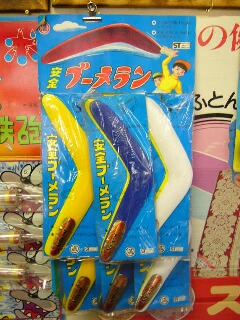
And that’s where the Australian touch comes in…Takeru’s weapon of choice is a boomerang!
The show ran for two series and was made by Nihon Tokusatsu Kabukikaisha.
The role of Takeru was shared by twins, Yoshinori and Mitsunori Nomura, both of who were prominent child actors at the time, but for who this would be their final role before they both left showbiz.
Monster Prince was plagued by troubles throughout its duration, though its merchandise did brisk sales.
Confectionary giant, Lotte, the program’s sponsor, wanted to pull the plug after the first series, but agreed to extend its backing when the show was sold to the United States.
In-fighting also plagued the program, which was shot in Kyoto but by a crew from Tokyo, and rivalries between those from the ancient and modern capitals were apparently fierce.
Nihon Tokusatsu Kabukikaisha wound up following the end of this series, which came as the tokusatsu boom that had encompassed Japan through much of the 1960s slowly declined from its zenith.

Check out KAIJU OUJI: MONSTER PRINCE, which has an awesome write-up on Monster Prince, a program also known outside of Japan by the romanization of its Japanese title,Kaiju Ouji.

See a subtitled version of the first-ever episode of Monster Prince (featuring plenty of boomerang throwing and an awesome scream to kick-off the opening titles!)
Cop A Gander At These Rippers Too...

  • | |

    The Multi-Function Polis: 日本の新型都市をオーストリアで建設計画

     それほど遠くない昔前、日本が「日本の新型都市」をオーストラリアで建設する計画があったのは知っていた?  その都市はサンフランシスコのジャパン・タウンかロサンゼレスのリットル・トーキョーのような日本人や日本が大きく影響与える町の一部なところではなく、日豪政府が合同で運営する新しい都市を一から作ろうという大きな計画だった。また、その都市は当時の最先端技術を全面的に活用しようという予定だった。これはマルチ・ファンクション・ポリス(MFP)という都市だった。   オーストラリア政府が1980年代の半ば頃日本政府にMFP計画を発案した。当時、白豪主義などでずーと避けようとしたアジアに対して近づこうと豹変したオーストラリア政府の考えだった。日本がプラザ合意直後円高が続き40年間に及ぶ経済成長が絶好調に進みさらに一層景気が発揮するところだった(その「発揮」がバブルだということは後になった分かったが当時は「ジャパニーズ・ミラクル」として見られたのは忘れちゃいけない。)  日本が半導体などの世界的なリーダーであったので最先端技術及びその都市のブレーンなどを供給し、オーストラリアが場所を提供すると両国が合同で資金を出し、合同で運営する都市という計画だった。両国が計画に関する協議などが進み、候補地になるためオーストラリア各地で激しい競争を行い、最終的に南オーストラリアの首都であるアデレード市の郊外で作ろうとした。  しかし、オーストラリア国内での反発が激しかった。当時まだ潜在する反日感情が沸き、表でも与党党首だったアンドルー・ピーコック氏や復員兵が構成するRSL会長のアルフ・ガーランド氏を先頭に「あの都市がアジア人の居留地しかならん」など、反MFP計画勢が計画の反対を示し、なかなか進めなかった。  結局、時間が経つと共にオーストラリア政府の動きが鈍くなる。1980年代後半オーストラリアが深刻な不況に落ち、バブル絶好だった日本がその半日感情を考慮し強い後押しを控えた。最後に、反対の声が強すぎ、バブルが破壊し、計画が元通りで進めなくなって今では忘れられている日豪関係のエピソードのひとつである。  ちなみに、連邦政府がMFP計画を断念したけど、1998年に南オーストラリア州政府が独自で同計画を部分的に使いMFPの候補地でMawson Lakesという新型地域を建設した。でも、もう日豪合同都市という夢が絶望となって、日本でもオーストラリアの連邦(国)政府のいずれも関係なかったけどね、、、 この話しをさらに読みたいなら考えRooが下記のサイトをお勧めします。 マルチ・ファンクション・ポリス(MFP)(English) グローバリゼーション下の国際協力政策 ――MFPの事例――(日本語)

  • |

    Little Girl’s Story Opens Door to Aussie Animal Boom in Japan

    Back in the early ’80s Australia did not command a great deal of attention in Japan (to be honest, it still doesn’t command that great a presence to this day…) Things changed, however, with the launch of Lucy-May of the Southern Rainbow. Lucy-May of the Southern Rainbow was an anime by Nippon Animation that aired weekly from January 10 to December 26, 1982. The cartoon told the story of Lucy-May Popple and her family, who had emigrated from Yorkshire to live in Adelaide, Australia. The story was based on a book called Southern Rainbow by Australian author Phyllis Piddington. The anime would be translated into numerous languages and aired in…

  • | |

    Aussie Soccer Presence Is So Strong Have Marinos Become Merinos?

    なぜ横浜F・マリノスはオージー監督を選び続けるのか? J.League powerhouse Yokohama F Marinos have such a strong connection with Australia it makes you wonder whether the club has gotten mixed up with merinos, the sheep attributed with making Australia rich. The Marinos recently appointed Steve Corica as coach, the sixth Aussie to hold the post since 2019. Jリーグの強豪・横浜F・マリノスはオーストラリアとの結びつきがあまりにも強く、クラブ名がオーストラリアを豊かにしたとされるメリノ種の羊(merinos)と混ざってしまったのでは、と冗談のひとつも言いたくなるほどだ。マリノスは最近、スティーブ・コリカを監督に迎えたが、これは2019年以降で6人目のオージー監督となる。 It Started with Ange すべてはアンジェから始まった In January 2018, Ange Postecoglou arrived at Yokohama F. Marinos after leading Australia to the 2015 AFC Asian Cup. Many wondered whether his adventurous attacking style would suit Japanese football. The answer came quickly. すべてはアンジェから始まった 2018年1月、アンジェ・ポステコグルー監督が横浜F・マリノスに就任しました。 アジアカップ優勝監督として期待される一方、その攻撃的なサッカーがJリーグで通用するのか注目されました。 答えは、すぐに示されました。 Winning Hearts—and the League サポーターの心とリーグをつかんだ In 2019, Marinos won the J1 League title playing fast, attacking…

  • |

    Tiny Tassie Town Gets A Kick Out Of Kiki

    A tiny Tasmanian town once known for its female factory has become a magnet for anime fans around the world because of its apparent connection with a witch. Ross, the town with a population of just over 400 and located just over 100 kilometers north of the Tasmanian capital of Hobart, attracts Studio Ghibli anime fans globally, particularly from Japan. The town’s bread shop is said to be the real-life inspiration for the Gütiokipänja Bakery where Kiki, the young witch titular character of Kiki’s Delivery Service, is said to base her business in the 1989 Studio Ghibli hit. The Ross Village Inn has set up an attic space to mimic…