Let’s Barbie! Aussie-Style BBQing for the Japanese!
 Australia beef is the most visibly successful Australian export to Japan, leaving considerable distance to its closest rivals, which these days are probably Tim Tams, Miranda Kerr and hordes of drunken ocker snow bunnies in country towns like Niseko and Hakuba.
To be honest, Oz doesn’t really enter the consciousness of most Japanese, except for Aussie Beef, which is probably the first thing that comes to mind for many Nihonjin when asked about Oz.
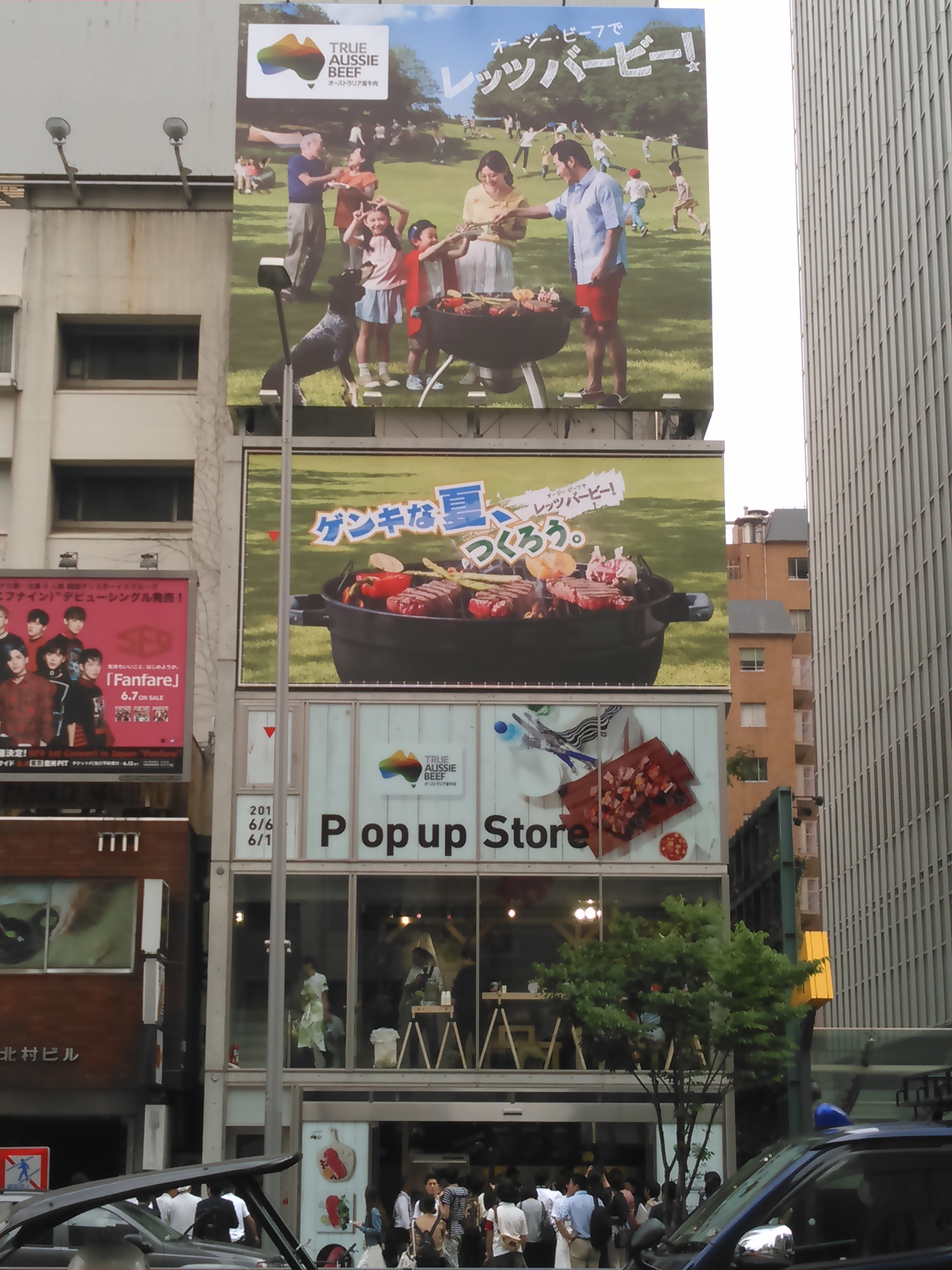
And this year, Meat & Livestock Australia Ltd (MLA) is going all-out to try and convert Japanese consumers to worshiping the barbie in much the same manner that many Aussies do.
MLA is conducting a huge Let’s Barbie campaign to encourage people to use the summer months to enjoy munching away on some good old tucker.
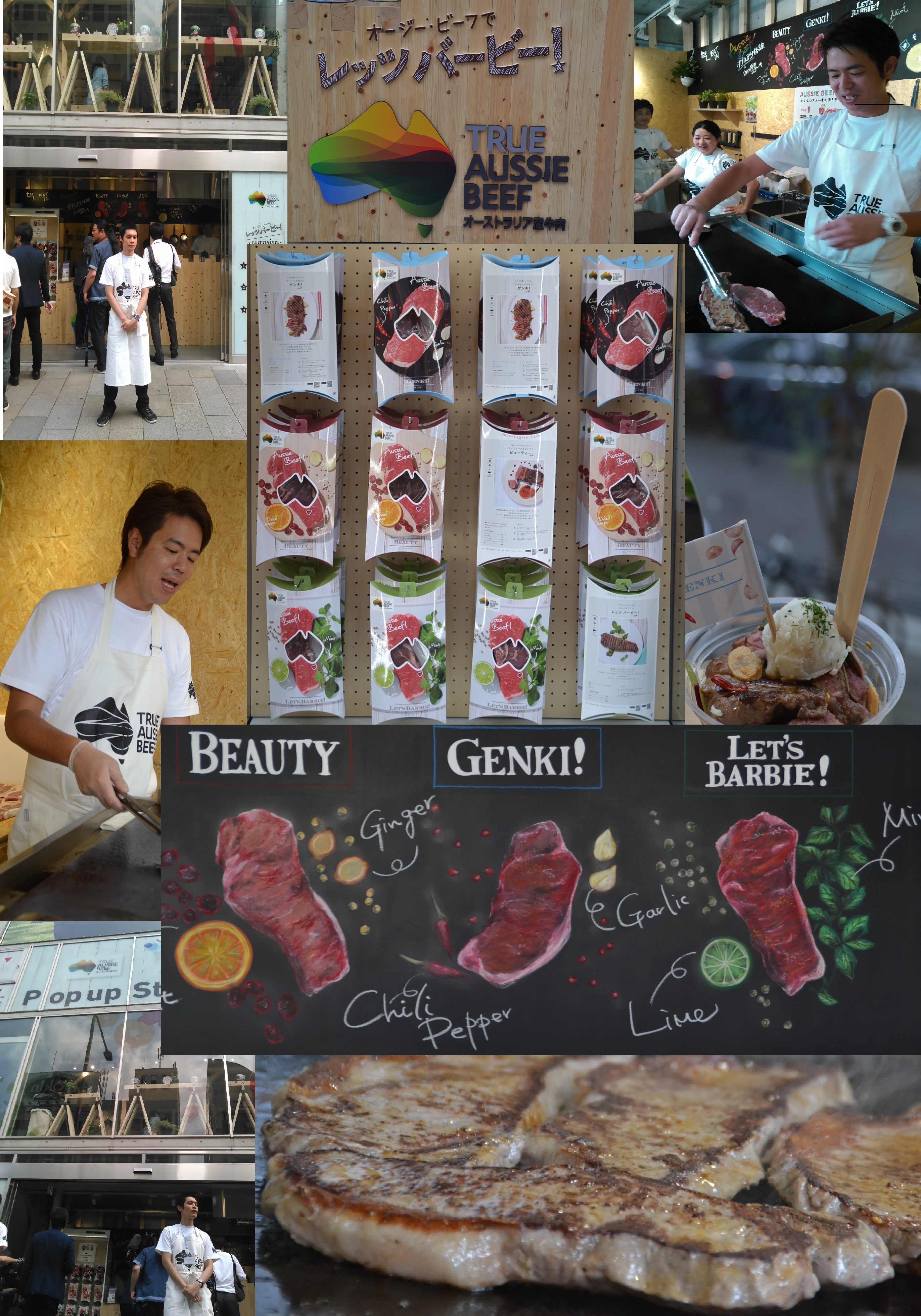
The pop-up shop is offering demonstrations of cooking, Strayan-style, and serves up three different kinds of steak and salad “meat parfaits.” There’s Beauty, with lime and ginger, Genki, flavored by chili pepper and garlic, and Let’s Barbie, with lime and mint. All are delicious and served in a cup with salad and mashed spuds.
Part of the campaign is teaching the Japanese about how Aussies barbie. Here’s what the official Let’s Barbie campaign website says about the Barbie…
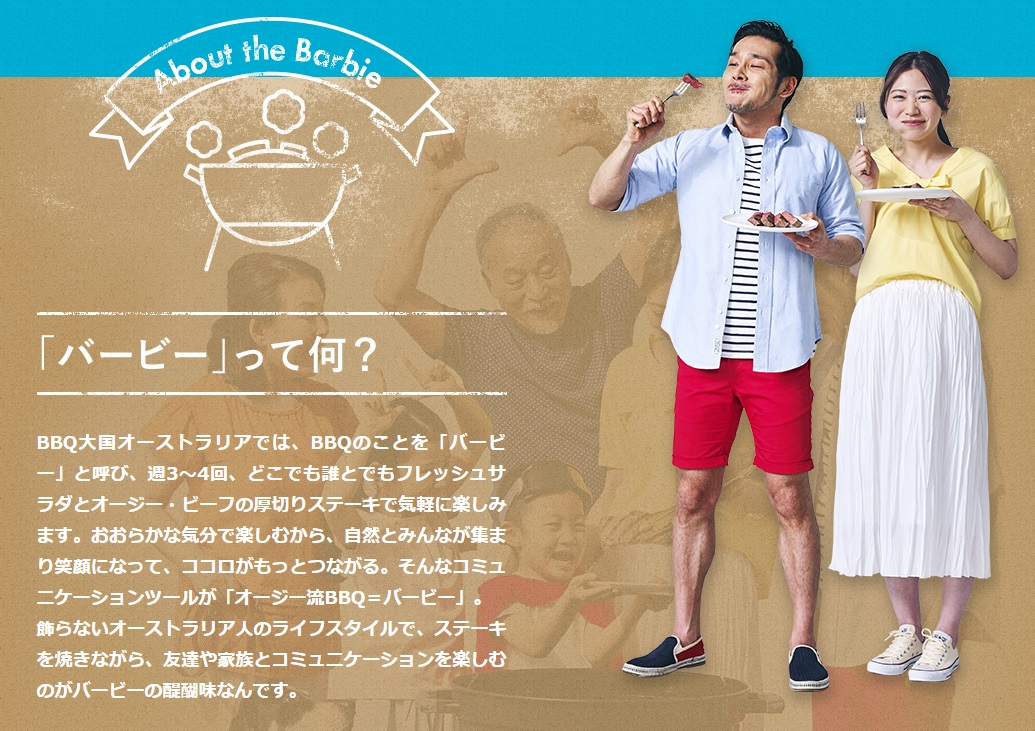
Barbecue Superpower Australia calls barbecues “barbies” and 3-4 times a week, (Aussies) enjoying tucking into thick-cut, Aussie Beef steaks and fresh salads anytime, anywhere. You can relax and enjoy them, and everybody’s all smiles out in the wilds of nature, which brings everybody closer. And the communication tool that brings that about is the Aussie-style barbecue: The Barbie.
Aussie lifestyle is about not putting on airs, and the real thrill of the barbie is being about enjoying communication with your mates and your family.
It’s hard to see what sort of impact the campaign will have. Japanese tend to be great barbecuers, anyway. And while many would gladly abide by the campaigns exhortations to get out and enjoy a good steak with your mates, most are stuck inside the office waiting for the boss to go home before they have any hope of being able to leave.
Related links
Barbie (Strine Strife)
Barbie (Yabai-lingual)
Barbie (Go-cabulary)