Sexism Sells…Aussie Princes and Arresting the Great Japanese Tourist Decline
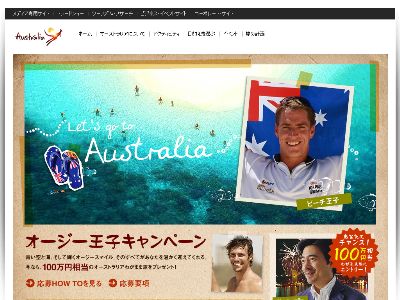
Japan’s Aussie Prince Campaign website seeking women’s photos of sexy blokes
In this day and age, it would be unthinkable to use taxpayers’ hard-earned money to promote a campaign promising a 1 million yen order-made trip to Australia for a young bloke sending in photos of a sexy member of the opposite sex.
But, when the shoe’s on the other foot, it seems to be all right.
At least, it was until just a few years ago.
For a while in the late Noughties to early 2010s, Tourism Australia worked desperately hard to arrest a drastic and dramatic decline in Japanese tourist numbers.
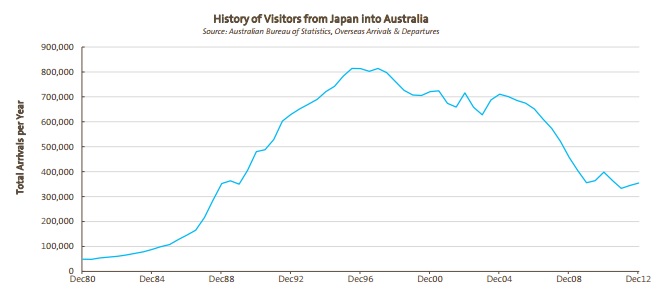
Japanese Visitors to Australia 2002-2012
Part of those efforts involved a campaign that Tourism Australia conducted in Japan back in 2009-2010. The campaign played on the Japanese homophones (words that sound the same but have different meanings) for Aussie (oojii in Japanese) and prince (ouji in Japanese).
The Oojii Ouji Campaign promised a 1 million yen prize to the entrant that provided Tourism Australia with the best story of a visit to Australia. Participants were also asked to send in a photo of an Aussie they’d enjoyed spending time with. The implied wording of the campaign (using “prince” in Japanese immediately implies a Disney-style, good-looking and virile hetero male who can sweep a woman of her feet) and actual use of only good-looking young Aussie blokes to promote the cause in Japan made it fairly obvious the promotion was all about physical attraction.
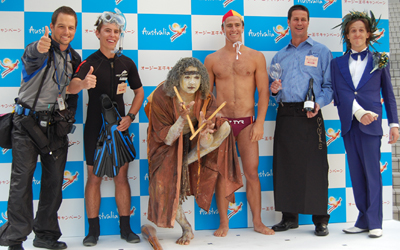
Aussie “princes” promoting the tourism campaign
The “princes” Australia sent to Tokyo to promote the campaign were Aborigine Prince Warren Clements, Great Emotion Prince Nick Atkins, Wine Prince Brett Stanley, Beach Prince Shannon Eckstein and Sports Prince Ben Tomkins.
Tourism Australia made no secret of targeting women in their 20s and 30s, a gender-oriented promotion they would not be able to engage in back in Australia.
Actually, it makes sense for tourist organizations to target younger Japanese women. They are less likely to be caught in overtime trap, have more of a chance of building up disposable income (especially if they’re living at home) and can be a bit more adventurous.
Ultimately, destiny made the campaign’s timing disastrous. Before the effects of the campaign could be felt, the Great East Japan Earthquake struck and there were far more serious issues to deal with.
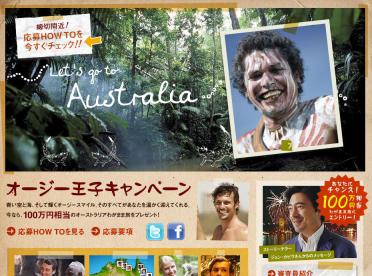
The website featuring “Aboriginal Prince” Warren Clements
Tourism Australia has reverted to a more standard approach to promoting the country in Japan, which no longer has the importance for the Australian tourist market that it held when it was sending 700,000-800,000 people a year Down Under from the mid-1990s to the early Noughties. Hordes of Chinese tourists swooping into Australia have made the need to encourage more Japanese to visit a far less critical issue than it was a decade ago.

Cop A Gander At These Rippers Too...

  • |

    「やばいリンガル」 Thongs

     今、オーストラリアは真夏に向かっているので、町の中では多くのオージーがthong姿を見せてくれるようになる。しかし、それを他の英語圏の人に言ったら、彼らは顔を赤らめるだろう。何でだろう?オーストラリアでのThong姿は、全然恥ずかしくないのに。 It’s approaching midsummer in Australia and many Aussies would now be getting about in thongs. Tell that to someone from another English-speaking country and they may assume it would be a time for red faces. Why thongs? And why so embarrassing?

  • | |

    The Multi-Function Polis: 日本の新型都市をオーストリアで建設計画

     それほど遠くない昔前、日本が「日本の新型都市」をオーストラリアで建設する計画があったのは知っていた?  その都市はサンフランシスコのジャパン・タウンかロサンゼレスのリットル・トーキョーのような日本人や日本が大きく影響与える町の一部なところではなく、日豪政府が合同で運営する新しい都市を一から作ろうという大きな計画だった。また、その都市は当時の最先端技術を全面的に活用しようという予定だった。これはマルチ・ファンクション・ポリス(MFP)という都市だった。   オーストラリア政府が1980年代の半ば頃日本政府にMFP計画を発案した。当時、白豪主義などでずーと避けようとしたアジアに対して近づこうと豹変したオーストラリア政府の考えだった。日本がプラザ合意直後円高が続き40年間に及ぶ経済成長が絶好調に進みさらに一層景気が発揮するところだった(その「発揮」がバブルだということは後になった分かったが当時は「ジャパニーズ・ミラクル」として見られたのは忘れちゃいけない。)  日本が半導体などの世界的なリーダーであったので最先端技術及びその都市のブレーンなどを供給し、オーストラリアが場所を提供すると両国が合同で資金を出し、合同で運営する都市という計画だった。両国が計画に関する協議などが進み、候補地になるためオーストラリア各地で激しい競争を行い、最終的に南オーストラリアの首都であるアデレード市の郊外で作ろうとした。  しかし、オーストラリア国内での反発が激しかった。当時まだ潜在する反日感情が沸き、表でも与党党首だったアンドルー・ピーコック氏や復員兵が構成するRSL会長のアルフ・ガーランド氏を先頭に「あの都市がアジア人の居留地しかならん」など、反MFP計画勢が計画の反対を示し、なかなか進めなかった。  結局、時間が経つと共にオーストラリア政府の動きが鈍くなる。1980年代後半オーストラリアが深刻な不況に落ち、バブル絶好だった日本がその半日感情を考慮し強い後押しを控えた。最後に、反対の声が強すぎ、バブルが破壊し、計画が元通りで進めなくなって今では忘れられている日豪関係のエピソードのひとつである。  ちなみに、連邦政府がMFP計画を断念したけど、1998年に南オーストラリア州政府が独自で同計画を部分的に使いMFPの候補地でMawson Lakesという新型地域を建設した。でも、もう日豪合同都市という夢が絶望となって、日本でもオーストラリアの連邦(国)政府のいずれも関係なかったけどね、、、 この話しをさらに読みたいなら考えRooが下記のサイトをお勧めします。 マルチ・ファンクション・ポリス(MFP)(English) グローバリゼーション下の国際協力政策 ――MFPの事例――(日本語)

  • 日本でありえない、、、豪の通勤電車でいきなりダンス・パーティー!

     化粧していると猛烈に怒りを買ったり、基本的に食べたり・飲んだりが嫌がれている日本の通勤電車では絶対ありえない(携帯電話使用が禁じていることを平気で無視されても)!  この頃、オーストラリアパース市に走る電車にいきなりスーツ姿の若い男性が表れ、「良かったら社内にダンス・パーティーやりましょう」と他の通勤者に声をかけた。その男はピーター・シャープ氏という。同氏が音楽をかけて、いきなり社内で踊りだした。そして、続々と他の乗客も踊りだし、いつの間にか社内全員が踊っていた。  アーティストであるシャープ氏の動機は、「人々の間に会話があるように呼びかけたい。その簡単にみんなが一緒に踊れるなら、会話がどんなに簡単に始まれるのか」とコメントした。  しんとする日本の電車ではこの行為があれば恐らく誰かが警察を呼ぶだろう。 是非、日本でもこのような陽気な通勤雰囲気を作っていけば良いなぁ~。

  • Malcolm Who?

    Australian Prime Minister Malcolm Turnbull visited Japan this week, but you’d barely have known it. Despite repeated claims of the Japan-Australia relationship being stronger than ever, Turnbull’s trip went almost unnoticed by the Japanese media. Turnbull toured an Air Self-Defense Force base with Prime Minister Shinzo Abe, seeing first-hand the Australian-made Bushmaster vehicles that Japan…

  • カンガルー、イルカ、クジラなどと買い物できる低額観光キャンペーンが国の高額PRに赤面する

     二次元のカンガルーかイルカやクジラを一般ショッピング・モールで一緒に踊ったり撫でたりできるニューサウスウェールズ州観光局であるDestination NSWが行った激安観光キャンペーンが注目を集めている。  同キャンペーンがショッピング・モールチェーンであるウエストフィールド社と共同で行い全額でわずか豪ドル3百万(約2億5千円)しかかからなく、ひそかなヒットとなっている。  一方、全国観光政策の実施を担当するTourism Australiaの2012年キャンペーンがおよそ豪ドル2億5千(約20億円)が「美しい」や「芸術的」などと評価されているものの効果についていまひとつであり、一般オーストラリア人の中では評判がそれほど良くない。  あなただったらどっちが良いかな?

  • |

    メルボルンがまた世界1住み易い都市、豪4つ都市がベスト10に

     メルボルンが2011年2年連続世界一番住みやすいとなっている、と英国エコノミスト・インテリジェンス・ユニットがクオリティ・オブ・ライフ調査発表を14日付行った。  ベスト10にはメルボルンをはじめ、4つのオーストラリアの都市が入っていた。アデレードが5位、シドニーが7位とパースが9位だった。隣のニュージーランド・オークランド市が10位とオーストララシアが圧倒的に上位を占める。カナダもバンクーバー、トロント・カルガリーの3都市もベスト10入り。 Melbourne rated world’s most liveable city in Economist Intelligence Unit’s Global Liveability Survey