Let’s Barbie! Aussie-Style BBQing for the Japanese!
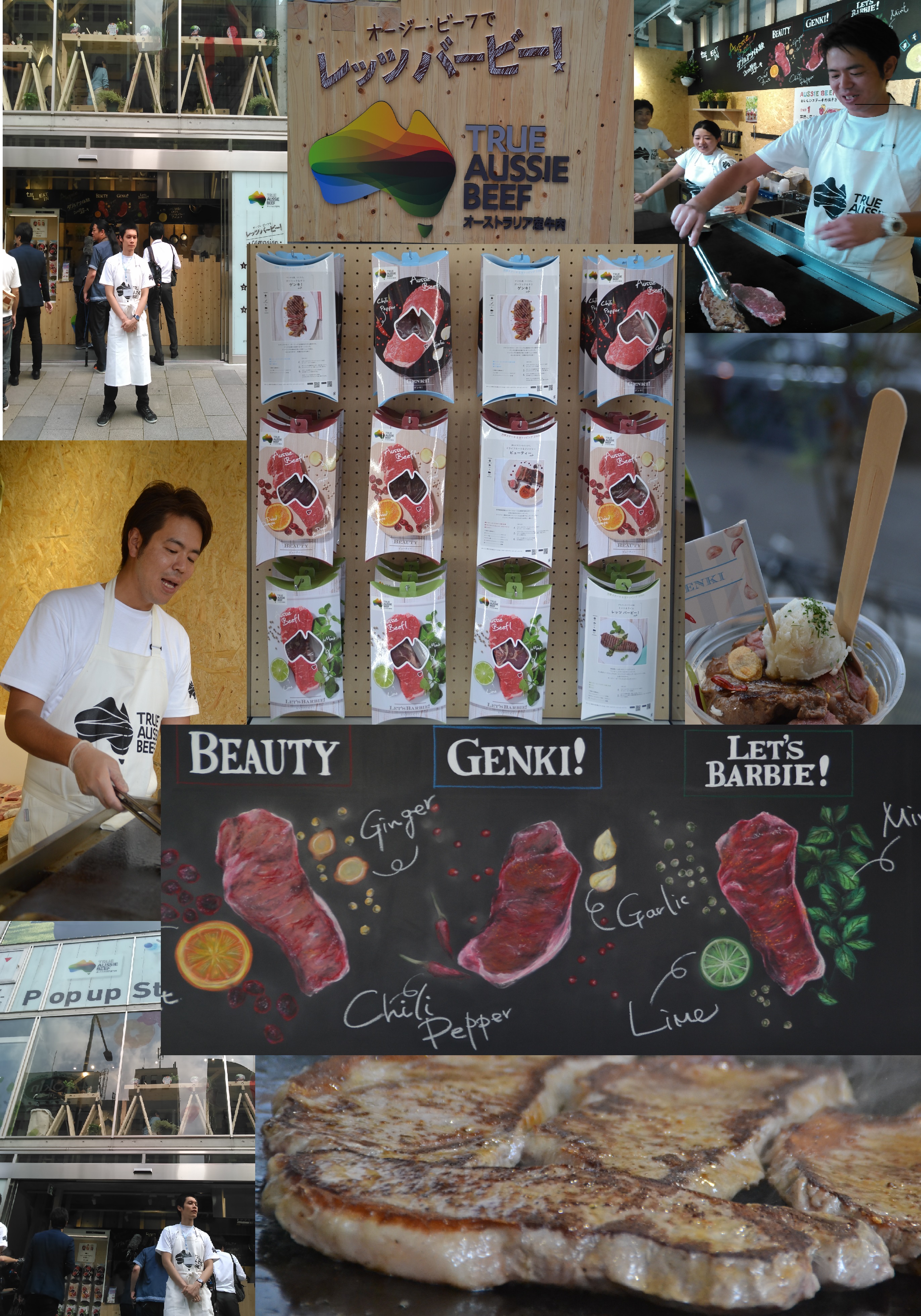
Australia beef is the most visibly successful Australian export to Japan, leaving considerable distance to its closest rivals, which these days are probably Tim Tams, Miranda Kerr and hordes of drunken ocker snow bunnies in country towns like Niseko and Hakuba.
To be honest, Oz doesn’t really enter the consciousness of most Japanese, except for Aussie Beef, which is probably the first thing that comes to mind for many Nihonjin when asked about Oz.
And this year, Meat & Livestock Australia Ltd (MLA) is going all-out to try and convert Japanese consumers to worshiping the barbie in much the same manner that many Aussies do.
MLA is conducting a huge Let’s Barbie campaign to encourage people to use the summer months to enjoy munching away on some good old tucker.
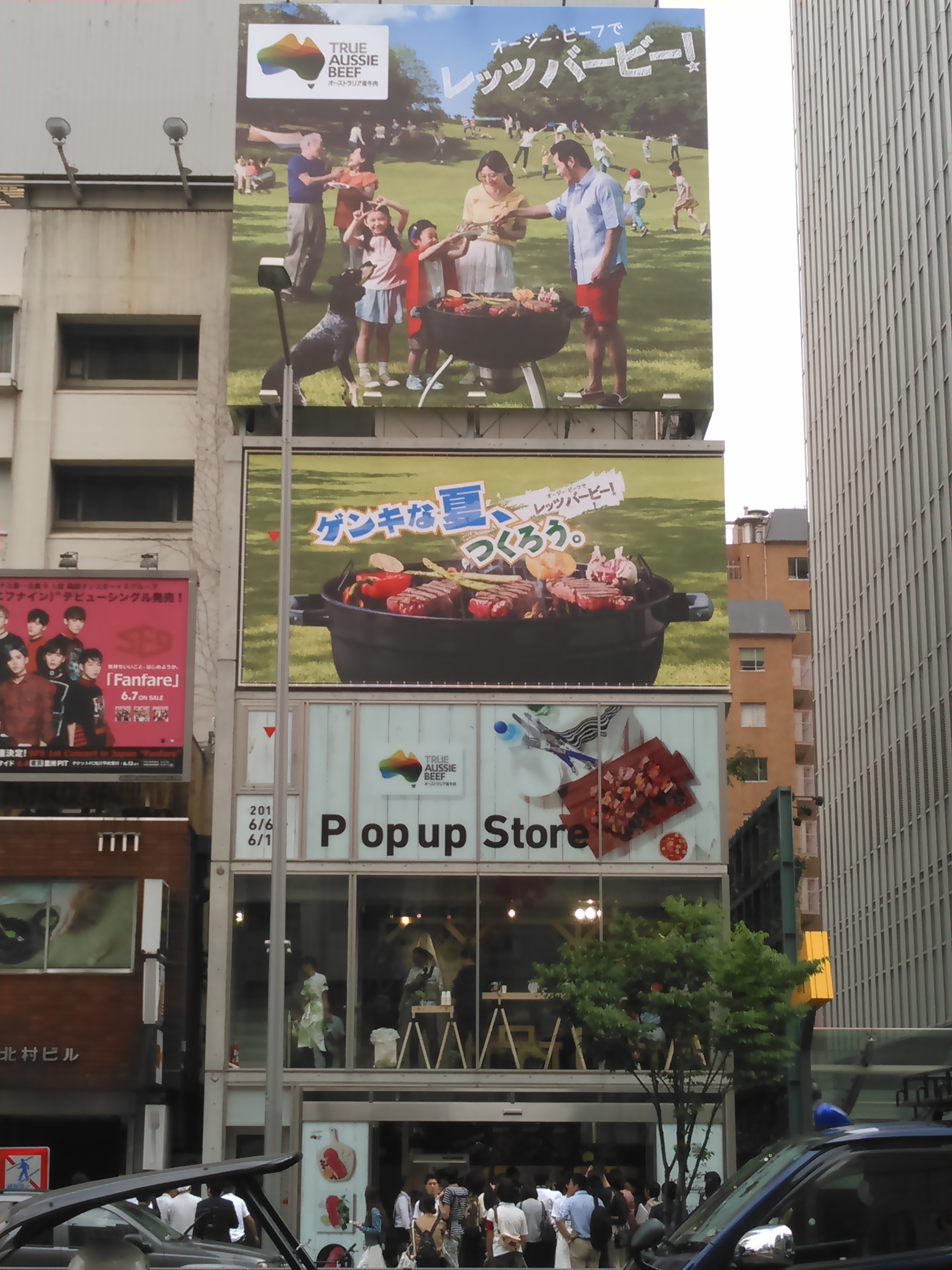
The Let’s Barbie pop-up store in Tokyo’s trendy Aoyama district
And they’re using Strine to do it, too, with part of the campaign involving a pop-up shop placed smack-bang in the middle of Aoyama, one of Tokyo’s trendiest districts, and a huge sign urging passers-by to “barbie!”
The pop-up shop is offering demonstrations of cooking, Strayan-style, and serves up three different kinds of steak and salad “meat parfaits.” There’s Beauty, with lime and ginger, Genki, flavored by chili pepper and garlic, and Let’s Barbie, with lime and mint. All are delicious and served in a cup with salad and mashed spuds.
Part of the campaign is teaching the Japanese about how Aussies barbie. Here’s what the official Let’s Barbie campaign website says about the Barbie…
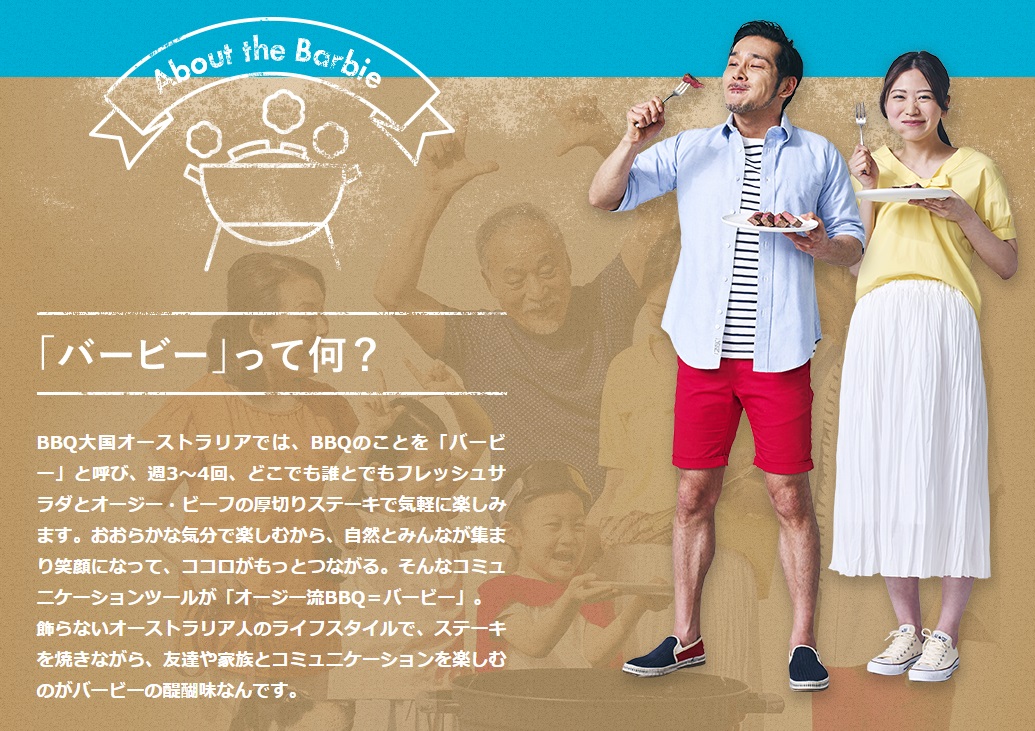
About the Barbie
What’s a Barbie?
Barbecue Superpower Australia calls barbecues “barbies” and 3-4 times a week, (Aussies) enjoying tucking into thick-cut, Aussie Beef steaks and fresh salads anytime, anywhere. You can relax and enjoy them, and everybody’s all smiles out in the wilds of nature, which brings everybody closer. And the communication tool that brings that about is the Aussie-style barbecue: The Barbie.
Aussie lifestyle is about not putting on airs, and the real thrill of the barbie is being about enjoying communication with your mates and your family.


It’s hard to see what sort of impact the campaign will have. Japanese tend to be great barbecuers, anyway. And while many would gladly abide by the campaigns exhortations to get out and enjoy a good steak with your mates, most are stuck inside the office waiting for the boss to go home before they have any hope of being able to leave.

Related links
Barbie (Strine Strife)
Barbie (Yabai-lingual)
Barbie (Go-cabulary)
Cop A Gander At These Rippers Too...

  • Inching Back Into Reality, One Step At A Time

    This week was all about crawling back into real life. I had spent the past couple of months pretty much shut away from the world and immobilized due to a broken leg. I got to return the crutches I had used, swapped them for a cane and now decided I am going to try and walk as much unaided as I possibly can. My doctor and physiotherapist advised me not to cycle, but they did so on the eve of the long year-end, new year holiday when dealing with any accident or incident is tough for medical professionals. I discovered cycling not only offered greater mobility, it was easier on…

  • ボーガン罵り言葉のパラドックス

    ボーガン語の中でも特に面白いのが、 オーストラリア人が“罵り言葉を社会的な句読点に変えてしまう”能力。 他の英語圏ならショッキングな単語が、 オーストラリアではこんなふうに使われる。 つまり、 罵り言葉が文法カテゴリーを全部制覇してしまう。もちろん、これはボーガンだけの特徴ではない。 オーストラリア全体の言語文化に根付いている。でも、「ボーガンのステレオタイプは、この“罵り言葉文化”を舞台演劇レベルまで誇張する。

  • |

    豪のイースター・ビルビー

     イースター・バニーじゃなくてビルビーだ!  今日はイースター・サンデーだ。キリスト教の影響が伝統的に強かった諸国では、イースター・サンデーはキリストが再生した日とされて祝う。北半球では春に行い、「再生」のシンボルとしてイースター・エッグを子供中心に配る。伝統的にチョコレート・エッグを配るのはイースター・バニーだ。日本ではバニーがちょっとセクシーな印象があるかもしれないが、うさぎが繁殖に強い動物であり春の「新生」を示すものだ。  しかし、オーストラリアは違う。イギリスの元植民地としてキリスト教の影響があり、イースターを祝う国であるが、宗教的な感覚よりイースター・エッグの販売などにより商業的な雰囲気の方が強い。当然、昔からオーストラリアではイースター・バニーがイースターの象徴の一つだったが、この約20年ではイースター・バニーの代わりにオーストラリア独特の動物であるビルビーが主流となりつつある。  子供たちにチョコレートを配るという役割は変わらないがイースター・ビルビーも違う、もっと重要な意味もある。そもそもオーストリアではうさぎがいなかった。しかし1850年代にはイギリス人一人が十数匹を狩りのために環境に導入した。以降、天敵がほとんどないため、外来種であるうさぎの急激な増殖が著しく約50年後大発生となり環境破壊がはかり知らないほど起こした(うさぎ防止のため世界最長人工物であるラビット・プルーフ・フェンスがオーストラリアの大田舎で作られた)。うさぎにより環境破壊の最も被害を受けた生物の一つがそのビルビーである。  ビルビーはうさぎと少し似ていながらカンガルーなどと同じように有袋類である。ビルビーはもともと数多くなかった動物だが、うさぎの急な増殖などによって絶滅危機となり、今野生ではほとんど存在しなくなり、およそ600匹ぐらいしか残っていないという。  そこで、イースター・バニーの代わりに1993年ジェニー・ブライトという作家が「イースター・ビルビーのバラ・二ム」 という本を出版し、印税をビルビーの保護に寄付し、ビルビーの絶滅危機に対して助けを呼びかけた。以降、イースター・ビルビーがオーストラリア全国で支持されるようになり、オーストラリアでのイースターの独特な祝い方でありながらかわいいビルビーの保護にも役に立ている。イースター・ビルビー関係の販売の一部がビルビー保護に寄付されることがだんだん広がっている。  では、ぜひビルビーを考えながらイースター・サンデーを楽しんでください。

  • |

    豪キャブラリー: Pissed

    オーストラリアの飲酒文化が深く、近所でバーベキューを頻繁に開き、日本などに比べて娯楽施設が少ないので、暇があると酒を飲む人が少なくなくpissedとなる場合が多い。他の英語圏の国ではpissedは主に「怒る」と言う意味だが、オージー英語ではその意味の上にもっとよく使われているのは「泥酔状態」を示すとしての言葉だ。考えてみれば、泥酔状態だと怒りが共通となる場合が多い。ところで、ノンべは、pissheadとも言う。ちなみに、pissedは、不敬な言葉なので、使うに気を付けましょう。

  • Catching Covid

    Well, what’s looking like a bleak time got bleaker as I caught covid and then shared it with Mrs. Kangaeroo. I isolated as soon as I realized something was wrong toward the end of the month. But it wasn’t enough to prevent the disease from spreading. I think allowing Dino to fly freely between us probably helped in transmitting the disease. At least I didn’t need to take any time off work, but Mrs. Kangaeroo wasn’t so lucky. Hope this isn’t a sign for the rest of the year.