Wharfie Time: From Pavlich’s Pep Talk To A Grand Final Heartbreak
「ワーフィー・タイム」は動機から悲劇へ
“Wharfie Time” has become one of the most recognisable pieces of Fremantle Dockers culture. Its history, however, goes back much further than the spectacular stadium production now associated with it.
「ワーフィー・タイム」は、今やフリーマントル・ドッカーズを象徴するものの一つです。しかし、現在の派手なスタジアム演出につながる歴史は、それよりずっと前に始まっています。
The phrase was first heard in 2009, when Fremantle captain Matthew Pavlich was picked up by television microphones during a pre-match team huddle. Trying to fire up his teammates, Pavlich called out: “Put on your Superman capes boys, it’s Wharfie Time!”
この言葉が初めて登場したのは2009年でした。当時フリーマントルのキャプテンだったマシュー・パブリッチが、試合前のチーム・ハドルでテレビ中継のマイクに拾われました。チームを鼓舞しようとしたパブリッチは、「Put on your Superman capes boys, it’s Wharfie Time!」と叫びました。
The phrase took on a new life in 2024, when Fremantle introduced Wharfie Time as an official stadium experience. When activated, a gong, flashing lights, AC/DC’s “Hells Bells” and dramatic images on the big screen are used to lift the crowd and the team during a tight late-game situation. The concept draws on Fremantle’s port-city and working-class identity.
この言葉は2024年に新たな形で復活しました。フリーマントルがワーフィー・タイムを正式なスタジアム演出として導入したのです。接戦の終盤に発動されると、ゴング、照明、AC/DCの「Hells Bells」、そして大型スクリーンの映像によって、観客とチームを盛り上げます。その背景には、港町フリーマントルと労働者階級というクラブのアイデンティティがあります。
Other teams have experienced the phenomenon at close quarters. In 2026, Hawthorn was four points ahead when Wharfie Time was activated during a remarkable comeback at Optus Stadium. Fremantle then kicked the final five goals to win by 15 points. Hawthorn forward Mitch Lewis later said the players initially did not know what was happening.
2026年には、他チームもこの演出を間近で体験しました。ホーソーン戦では、フリーマントルが4点を追う状況でワーフィー・タイムが発動。その後ドッカーズは最後の5ゴールを決め、15点差で勝利しました。ホーソーンのミッチ・ルイスは、最初は選手たちが何が起きているのか分からなかったと話しています。
Geelong had a different experience in the semi-final. The Cats reduced the margin to eight points with just over a minute remaining. Wharfie Time was activated, Patrick Voss kicked the sealing goal, and Fremantle won by 14 points.
ジーロングとのセミファイナルでは、少し違った展開になりました。残り1分あまりでジーロングが8点差まで迫ると、ワーフィー・タイムが発動。パトリック・ヴォスが決定的なゴールを決め、フリーマントルは14点差で勝ちました。
Then came the Grand Final.
そしてグランドファイナルです。
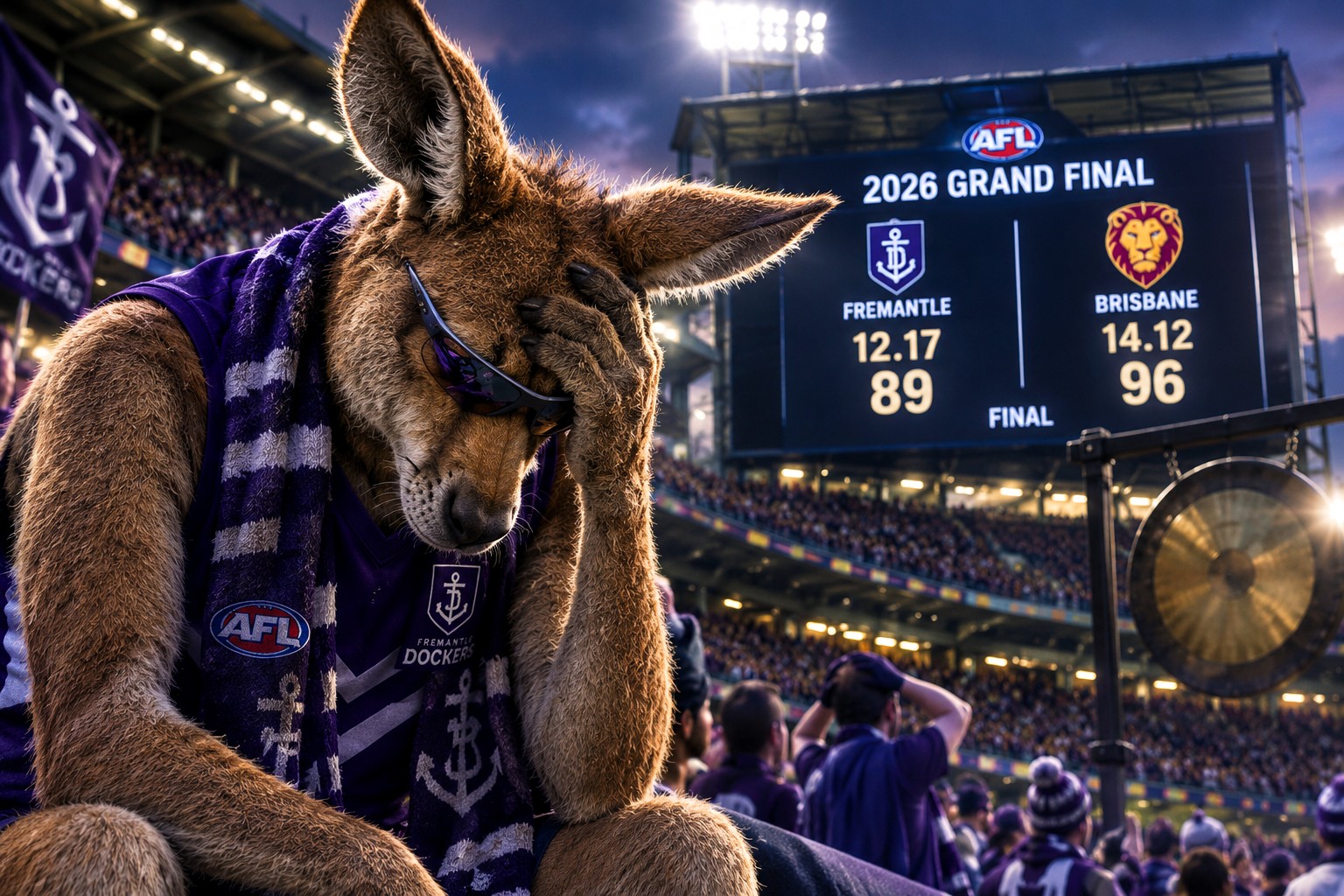
With less than five minutes remaining at the MCG, Patrick Voss kicked his third goal and Fremantle moved 17 points ahead. Wharfie Time was activated.
メルボルン・クリケット・グラウンドで残り5分を切ったころ、パトリック・ヴォスがこの日3本目のゴールを決め、フリーマントルは17点リードしました。そこでワーフィー・タイムが発動されました。
This time, however, the story changed.
しかし、今回は物語が変わりました。
Wharfie Time did not cause Fremantle’s defeat. The timing was simply extraordinary: the famous Dockers rallying call was activated when the team appeared to be heading towards its first premiership, and Brisbane immediately produced one of the great Grand Final comebacks.
ブリスベンが4ゴール連続で決めました。そのうち2本はローガン・モリスによるもので、最後の1本はライオンズを逆転させるゴールでした。ブリスベンは14.12(96)対12.17(89)で勝利し、3年連続のプレミアシップを達成しました。
Brisbane responded with four unanswered goals. Logan Morris kicked two of them, including the goal that put the Lions in front. Brisbane won 14.12 (96) to 12.17 (89), completing a third consecutive premiership.
ワーフィー・タイムがフリーマントルの敗因だったわけではありません。ただ、そのタイミングはあまりにも劇的でした。ドッカーズが初のプレミアシップに向かっているように見えた瞬間に有名な演出が発動され、その直後にブリスベンがグランドファイナル史に残る逆転劇を演じたのです。
For Fremantle supporters, that may be the cruelest chapter yet in the Wharfie Time story.
フリーマントルのファンにとって、これはワーフィー・タイムの歴史に加わった、あまりにも悔しい一章になりました。