Flamin’: An Aussie Expression For Anger And Abuse When You Can’t Use The Other F Word
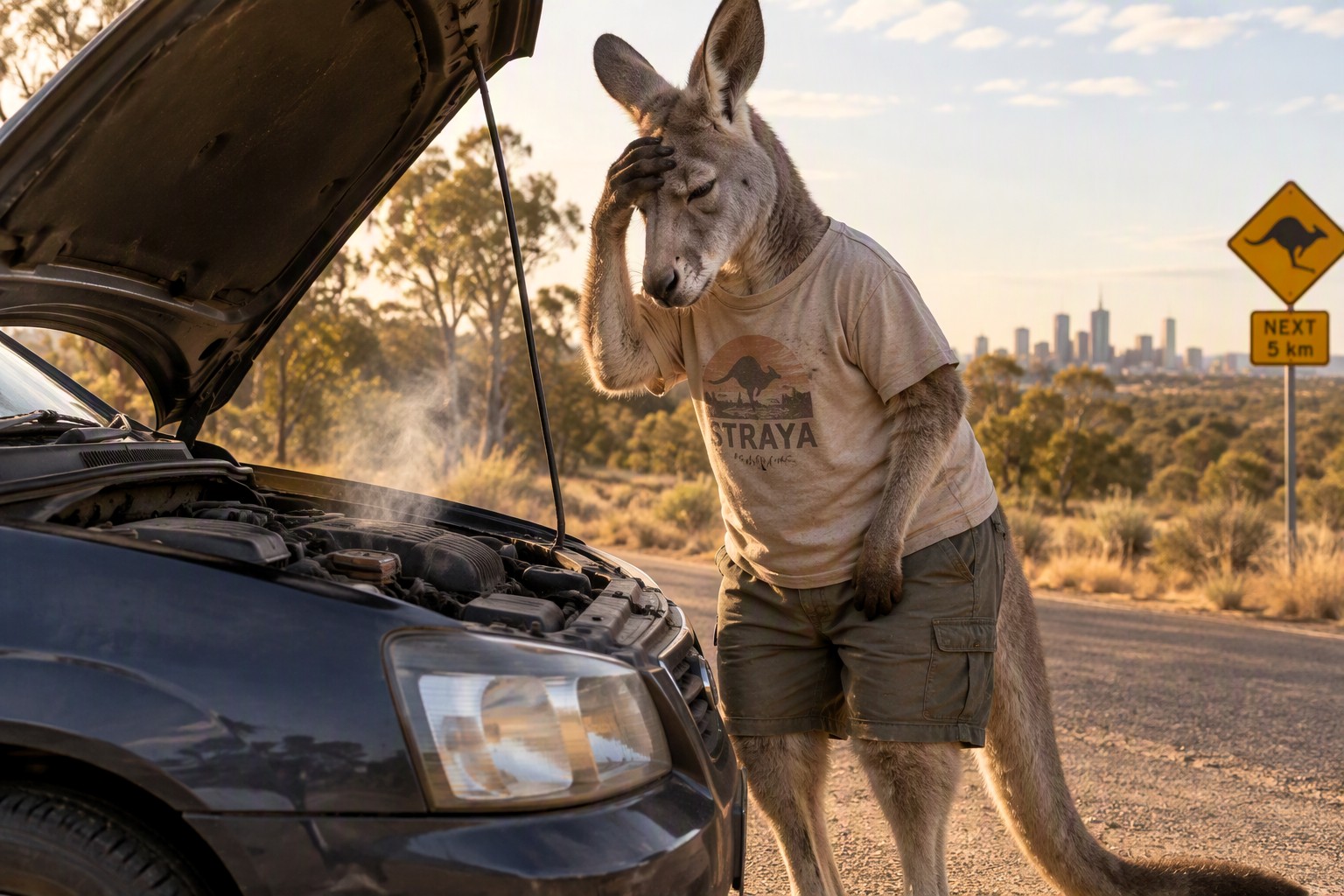
Sometimes a simple swear word just doesn’t carry enough heat. In Aussie English, “flamin’” can add extra fury to a complaint or insult, without using a stronger obscenity. Flamin’ has become something of a joke word in recent years because of its common use as profanity acceptable for the telly.
「flaming」は、怒りや悪態に勢いを加える言葉です。もっと強い罵り言葉を避けながら、不満や苛立ちを強調できます。

Meaning🦘🦘
Flamin’ is an emphatic, mildly offensive intensifier, often used when someone is angry or frustrated. It can turn an ordinary complaint into a more forceful outburst.
怒りや苛立ちを強調する、やや乱暴な強調語です。普通の不満も、「まったく、こんちくしょう」といった勢いのある言い方になります。
Examples
“You flamin’ galah! You’ve lost the keys again!”
「この、まったく間抜けな奴め! また鍵をなくしたのか!」
“Why won’t this flamin’ car start?”
「このポンコツ車、いったいなんで動かないんだ!」
Japanese Explanation
文脈によって「こんちくしょう」「いまいましい」「この野郎」などと訳せます。決まった日本語訳はなく、怒りの強さや相手との関係に合わせて表現を選びます。
Depending on the context, it can mean “damned”, “bloody” or a similarly irritated expression. The tone matters: it may sound comic, exasperated or genuinely insulting.
Australia–Japan Connection
Flamin’ is not exclusive to Australia, but it fits the tradition of colourful Aussie insults. “You flamin’ galah!” combines it with “galah”, a familiar Australian bird whose name also describes a foolish person.
「flamin’」は豪州だけの言葉ではありませんが、豪州らしいカラフルな悪態によく登場します。オウムの仲間「galah」を組み合わせた “You flaming galah!” は、相手を「この間抜け!」と罵る表現です。
Japanese equivalents include “completely knackered”, “haven’t a clue” in meaning, or “completely stuffed” depending on context. However, “buggered” is very informal. A milder expression may be more suitable for some audiences.

“Flamin’” adds heat without necessarily going full-strength. I reckon it’s a handy word when frustration gets the better of you.「flamin’」は、怒りを強めても露骨な罵り言葉を避けられる便利な表現だと思います。
Scale of Roo-dness
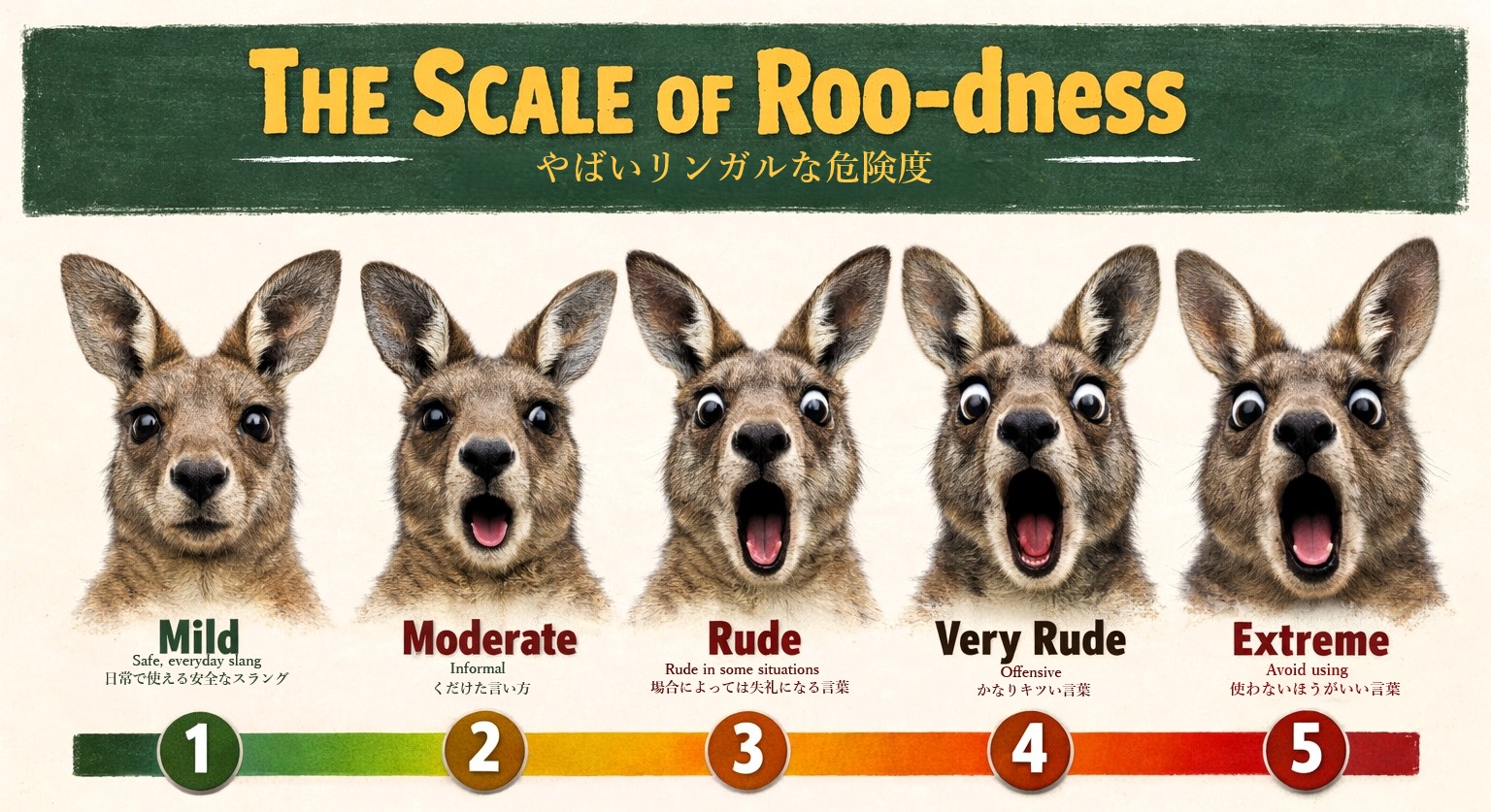
Stage 2 of 5 — mildly offensive, depending on tone and context.