
The Lucky Country
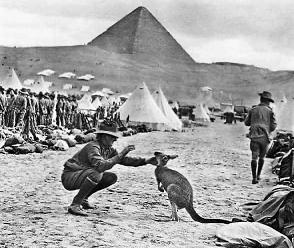
Australia is often referred to as “the lucky country,” which most people use favorably, but was actually a derogatory term coined by journalist Donald Horne in his book of the same name, and with April 25 a landmark date in Aussie history now called ANZAC Day, it got me thinking about fortune and the role it plays in lives.

Australia had the misfortune to fight its first day of war as an independent, federated country on April 25, 1915, and thousands of young men were brutally mowed down in meaningless slaughter in the ill-fated Gallipoli campaign of World War I (having been escorted to the battlefield by our erstwhile Japanese allies, it should be noted). True to Australian form, Gallipoli has come to be celebrated and many positives have been drawn out of the event and it has assumed almost mythical, legendary status in contemporary Oz, rather than being viewed as the senseless sacrifice of young lives to sate the British ego.

Without being disrespectful to those who served, who are deserving of praise for their sacrifices–ultimate in too many cases–the turnaround of the view on Gallipoli and making it a hallowed event is somewhat akin to Horne’s intent when he coined the lucky country phrase, as explained in the following exert from his book:
“Australia is a lucky country run mainly by second rate people who share its luck. It lives on other people’s ideas, and, although its ordinary people are adaptable, most of its leaders (in all fields) so lack curiosity about the events that surround them that they are often taken by surprise.”

Before it seems like I’m getting too critical, allow me to point out that I’m trying to draw on how lucky I have been in my life, particularly as in old age my track record in life shows me that I’m the type of mediocre white man who gets ahead undeservedly that women often complain about.

Had I not bumped in to a couple of women at opportune but totally unexpected instances, I’d have not only never come to Japan at all, but also been unable to rebuild my life after it came crashing down here. Total flukes, from go to whoa.

And my life collapsed because of an off-the-cuff remark with an impact that spread like wildfire only months later but continues to have repercussions for me and my family decades later.
Fortune favored me, not because I was brave, but because I had nowhere else to go when I was in the darkest depths, then again when I got a chance at a steady job.

I’ll never forget interviewing movie producer Jerry Bruckheimer, who told me the harder he worked the luckier he got. It resonated with me at the time because I was on the way up the career ladder and working hard to get there. But I fell off the ladder and the corporate conveyor belt, almost entirely because of my misbehavior, but also because the fates had found a way to highlight that.
Nonetheless, I’ve been able to experience an amazing professional career, met heads of state, Nobel laureates, Hollywood stars and literally seen the world even though I am basically fucken useless at everything.

Misfortune has a strong grip over my life at the moment, mainly because of professional difficulties, but there’s luck involved there, too, because someone who serendipitously turned up to interview for their position (that I recommend they be hired for), turned out to be a zealous corporate jihadi who has made life misery for all those who work with them, including me.

All in all though, despite my clumsiest efforts to derail my own train in one way or another, I pulled out a winning lottery ticket in many ways, suggesting I am, in another derivative term from Horne’s phrase, a lucky cunt, which was the choice of album name for one of my favorite bands back in the day, TISM, who also saw their work censored and cancelled in much the same way I have been. But that’s another story.