Banged Up(バングド・アップ)の使い方によってやばさが違うって本当?

文脈で意味が変わるオージー英語

Banged up は、オーストラリア英語でも文脈によって意味が変わる表現です。

最もよく使われる意味は、

  • ケガをしている
  • 刑務所に入っている

の二つです。

一方で、昔のオーストラリアでは 「妊娠している」 という意味でも使われることがありました。

この使い方は現在ではかなり古く、若い世代にはほとんど通じない場合もあります。

そのため、辞書には載っていても、自分で使うことはあまりおすすめできません。

知識として覚えておけば十分でしょう。


意味

① ケガをしている

② 刑務所に入っている

③(古い俗語)妊娠している


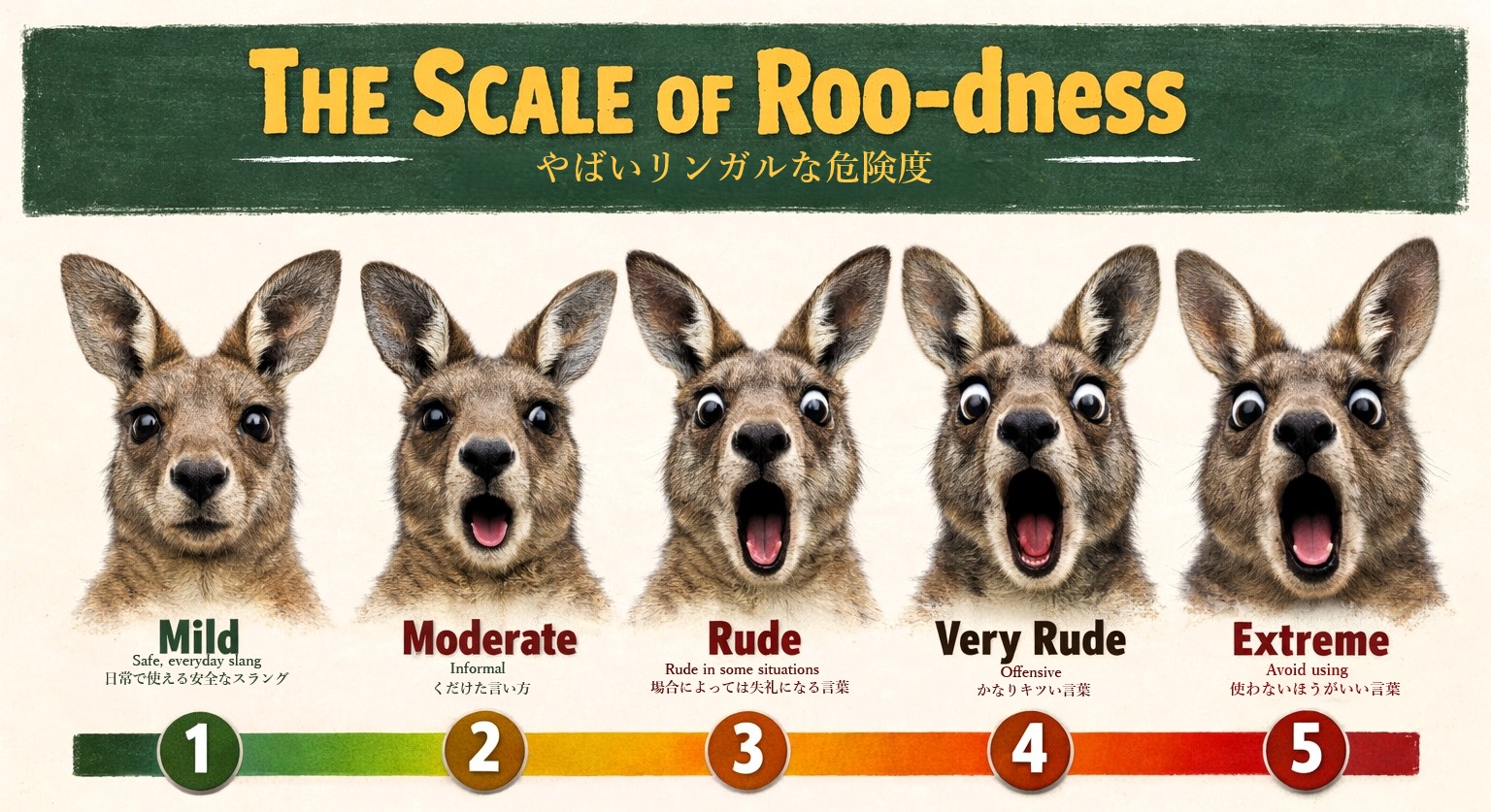
危険度

🦘🦘☆☆☆

意味が複数あるため、誤解されやすい表現です。

例文

He got pretty banged up in the crash.

「彼は事故でかなりケガをした。」


豆知識

オーストラリア英語には、時代とともに意味が変化したスラングが数多くあります。banged up はその代表例の一つです。


Cop A Gander At These Rippers Too...

  • | |

    豪キャブラリー: Fossick

    Fossickは古くから使われている独特なオージー英語であり、珍しく今でもよく使われている言葉だ。意味は、あっちこっちにものを探すことだ。由来はオーストラリアの19世紀での発展に大きく貢献したゴールド・ラッシュである。当時、金を探す人たちはfossickerと呼ばれ、その後金以外どんなものでも探すのがfossickするということになったようだが未だに鉱業に全く縁がない考えRooでも最初に思い浮かぶのが「金を探る」のが不思議でしょうがない。

  • Heaps, And Why Aussies Turn A Noun Into “So Much Of It”

    An Aussie tradie looks at a client’s renovation quote and says, “Nah mate, that’s heaps too dear.” No hills or piles of anything are involved. So, what is “heaps” actually doing in that sentence? オージーの職人がリフォームの見積もりを見て「Nah mate, that’s heaps too dear(いや、それめっちゃ高いよ)」と言う。山も丘も出てこない。では、この “heaps” は一体何をしているのだろう? Heaps in Strine means “a lot” or “many” as a noun (“heaps of tourists”), and, more distinctively, it’s used as an intensifier meaning “very” or “extremely” (“heaps good,” “thanks heaps”). It’s one of the most flexible words in everyday Strine, slotting in anywhere “really” or “a lot” would go in standard English. Heaps は名詞として「たくさん」「多数」を意味し(heaps of tourists=たくさんの観光客)、さらに独特なのは「とても」「めちゃくちゃ」という強調語としても使われる点だ(heaps good=めっちゃ良い、thanks heaps=ほんとにありがとう)。標準英語の “really” や “a lot” が入る場所ならほぼどこにでも使える、日常ストラインの中でも特に汎用性の高い単語である。 Example “We had heaps of…

  • ディンゴが見ればあなたはどこへGO?

    Where Will You Go If You See A Dingo? Stretch a fence from the Queensland coast to the cliffs of South Australia and you have the Dingo Fence. At roughly 5,600 kilometers, one of the longest structures ever built by humans, longer than the distance from Tokyo to Jakarta. Its entire job is to keep one animal out: the dingo. 考えRoo が最後にディンゴを見たのは、ディンゴフェンスに沿って南オーストラリアの荒野を自転車で走っていたときだった。 遠くの丘の上で、じっとこちらを見つめる一匹の犬。オオカミでもなく、普通の犬でもない。 それがディンゴだった。 What’s a dingo? The dingo (Canis familiaris, sometimes classified separately) is Australia’s wild dog, believed to have arrived with seafarers from Asia around 3,500–5,000 years ago. It is now the continent’s largest land predator, feared by sheep farmers and protected as a native species in national…

  • Scungiesはくだけているが、「バジー密輸」より良いのはなぜ?

    Scungies Is A Lousy Word, But Still Better Than “Budgie Smugglers” 「バジー・スマグラーズ(budgie smugglers)」、ようするに、「バジーを密輸する服」は賛成のパンツ型水着のことだ。世界的に有名になった言葉だが、 その表現が生まれるずっと前から、オーストラリアのサーファーたちには ぴったりした水着を指す言葉があった。しかも、それは決して褒め言葉ではなかった。 “Budgie smugglers” gets all the international fame. But long before that phrase existed, Australian surfers already had a word for tight swimming briefs. And it wasn’t a compliment. Meaning スカンジーズとは、ぴったりとした男性用の水着ブリーフのことで、スピード社の 水着(Speedo)とほぼ同義語だ。この言葉は、より古いオーストラリア俗語 “scungy”(汚らしい、感じが悪い)に由来しており、1970年代のサーフカルチャーに おいて、それを着る人への軽い侮蔑が込められていた。シドニーの一部地域では、 ネットボールのスカートの下にはくブリーフ型下着を指すこともある。 Scungies are brief, close-fitting men’s swimming trunks, essentially another word for Speedos. The word comes from the older Australian slang term scungy, meaning dirty or disagreeable, reflecting a certain 1970s surf-culture disdain for anyone who wore them. In some parts of Sydney, “scungies” also refers to girls’ brief sports underwear worn beneath a netball skirt. Example “The ultimate disgrace for a…

  • | |

    豪キャブラリー: Servo

     Servoは、皮肉的にservice stationのserviceの省略だ。なぜ皮肉的かというとserviceは実際にはない。オーストラリアのガソリン・スタンドはすべてがセルフ・サービスである。厳密に言えば、「サービス」の本来の意味は「奉仕」に近いので、自分が自分のためにやるものではないのだ。しかし、セルフ・サービスという言葉が一般的に使用されることによって、矛盾する意味が通用するようになった。