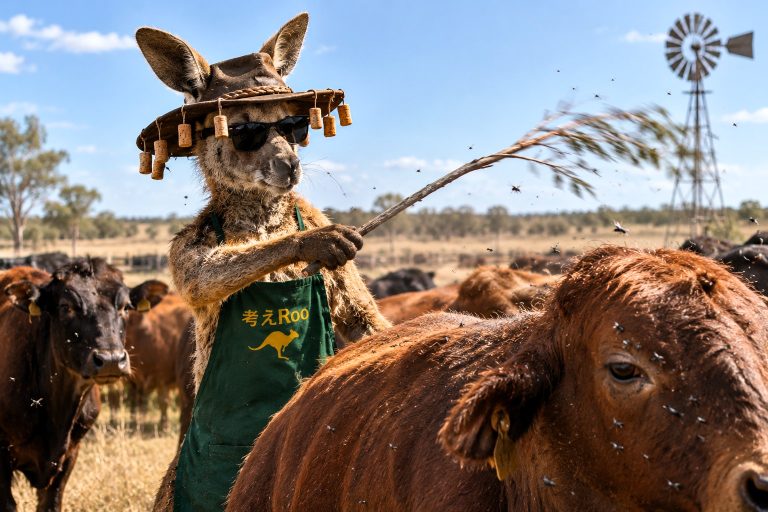
ディンゴが見ればあなたはどこへGO?
Where Will You Go If You See A Dingo?
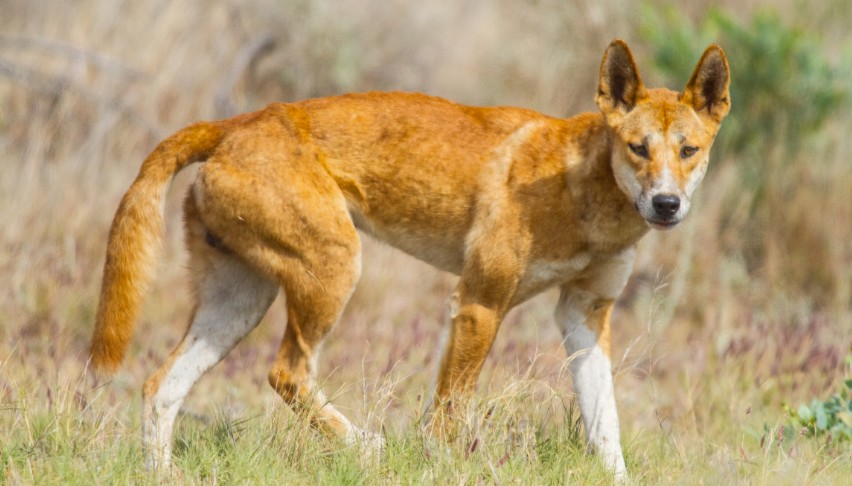
Stretch a fence from the Queensland coast to the cliffs of South Australia and you have the Dingo Fence. At roughly 5,600 kilometers, one of the longest structures ever built by humans, longer than the distance from Tokyo to Jakarta. Its entire job is to keep one animal out: the dingo.
考えRoo が最後にディンゴを見たのは、ディンゴフェンスに沿って南オーストラリアの荒野を自転車で走っていたときだった。 遠くの丘の上で、じっとこちらを見つめる一匹の犬。オオカミでもなく、普通の犬でもない。 それがディンゴだった。
What’s a dingo?
The dingo (Canis familiaris, sometimes classified separately) is Australia’s wild dog, believed to have arrived with seafarers from Asia around 3,500–5,000 years ago. It is now the continent’s largest land predator, feared by sheep farmers and protected as a native species in national parks at the same time.
ディンゴはオーストラリアの野生の犬で、3,500年から5,000年ほど前にアジアから 渡ってきたと考えられている。今では大陸最大の陸上捕食動物であり、 牧場では恐れられる一方、国立公園では保護動物でもあるという、複雑な立場にある。
Example
“Keep the gate shut — we’ve had a dingo prowling round the sheep yard all week.”
「門を閉めておいて。今週ずっと羊小屋の近くにディンゴがうろついているんだ」
ディンゴとは?
日本語で「ディンゴ」という単語自体はすでによく知られているが、その社会的な重みは あまり伝わっていない。1980年、ウルル(エアーズロック)近くのキャンプ場で 生後9週間の赤ちゃんアザリア・チェンバレンがディンゴに連れ去られるという事件が 起きた。母親のリンディは当初、殺人罪で誤って有罪判決を受けたが、後に無実が 証明された。この事件はオーストラリアの司法史上、最も有名な誤審の一つとして 記憶されている。
日豪関係
Japanese wildlife documentaries have long been fascinated by the dingo as one of the world’s few “return to the wild” domestic dog stories; a dog that went feral and re-evolved into something closer to a wolf. It is a favourite subject for Japanese zoology students studying canine evolution, and several Japanese zoos have hosted dingo exhibits explaining this rare biological journey.
日本の動物番組では、ディンゴは「一度人に飼われた犬が再び野生化した」という 珍しい例として、たびたび取り上げられてきた。犬の進化を研究する日本の学生に とっても、興味深い研究対象となっている。
A fence longer than the distance between two countries, built for one animal. That tells you everything about how seriously Australia takes the dingo — not as a pest, not as a pet, but as something in between that demands respect. 一つの動物のために、国と国との距離ほど長いフェンスを築く。それだけで、 オーストラリアがディンゴをどれほど真剣に見ているかが分かる。害獣でも害獣でもペットでもない、 敬意を払うべき存在として。人が伝統を大切にする国民性が表れている。
Related Links