Japan and the ANZACs

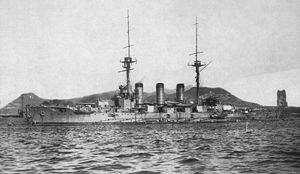
HMIJS Ibuki

Japan is one of the many forgotten contributors to

ANZAC Day, a day that has assumed legendary status in Australia and New Zealand.

ANZAC Day commemorates the landing of Australian and New Zealand troops at Gallipoli on April 25, 1915.

Thousands of young men would be cut down in their prime during the vain campaign that ended in an embarassing defeat at the hands of the Ottomon Empire forces, but Gallipoli has since become a hallowed reminder of people’s willingness to commit their lives for their country. The ANZACs, diggers from the Australia New Zealand Army Corps, are now almost deified in an Australia where nationalism has come into vogue over the past couple of decades.

Yet, the ANZACs may never have arrived at the battlefield were it not for Japan.

Japan was an ally in World War I, courtesy of the Anglo-Japanese Alliance then in operation. Japan was entrusted with providing military power in the Pacific, protecting Australia and other British possessions in the Pacific. Part of those duties included His Japanese Imperial Majesty’s Ship Ibuki escorting the original ANZACs to Egypt, from where they would later head to Gallipoli.

Ibuki was the only protection for the HMAS Sydney when she took on the German ship SMS Emden in the Battle of the Cocos, Australia’s first-ever naval
engagement as a nation.

Ibuki could have taken on the German ship as it was more powerful than the Sydney, but deferred to the Australian craft. Australian naval authorities would later laud the Ibuki for showing the “spirit of the samurai” for the gesture that allowed the Royal Australian Navy to mark its first major success with the sinking of the Emden.

In this regard, Japan’s part in creating the ANZAC legend has largely fallen by the wayside alongside others such as Indigenous Australians, Chinese Australians and woman. Many around Australia will mark ANZAC Day today with the phrase “Lest we Forget.” We hope that includes not forgetting the way many other less well-known contributors helped shape the ANZAC tradition.
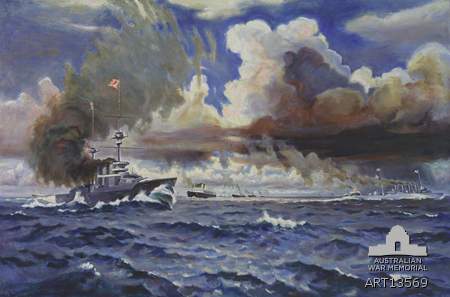
HMIJS Ibuki (left) and HMAS Melbourne escorting ANZAC troops to Gallipoli

    Reference

HMIJS Ibuki
Lest We Forget Japan’s Role in Creating the ANZAC Legend

敵国の大将を招いたアンザック・デー

Cop A Gander At These Rippers Too...

  • Did The Sun Never Shine Brighter?

    What Does “Never Saw the Sun Shine Brighter” Mean? Aussieが「Never Saw the Sun Shine Brighter」と言うのはどういう意味? An old mate has just won the lottery. Another has become a grandfather for the first time. Someone asks how they’re feeling. With a huge grin, the answer comes back: “I never saw the sun shine brighter.” Nobody is talking about the weather. It’s a wonderfully old-fashioned Aussie way of saying, “I couldn’t be happier,” or “Life has never looked better.” Although it’s not heard as often today, you’ll still come across the expression in older books, films and conversations with older Aussies. 日本語には、「空まで晴れやか」という表現があります。Aussieにも、それによく似た言い回しがあります。それが、”Never saw the sun shine brighter” というStrineです。もちろん、本当に太陽がいつもより明るく輝いているわけではありません。 「これ以上ないくらいうれしい。」「人生最高の日だ。」「幸せでいっぱいだ。」 そんな気持ちを表す、美しい表現です。 どこか詩のような響きがあり、昔のAussieが好んで使った言葉として今でも親しまれています。 Expression Never…

  • |

    「やばいリンガル」 Flick (人と縁を切る)

     オージー英語はユニークな使い方がある場合が多い。たとえ他の国の英語では同じ言葉でもオージー英語の場合の意味が完全に違うこともある。Flickは、本来の英語ではflick(軽くたたくこと)という意味だが、オージー英語ではどうだろう?

  • Public Organizations/公的機構

    (Links open to new browser) Statistics Bureau 総務省統計局 National Diet Library 国立国会図書館 National Museum of Japanese History 国立歴史民俗博物館 The National Museum of Modern Art, Tokyo 東京国立近代美術館 The National Institute for Japanese Language 国立国語研究所 International Research Center for Japanese Studies 国際日本文化研究センター National Consumer Affairs Center of Japan 国民生活センター CLAIR (Council of Local Authorities for International Relations) 自治体国際化協会

  • | |

    Poles Apart! How A Japanese-Aussie Created An Apparently Eastern European Monicker

    なぜオーストラリアに「日本人由来のポーランド風の姓」があるのでしょうか? A very Australian mystery オーストラリアにある不思議な姓 Dicinoski sounds Polish. In fact, the surname is so unusual that it appears to belong to just one Australian family. And many of its members thought they came from Poland, too. Yet its origins lie not in Europe, but in Japan. And with a circus performer who became one of the earliest recorded Japanese settlers in Australia. 「ディキノスキー」と聞けば、ポーランド系の姓だと思うのが自然でしょう。ところが、この珍しい姓はオーストラリアの一つの一族にしか見られません。そのルーツはヨーロッパではなく日本。そして、その始まりはサーカス芸人として渡豪した日本人でした。 Meet Rikinosuke 始まりは力之助 His name was Sakuragawa Rikinosuke (桜川力之助). He was a Japanese acrobat who travelled to Australia with other performers in the early 1870s. Australian and Japanese sources differ slightly over the precise arrival date, but he was in Australia by 1873 and is recognised…

  • Ocker/オージー

    Australian English A loud-mouthed, drunken, swearing, uncouth, uncivilized and stereotypical Australian. Amazingly, despite the above description, the term can also be endearing at times, depending on the context in which it is used. Ockers live in Oz, another named used for Australia and an abbreviation of the country’s phonetic rendition. 日本語 ステレオタイプなオーストラリア人。その典型的な例えは、口うるさく、酔っぱらい、悪口ばかり言う、洗練されていなく教養のないしつこい人のことだ。これにしても、文脈によって温かみを込めて使う場合もある。Ockerは、オズという国に住む。これは、「オズの魔法使い」じゃなくて、現地の発音でAustralia(Oztraylya)の省略だ。 Plain English Aussie, Australian. Strine Dictionary