賀正!巳・蛇年2013年!Happy New Year 2013, the Year of the Snake
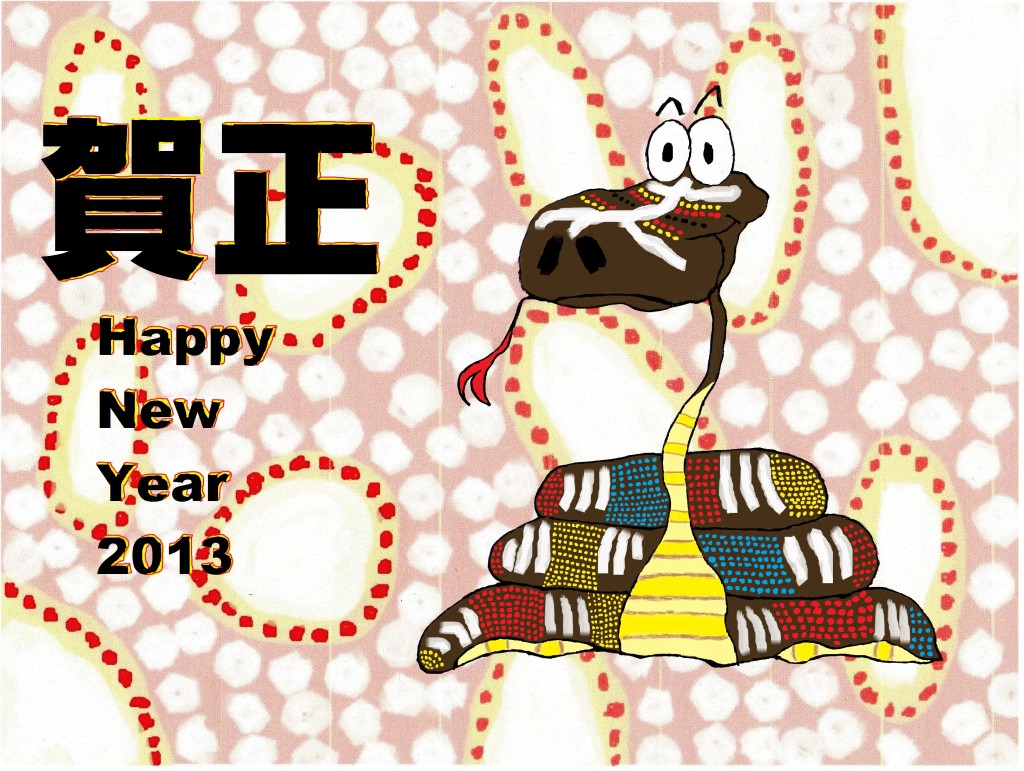
SerpentNenga2013Lettered 2013年は巳年で、蛇が脱皮をすることから「復活と再生」を連想させ、餌を食べなくても長く生きることから「神の使い」として崇められている。
Welcome to 2013, the Year of the Snake, according to the Chinese Zodiac. The Year of the Snake is said to evoke images of rebirth and revival, due to the snake’s repeated shedding of its skin, as well as have a strong connection with the gods due to the reptiles’ ability to live for long periods without eating.
 恐らく海外で最も有名な蛇年生まれのが安室奈美恵島田順子香取慎吾本木雅弘だろう。
Probably the most famous overseas of those Japanese born in the Year of the Snake are singer Namie Amuro, fashion designer Junko Shimada, entertainer and youngest SMAP member Shingo Katori and actor Masahiro Motoki.
 もちろん、オーストラリアにとって蛇も重要な存在だ。
Of course, the snake also plays an important role in Australian mythology.
 それは特に豪先住民にとって言える。
That’s due to the Australian indigenous mythology.
 豪先住民の創造神話である「夢幻時(ドリームタイム)」の中心が「虹蛇」となっている。考えRooのお正月イラストがこの「虹蛇」をモチーフにしている。虹蛇の仲間がユルルングルエインガナなどもいる。
Australia’s indigenous peoples believe in the Dreamtime myths in which the Rainbow Serpent plays a crucial role. Other prominent snakes in Australian aboriginal mythology include Wagyl, which created the Swan River, Yurlungur and Eingana.
Kangaeroo.com’s New Year illustration derives from images of the Rainbow Serpent.
Cop A Gander At These Rippers Too...

  • | |

    How Did Japanese Shellfish Help Aussie Harvesters Realize The World Was Their Oyster?

    日本のカキはオーストラリアのカキ産業をどう変えたのか? Aussie oysters are famous around the world. Few people realise that one of the industry’s biggest turning points began in Japan. A tiny shellfish—and decades of scientific cooperation—helped reshape Australian aquaculture. オーストラリア産のカキは世界的に高く評価されています。しかし、その発展の大きな転機の一つが日本にあったことは、あまり知られていません。一つの小さな貝と、長年にわたる日豪の科学協力がオーストラリアの養殖業を大きく変えたのです。 An Industry Faces New Challenges 転機を迎えたオーストラリアのカキ産業 For generations, Australia’s oyster industry relied on the native Sydney rock oyster. It remains one of the country’s finest seafoods. But during the 20th century, growers faced disease, slow growth and changing environmental conditions. They began searching for new ideas. 転機を迎えたオーストラリアのカキ産業 長年にわたり、オーストラリアのカキ産業はシドニーロックオイスターを中心に発展してきました。 現在も高級食材として親しまれています。 しかし20世紀になると、病気や成長速度、環境の変化など、新たな課題に直面しました。 生産者たちは新しい可能性を探し始めます。 Looking to Japan 日本に学ぶ Japan had centuries of experience cultivating oysters. Its farmers had developed efficient methods for collecting oyster spat, raising young oysters and managing…

  • |

    Miranda Kerr ‘Teas Off’ as Japan’s Midsummer Santa

    Aussie model Miranda Kerr is gaining an increasingly high profile in the lucrative Japanese market with her new ad for Lipton tea released on Tuesday. オーストラリア出身モデルミランダ・カー氏が日本での新作CMが21日付から上映されています。 Kerr, a Victoria’s Secret angel, brand ambassador for Japanese fashion label Samantha Thavasa and wife of Hollywood heartthrob Orlando Bloom, appears as a midsummer Santa in the commercial for a brand of Lipton tea. カー氏は、サマンサタバサ及び米国ヴィクトリアズ・シークレットのブランド大使などであり、ハリウッド俳優オーランド・ブルームの妻でもある。 Kerr’s unseasonal Santa ad is the second commercial she’s made for the British brewer’s Japanese outfit, following an earlier version where she was a waitress. 今回のリプトンCMがカー氏にとって日本で2回目であり、前回が去年上映されたウェートレス役をやった。

  • Japanese long-term resident numbers double Down Under

    Japanese long-term residents in Australia doubled over the course of the Noughties, according to the recently released 2011 Australian Census. The number of Japanese speakers residing permanently in Australia grew from 1,002 to 2,032 from 2000 and 2010, representing a 102.8% change. The 2011 Census showed there were 21,507,730 people in Australia, of who 43,692 are Japanese speakers. The total population of Japanese speakers in Australia was made up of 59.1% females and 40.9% males. And only 204 speakers were involved in a same-sex couple. Popular suburbs for long-term Japanese residents of Down Under to live in were Chatswood (NSW), Melbourne (VIC), Southport (QLD), Adelaide (SA), South Perth (WA), Sandy…

  • |

    豪政府の完全敗戦だったエミュー大戦争

    オーストラリアが独立した1901年1月1日時点には、南アフリカにてボーア戦争に参戦し、現在に至るまでさまざまな戦争や紛争に戦い、決して「平和的」な国とは言い難い。20世紀に渡って第一次・第二次世界大戦をはじめ朝鮮戦争、マレーシア紛争、インドネシア戦争、ベトナム戦争に参戦した上、21世紀になったらアフガニスタンとイラク戦争にも参戦した。軍事力はそこそこ評価されるが、参戦した戦争の中ではオーストラリア軍がものすごく恥をかかされたのは特に一戦が目立つ。それは1932年のエミュー大戦争だった。おまけ、オーストラリア軍に対して戦勝した相手がエミュー、、、国家鳥だ。  事態は今からちょうど79年さかのぼって世界恐慌下で起きた。戦場が西オーストラリア州マーチソン地区だった。いつもより熱かった夏によりオーストラリア国紋章にある国家鳥エミューの繁殖がさかんとなり、農産物を大量摂取することになった。すでに経済的に苦しんでいる農家を中心に事態に対して連邦政府(国)に対策を実施するようにプレッシャーをかけるようになった。  オーストラリアでは政治的権力が今も昔もある農家を政治家が無視できない。選んだ対策はオーストラリア軍の動員だった。  1932年11月上旬のある朝、王立豪州大砲部隊約50兵がG.メレディス大佐下でおよそ20万羽のエミューと戦う。部隊は、トラックに取り付けられた機関銃で国家鳥と向き合う。  エミュー群は池で水を飲もうとしたところ軍が突然開戦し、機関銃で全開鳥に向かって打つ。  しかし、エミュー群が広げて鳥があっちこっち走り回って、打たれた鳥の数はほんのわずかしかすぎなくて、ほとんどのエミューが見事に逃げた。  同日午後、部隊が再び集合し、もう一回攻撃をしようとした。しかし、機関銃の音でまた鳥が走って逃げて、結果的に何万羽の鳥中、殺されたのが数羽しかなかった。  豪軍部隊が撤退し、エミューが思う存分農産物を餌にし続けた。  約1週間後、メレディス大佐がまた先頭に再び豪軍がエミュー群と向かって機関銃で乱射したが、また効果がほとんどなく、もう1回エミュー群のほとんどが逃げた。2回戦って約2万弾を使用した結果エミュー数百羽しか殺せなかった。  「この鳥のように弾に対しての力があった部隊があれば世界中のどんな国の軍隊に対して争える。機関銃に対して戦車並みの力がある」とメレディス大佐が敗戦を認めた。  これが起きている時、遠いキャンベラの国会ではエミュー大戦争に対して大騒ぎになった。国防相(当時)ゴードン・ピアス氏が豪軍敗戦を認めて、戦場から撤退の命令を下した。それに対してエミューの反応が未だに不明だが、以降数十年同地区では農家の大迷惑をかかったのは間違いない。  敗戦後、農家が1948年まで3回も連邦政府のエミュー対策を要請したが1932年の敗戦を背景に毎回拒否し、エミューの完全勝利となった。  

  • | | | |

    Kangaroo Cooking…Roo Meat: It’s Tasty if Ya Cook It!

    Japanese have been legally eating kangaroo for longer than most Australians. Kangaroo meat was imported to Japan and being served in Tokyo restaurants from 1988, five years before meat from the national symbol was legalized for consumption by Australians in all states other than South Australia, where kangaroo could be eaten legally from 1980. (Indigenous Australians had continued eating kangaroo, a traditional food, regardless of the ban.) Despite the head start, kangaroo meat never really kicked on in Japan, despite its reputation for being a healthy, high-protein, low-fat alternative to beef or pork. RooMeat was promoted in Japan as being a preferred choice of athletes and models, but the “stars”…

  • | |

    A Symbol Of Japan That Fits Australia Like A Shoe

    Given the powerful pull of the surf culture in Australia, a link with Katsushika Hokusai‘s The Great Wave Off Kanagawa that immediately conveys an image of Japan was almost inevitable, but also symbolizes the strong ties between the two countries almost made for each other. Countless Australian companies, organizations, entrepreneurs, artists and others utilize or have utilized directly or derivatively the iconic Japanese work forming one of Hokusai’s Thirty-six Views of Mount Fuji. Even though the Great Wave is an instantly recognizable image that embodies the essence of Japanese spirit, particularly with the inclusion of Mount Fuji, Australia has long recognized the work as a shared connection between the countries….