Nissan Bluebird Oozui: When Australia (Briefly) Exported Cars to Japan
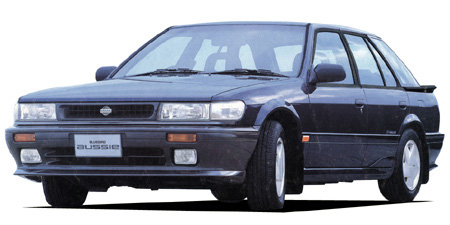
The Nissan Aussie sold in Japan.
This year marks the 20th anniversary of Australia’s disastrous foray into exporting cars to Japan.
For a brief period from 1989 to 1992, fully imported Bluebird Aussie cars made in Australia went on sale in Japan.
The Bluebird Aussie was apparently the result of Nissan Australia’s Matilda Project, which had aimed to make a solely Australian car for Australian conditions, but ended up being a modified bluebird.
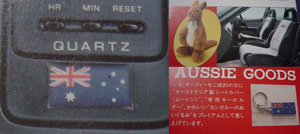
Aussie flag clock, kangaroo stuffed toy, sheepskin seat covers…premium added extras.
Australia was, at the time, at the peak of its powers in the enormously fickle Japanese market.
Thousands of Japanese tourists were flocking Down Under and Australia was on the verge of overtaking Hawaii (albeit very briefly as it turned out) as the most preferred destination for Japanese honeymooners.
Perhaps it was a desire to capitalize on this goodwill toward the land Down Under that prompted Nissan to import cars from Australia, hardly a country with a reputation for automaking.
Nonetheless, with all the very best of “That’ll have to do, mate” quality and offering added extras such as sheepskin seat covers, a free kangaroo stuffed toy, an Aussie flag keyring and Aussie flag sticker under the dashboard clock to entice Japanese punters, the Bluebird Oozui, as the car was labeled for the Japanese market, hit showrooms across the country.
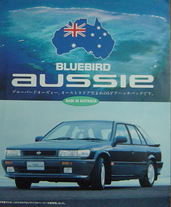
The Bluebird Aussie’s Japanese sales catalog
The Bluebird Aussie was an embarrassing failure in Japan…In fact, of the 44,049,099 new and used car sales in Japan from 1989 to 1992 — the period the Aussie was on sale — the Australian-made hatchback accounted for a mere 1,300 units.
Nissan Australia shut down its manufacturing plant in 1993 and the Aussie was never heard of again…not that many Japanese consumers ever seemed to have heard of it in the first place.
Cop A Gander At These Rippers Too...

  • |

    ウィンブルドン選手権優勝にぴったりのBig Tennis Racquet

     只今、錦織圭選手が3回戦進出を決めて大活躍中のウィンブルドン選手権は、驚くことにオーストラリアの「Big Things」と(ちょっと微妙な、、、)つながりがある。  かつてオーストラリアは「テニス大国」と言われるぐらいで、今でも全豪オープンが4大大会のひとつであるが、それは「Big Things」と何の関係だろう?  実は、ニューサウスウェールズ州東南部にあるバレリンという町に初めて豪州先住民としてウィンブルドン選手権優勝者であるイボンヌ・グーラゴング氏の生まれ故郷である。  ウィンブルドン、全豪を含めて4大大会シングルズ優勝計7勝を果たしたグーラゴング氏を称えるため、同町が2009年なんと高さ13メートルのテニス・ラケットとテニス・ボールを作って、町の名所と共に「Big Things」の一つとなった。グーラゴング氏自身が開会式に出席し、Big Tennis Racquetの除幕式を行なった。  このラケットが使えれば、なかなか負けそうもないよね。(しかし、コンクリート製なので、運ぶのはちょっときついかもしれない、、、)。 大きな地図で見る

  • |

    オーストラリアでも伝説的な存在Fighting Harada!

     多くの人にとって驚く話かもしれないが、日本ボクシング界の伝説的な歴代世界チャンピオンFighting Haradaは、オーストラリアにもスーパースター扱いされている。 Former world boxing champion Masahiko “Fighting” Harada is a legend in his home country, but few Japanese are aware he occupies a similarly exalted status in Australia.  一連の動画シリーズによってこの数週間その理由を迫る。 We’ll use a series of videos over coming weeks to find out why.  話の始まりのは1968年2月。 The legend starts in February 1968.  ファイティング原田がまだ世界バンタム級チャンピオンだった。 Fighting Harada was then world bantamweight champion.00  世界タイトル戦相手がリオネル・ローズ氏だった。 He was defending his title against Lionel Rose.  一人のオーストラリア人。 An Aussie.

  • 何でオージー英語では金持ちがStinking?

    Why Do The Wealthy Smell In Strine? オーストラリアの俗語では、富はただ輝くだけでなく、どうやら「臭う」ものらしい。 誰かを”stinking rich”(腐るほど金持ち)と呼べば、その人がどれほど裕福かが 一発で伝わる。 Riches, in Australian slang, don’t just glitter; they smell. Call someone “stinking rich” and everyone instantly knows exactly how wealthy you mean. Meaning “stinking rich”は「非常に、過剰に裕福」という意味で、ほとんど嫌みなほど 金持ちだというニュアンスを持つ。この表現自体はオーストラリアだけのものでは なく、イギリスやアメリカの英語でも広く使われている。ただしオーストラリアでは、 かつての牧羊業で一夜にして富を築いたスクワッターや羊毛長者たちの物語で、 特によく使われる表現でもある。 “Stinking rich” means extremely, excessively wealthy — so much money it’s almost distasteful. The phrase isn’t unique to Australia; it’s common across British and American English too. But Australians lean on it heavily in stories about old pastoral fortunes — the squatters and wool barons whose sheep runs made them wealthy almost overnight. Example “He struck it lucky on the goldfields and ended up stinking rich.” 「彼は金鉱で運よく大当たりして、腐るほど金持ちになった」 何で金持ちが臭い? “stinking”という単語を「臭い」ではなく「過剰な」という強調語として使う 発想は、日本語話者には少し不思議に感じられるかもしれない。似た発想の…

  • |

    …ah, so* have a Winfield: The Tiny Tale Of Aussie Durries In Japan

    A long, long time ago, in a Straya far, far away, Australia briefly exported cigarettes to Japan.It wasn’t that long ago, actually.But for several months in 1994, Winfield cigarettes, one of Australia’s most famous brands (it marketed itself as “Australia’s No. 1 brand” in Japan, but it was actually only the second-biggest seller Down Under, behind Peter Jackson), was an unlikely competitor of mostly British and American Big Tobacco companies to tap into what was still then a thriving Japanese smokers’ market largely unregulated at the time.Winfield was on a downturn at the time in its home country.Cigarette advertising had been banned from TV and print media decades earlier, but…

  • Koala Attack! 一日中寝ている訳でもない

    コアラ、カンガルーやエミューなどが人間に対してあまり危険視されていないが、下記のビデオで見えるように、危ない場合もある。  コアラは、一日中寝ているという印象を持っている方が多いだろう。(実際に合っているが)年間を通してコアラもさまざまな行動を行っている。Australian Geographic誌がこのビデオにあるコアラ群れを未着取材し面白いドキュメンタリーを制作された。  普段あまり動かないコアラの活発な姿で驚ければ、この映像がなおさら怖い!今年4月、オーストラリア北部になんとヘビを食べられるクモがいった!糸で捕まったより、ヘビが偶然に糸に上の枝から落ちてクモが素早く動いて捕まって、糸で拘束して食べちゃった!