Indigenous Aussies and Strine 先住民と豪語

Indigenous Australians have contributed richly to language on a global scale. This is especially through the names of creatures such as the kangaroo, koala, wombat, wallaby and dingo, all of which were originally Indigenous Australian words, but now used everywhere English is spoken, as well as being incorporated into other languages, including Japanese.
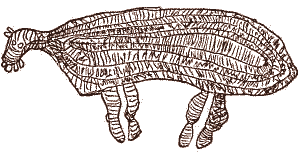
Bunyip

 オーストラリア原住民の言語は、世界的にも貢献している。カンガルー、コアラ、ウォンバットやディンゴなどの動物の名前は全て先住民語に由来し、現在は英語だけでなく日本語を含め世界各国で使われており、まさに「国際語」だ。

Other Indigenous Australian contributions to global lexicography include boomerang, corroboree, humpy, billabong, and woomera, the last two giving their names to a surfing clothes conglomerate and rocket launching range, respectively.

 また、ブーメラン、コロボロリー、ハンピー、ビラボングとウメラも英語圏をはじめ、世界中に使われているし、由来がオーストラリアの先住民の言葉だ。

On a more mysterious side, English speakers internationally now know of the bunyip, a mythical monster originating from Indigenous Australian myths.

 そして、神秘的な世界に入って見ると、バンイップというモンスターの話が多くの国に行き渡っている。やはり、これも先住民語が由来、昔からいい伝われた神話のだ。

注意: 日英豪問わず、オーストラリア先住民をアボリジニと呼ぶことがほとんどだ。しかし、アボリジニには「土人」という意味があり、確かに未だに広く使われ、聞き馴染みがあるかも知れませんが、豊かな文化や伝統を持つ先住民に対して差別的な意味合いがあるので、考えRoo.comでは使いません。

Cop A Gander At These Rippers Too...

  • Commo

    Commo is Strine for communist, either a person, the ideology, or an adjective. It reflects the Strine tendency to use the diminutive form. Commie is also used. Commo はストラインで“共産主義者”を指す言葉で、人そのもの、思想、あるいは形容詞としても使われます。ストライン特有の縮小形(短縮形)を好む傾向を反映した表現で、commie という形も使われます。

  • | |

    Australiana for Australia Day

    オーストラリア人コメディアンオーステン・テーシャス氏*が1983年豪州象徴的なものや地名などのごろ合わせによって詩「Australiana」で全国一世風靡し、No. 1ヒットとなった。かなりやばい言葉使いであり、色な所で放送禁止となった。 1月26日建国近年日にあたる「Australia Day」にちなんで、下記再現する。お楽しみ。 Australiana Sittin’ at home last Sunday mornin’ me mate Boomer rang (boomerang). Said he was havin’ a few people around for a barbie, Said he might cook a burra (kookaburra) or two. I said, “Sounds great, will Walla be (wallaby) there?” He said “Yeah and Veggie might (Vegemite) come too”. So I said to the wife “Do you wanna Go Anna (goanna)?”. She said “I’ll go if Din goes (dingoes).” So I said “What’ll (wattle) we do about Nulla?” He said “Nulla bores (Nullarbor) me to tears, leave him at home.” We got to the party about two and walked straight out the kitchen to put…

  • この言葉本当にオージー英語で大活躍Bar None?

    「バー」じゃない?オーストラリア英語の Bar Bar と聞くと、多くの人はお酒を飲むバーを思い浮かべます。 ところが、オーストラリア英語では bar にまったく違う意味がいくつもあります。 例えば、 “I won’t have a bar of it.” これは 「そんな話、お断り。」 「絶対に受け入れない。」 という意味になります。 また、昔は自転車のハンドルやフレームに人を乗せることを bar と言うこともありました。 子どもの遊びでは、「先に bar! と言った人が権利を持つ」という意味で使われる地域もあります。 つまり bar は、一つの意味だけでは理解できない、多義語なのです。 文脈を読むことが何より大切になります。 Strine 単語 Bar 意味 文脈によって意味が変わる表現。 代表的には、 例文 I wouldn’t have a bar of it. 「そんな話には絶対に乗らないよ。」 日本とのつながり 日本語にも「かける」のように意味がたくさんある言葉があります。 英語も、一つの単語が複数の意味を持つことは珍しくありません。 辞書で最初に出てくる意味だけを覚えると、本当の英語は見えてきません。Barはchuckやcrackなどに並べてオージー英語で大活躍動詞の一つ。「禁止する・通さない」、「自転車の二人乗り」、「権利を出張する」「唾を付ける」などとして使うことがある。文脈を読む力こそ、オーストラリア英語を楽しむ近道です。

  • |

    Japan and the ANZACs

    Japan is one of the many forgotten contributors to ANZAC Day, a day that has assumed legendary status in Australia and New Zealand. ANZAC Day commemorates the landing of Australian and New Zealand troops at Gallipoli on April 25, 1915. Thousands of young men would be cut down in their prime during the vain campaign that ended in an embarassing defeat at the hands of the Ottomon Empire forces, but Gallipoli has since become a hallowed reminder of people’s willingness to commit their lives for their country. The ANZACs, diggers from the Australia New Zealand Army Corps, are now almost deified in an Australia where nationalism has come into vogue…

  • Bung On An Act

    Bunging on an act in Australian English, or Strine, means to pretend, or fake. オージー英語(ストラインとも言う)では、「bung on an act」は「見せかける」か「演技する」という意味。ちなみに、bung onも独特なオージー英語でもあり、「する」の砕けた言い方。 Strine Dictionary | 考えRoo