
Strine(オージー英語)を生んだ親

Let Stalk Strine
Afferbeck Lauder氏はストライン(オージー英語)の父と言っても過言ではない。
 1950年代から1960年代にかけてまでほとんどのオーストラリア人が自国が英国帝国の一部として見て、イギリスと親密感があった。オージー英語の特殊さ及び独特な味を誇りに思うより、恥ずかしがる人が多かった(これは別の話し後日にお話しするが、この現象がcultural cringe< 文化的従属的姿勢>という)。
 しかし、Afferbeck Lauderが違った。恥ずかしがるよりオージー英語を評価した。とはいえ、ふざけてパロディ版のオージー英語作文多数著書した。同氏のストライン解釈は実際に使う言葉よりオージー鉛を利用してまるで全く違う言語のように描いた。最初の作品が「With Air Chew](直訳すると「空気を噛みながら」という意味だがオージー鉛にかけてWithout Youの意味だ)を発表し、成功した上にLet Stalk Strine(直訳:ストライン<豪州英語>を狩ろうが本来の英語だったら、「ストラインを話そう」の意味だ。)という本を1965年に出版した。これも大成功し、二年後続編のNose Tone Unturned (直訳:「鼻の口調曲がらない」が本来の意味はNo Stone Unturned(あらゆる手を講じる)。
 Lauder氏は同じようにイギリス上級階層の鉛をパロディして本を出した。これは1968年発行のFraffly Well Spoken (Frightfully Well Spoken<怖いほど話しが上手>)とその翌年発行のFraffly Suite(Frightfully Sweet< 怖いほど甘い・優しい>)。  ちなみに、Afferbeck Lauder自身の名前がストラインのジョークである。ストラインの由来はオーストラリア英語の鉛でAustralianをいうとストラインに聞き取ると同じように同氏の名前の由来がオーストラリア鉛でalphabetical order(アルファベット順)をいうとアファベック・ローダーに聞こえるようだ。  本名はAlistair Morrisonだった。 With Air Chew
By Afferbeck Lauder
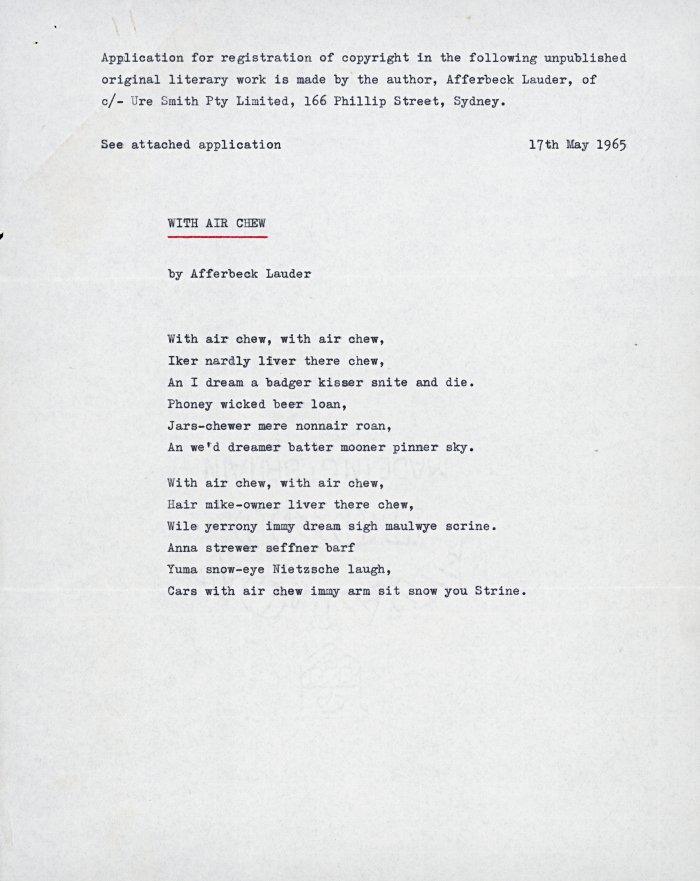
With air chew (Without you)
A translation for non-Strine speakers

Without you, without you,
I can hardly live without you,
And I dream about your kisses night and day.
If only we could be alone,
Just you and me and on our own,
And we’d dream about the moon up in the sky.

Without you, without you,
How am I gonna live without you?
While you’re only in my dreams I’m always cryin’.
And as true as heaven above
You must know I need your love
‘Cause without you in my arms it’s no use tryin’.

Cop A Gander At These Rippers Too...

  • | |

    How Did Noriko Nishimoto Help Thousands of Japanese Discover Australia?

    西本典子さんは、どのように何千人もの日本人とオーストラリアを結び付けたのか? Long before influencers and travel bloggers, one Japanese woman was quietly introducing Australia to generations of Japanese visitors. Through warmth, knowledge and tireless community work, Noriko Nishimoto became one of the unsung builders of Australia–Japan friendship. SNSも旅行インフルエンサーも存在しなかった時代、一人の日本人女性が静かにオーストラリアの魅力を日本へ伝えていました。西本典子さんは、長年にわたり多くの人々を結び付けた、知られざる日豪交流の立役者です。 A New Home 第二のふるさと Noriko Nishimoto did more than settle in Australia. She made it her mission to help Japanese visitors and residents feel welcome. Whether answering questions, sharing local knowledge or building friendships, she became a trusted bridge between two cultures. 第二のふるさと 西本典子さんは、オーストラリアで暮らすだけではありませんでした。 日本人が安心して生活し、旅を楽しめるよう支え続けました。 情報を伝え、人と人を結び、日豪をつなぐ架け橋となったのです。 Building Communities コミュニティを育てる International friendship rarely happens through official ceremonies. It grows through everyday acts of kindness. By helping newcomers find their feet, Nishimoto strengthened both…

  • 豪キャブラリー:What ‘Dunny’ Means In Strine

    Dunny is an Australian slang word for a toilet. 日本語の意味 Dunny は「トイレ」を意味する代表的なオーストラリア英語です。 Explanation Before indoor plumbing became common, many Australian homes had outdoor toilets located at the back of the property. These were known as dunnies. Although most Australians now have modern bathrooms, the word remains widely used. 日本語での解説 昔のオーストラリアでは、トイレが家の外に設置されていることがよくありました。 そのようなトイレを “dunny” と呼んでいたことから、現在でも「トイレ」という意味で使われています。 Example “Mate, where’s the dunny?” “Out the back near the shed.” 日本語訳 「トイレどこ?」 「裏庭の物置の近くだよ。」 Strine Culcha Dunny is one of the first Australian slang words many visitors learn. 文化メモ “dunny” はオーストラリア英語を代表する単語の一つで、多くの旅行者が最初に覚えるスラングです。 Related Terms

  • | |

    Strine-speaking, Sydney-born star made Japan’s queen of natto fermented beans

    Strine-speaking Shiori Kutsuna has been declared the 2012 Natto Queen, an award handed out to celebrities who promote fermented soybeans, or natto, as they’re known in Japanese. Kutsuna, a 19-year-old Sydney-born actress, was presented with her award at a ceremony in Tokyo earlier this week. Natto are a popular dish, particularly in eastern Japan, and are highly valued for their nutritional content and health benefits. Less widely praised are the gooey, sticky texture of the fermented beans. Kutsuna was born in Sydney and spent her formative years in Australia’s biggest city, learning how to speak fluent Strine. She is a dual Australian-Japanese citizen. As Japan’s Natto Queen, an award bestowed…

  • | |

    「やばいリンガル」 Sport

     オーストラリアはスポーツ大国に間違いない。sportも典型的なオージー英語として使われる言葉だが、他の英語圏での意味と全く違う。どのように違うか見てみよう。 Australia is undoubtedly a sporting power, but sport in Strine, or Australian English, has a completely different meaning compared to when the word is used in other forms of English. Read on to find out how.

  • Servo(サーボ)とは?オーストラリア人が使う「ガソリンスタンド」の意味

    豪cabulary: Servo(サーボ) 🦘 G’day! 考えRooです! オーストラリア人は、とにかく言葉を短くするのが大好きです。afternoon は arvo。breakfast は brekkie。barbecue は barbie。そして今日は…service station が servo になります! えっ!? どうしてそんな形になるのでしょう? Today’s 豪cabulary servo 発音 「サーボ」ではなく、「サーヴォ」に近い発音です。 意味 ガソリンスタンド 英語では普通 gas station(アメリカ)や petrol station(イギリス・オーストラリア)と言います。 でもオーストラリアでは… I’m just stopping at the servo. (ちょっとガソリンスタンドに寄ってくるよ。) これがごく普通です。 なぜ servo なの? 正式には service station ですが、 オーストラリア人は長い単語が嫌いです(笑)。 そこで service ↓ serv… ↓ servo! となりました。 語尾に -o を付けるのはストライン、ようするにオーストラリア英語、では非常によく見られる特徴です。 例えば ambo(救急隊員) garbo(ゴミ収集員) bottlo(酒屋) reffo(難民) smoko(休憩) などがあります。 使ってみよう! 会話① Davo I’m going to the servo. Jacko Can you grab me a bottle of water? デイボ 「ガソリンスタンドに行ってくるよ。」 ジャッコ 「ついでに水を買ってきて!」 会話② We’re nearly out of petrol. Let’s find the nearest servo. 「ガソリンがもうない。」 「近くのガソリンスタンドを探そう。」 日本人には意外! オーストラリアのガソリンスタンドは、日本よりも「コンビニ」に近い存在です。 飲み物。 アイス。 ミートパイ。 新聞。 コーヒー。 場所によってはスーパー並みに商品があります。 長距離ドライブでは、servo は旅のオアシスなのです。 考えRoo Says……