Poles Apart! How A Japanese-Aussie Created An Apparently Eastern European Monicker
なぜオーストラリアに「日本人由来のポーランド風の姓」があるのでしょうか?
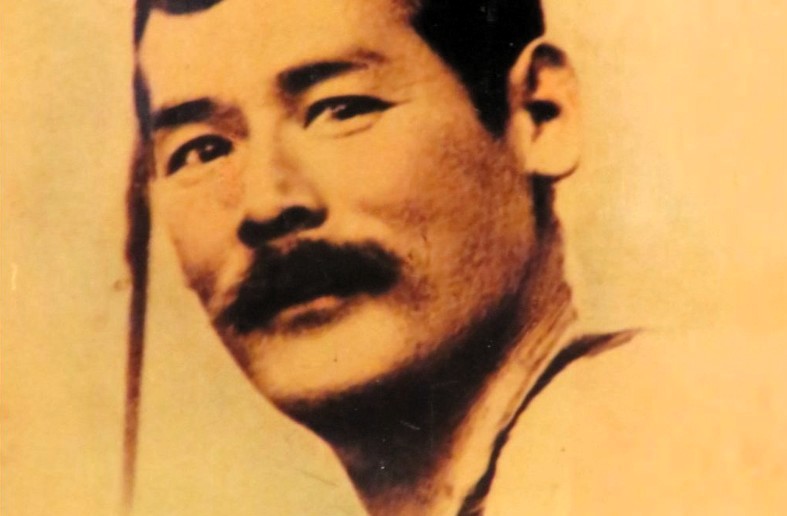
A very Australian mystery
オーストラリアにある不思議な姓
Dicinoski sounds Polish. In fact, the surname is so unusual that it appears to belong to just one Australian family. And many of its members thought they came from Poland, too. Yet its origins lie not in Europe, but in Japan. And with a circus performer who became one of the earliest recorded Japanese settlers in Australia.
「ディキノスキー」と聞けば、ポーランド系の姓だと思うのが自然でしょう。ところが、この珍しい姓はオーストラリアの一つの一族にしか見られません。そのルーツはヨーロッパではなく日本。そして、その始まりはサーカス芸人として渡豪した日本人でした。
Meet Rikinosuke
始まりは力之助
His name was Sakuragawa Rikinosuke (桜川力之助). He was a Japanese acrobat who travelled to Australia with other performers in the early 1870s. Australian and Japanese sources differ slightly over the precise arrival date, but he was in Australia by 1873 and is recognised as its first recorded Japanese settler.
その人物は、桜川力之助(さくらがわ・りきのすけ)。他の芸人たちとともに1870年代初頭にオーストラリアへ渡った日本人の曲芸師です。渡豪年について資料には若干の違いがありますが、1873年には豪州に到着しており、記録上の最初の日本人定住者とされています。
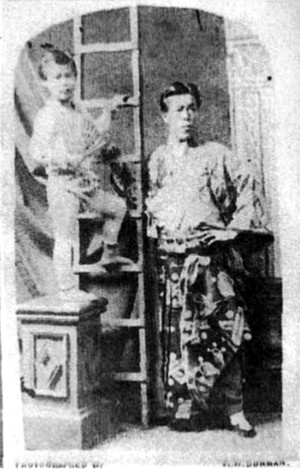
Lost in translation
名前が「聞き間違えられた」
The remarkable part came when Australian officials recorded his Japanese name phonetically. Rikinosuke was rendered as “Decenoski” or “Dicinoski” in Australian records. The Japanese Embassy says an immigration officer appears to have mistaken Rikinosuke, his given name, for his family name, and then recorded what he heard. Pronounced by a Japanese speaker, an “r” can often sound like a “d” to a native English speaker, and that’s what looks like happened.
ここからが驚きです。オーストラリアの役人は、力之助という日本名を聞こえた通りに記録しました。「Decenoski」や「Dicinoski」と書かれたのです。在オーストラリア日本国大使館によれば、入国担当者が「力之助」を姓だと取り違え、聞き取った音をそのまま記録したと考えられています。
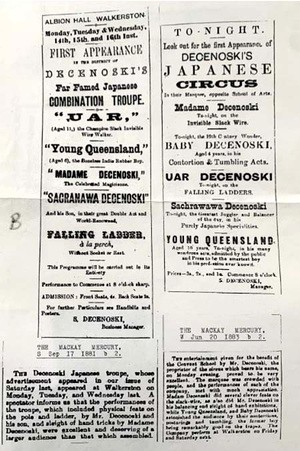
From Rikinosuke to Dicinoski
力之助からディキノスキーへ
Rikinosuke subsequently used the name “Decenoski” and even adopted the English first name Reginald. His son Ewar also used Decenoski, but after his father died he changed the spelling to “Dicinoski”. Ewar’s name appears to be derived from his given name of Iwakichi. The new spelling was formally recorded when Ewar married Susan Bowtell in 1892.
その後、力之助は「Decenoski」という名前を使い、英語名として「Reginald」も名乗りました。息子のEwarもDecenoskiを使いましたが、父の死後に綴りを「Dicinoski」へ変更。1892年、Susan Bowtellとの結婚時に、この綴りが正式な記録に残りました。
A circus family is born
サーカス一家へ
Ewar became a circus performer and eventually established the Dicinoski Troupe with his growing family. The troupe travelled throughout Australia, turning a strange spelling error—or perhaps simply an attempt to reproduce an unfamiliar Japanese name—into a permanent Australian family name.
Ewarはサーカス芸人となり、やがて家族とともに「Dicinoski Troupe」を結成しました。一家はオーストラリア各地を巡業し、外国人の名前を書き留めたことから生まれた奇妙な綴りが、やがてオーストラリアに根付く一つの姓になったのです。
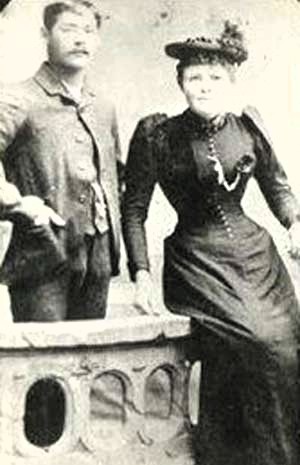
The name helped hide a Japanese past
その姓が日本のルーツを隠した
The story took a darker turn. In 1914, Ewar applied for Australian naturalisation and was rejected because he was classified as an “Aboriginal native of Asia”. In 1917 he was registered as a Japanese alien. The surname that sounded European may therefore have helped obscure the family’s Japanese origins during a discriminatory era.
その後、この姓には重い意味も加わります。1914年、Ewarは帰化を申請しましたが、「アジアの原住民」と分類され、拒否されました。1917年には「日本人外国人」として登録されています。ヨーロッパ風に聞こえる姓は、差別の時代に一家の日本人としてのルーツを覆い隠す役割を果たした可能性もあります。
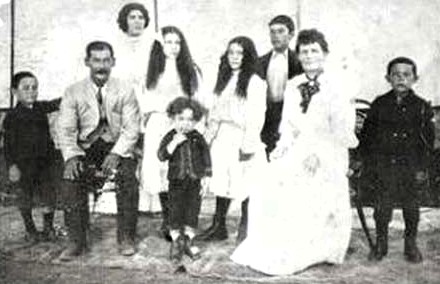
A Japanese name hiding in plain sight
人知れず残った日本の名前
For generations, members of the family knew little about their Japanese ancestry. Descendant Steve Dawson has described how his family history was eventually rediscovered through archival research. Today, Dicinoski remains a unique surname associated with a Japanese-Australian family whose story reaches back to Australia’s earliest recorded Japanese settlement.
何世代もの間、一族の中でも日本とのつながりはほとんど語られませんでした。子孫のSteve Dawson氏は、後に資料調査によってそのルーツが再発見された経緯を記しています。現在もDicinoskiは、日本にルーツを持つこのオーストラリアの一族だけに受け継がれる、極めて珍しい姓です。
More than a funny name
面白い名前、それだけではない
Dicinoski is a reminder that Australia–Japan connections did not begin with modern diplomacy. They began with individuals: performers, migrants, families and people whose names were sometimes misunderstood. One clerical rendering of a Japanese name created a surname that has survived for more than a century—and still carries a Japanese story.
Dicinoskiという姓が教えてくれるのは、日豪関係が現代の外交から始まったわけではないということです。芸人、移民、家族、そして時には名前さえ正しく理解されなかった人々が、その歴史を作りました。一つの日本名の記録が、100年以上続く姓と、今も生きる日豪の物語を生んだのです。
The friendship continues
友好の物語は続く
Perhaps the most remarkable thing about Dicinoski is that a name created in the confusion of 19th-century migration has become a living link between Australia and Japan. What once looked like a Polish surname turns out to be an unexpected piece of Japanese Australian history.
Dicinoskiという姓の最も不思議なところは、19世紀の移民社会で生まれた混乱の中の名前が、今では日豪を結ぶ生きた歴史になっていることです。ポーランド風に見える姓の中に、日本とオーストラリアの意外な物語が隠れていたのです。
Find Out More About This Amazing Tale
- Nikkei Australia | Japanese diaspora in Australia
- Japan And Townsville
- The first recorded Japanese in Australia: Steve Dawson’s family story
- The First Recorded Japanese in Australia: Steve Dawson’s Family Story — Part 1
- The First Recorded Japanese in Australia: Steve Dawson’s Family Story — Part 2
- The untold story of Ewar Dicinoski (Togawa Iwakichi)
- The First Japanese: An Insight into the History between Japan and Queensland (Video)
- Sakuragawa Rikinosuke: Australia’s first recorded Japanese migrant | SBS Japanese
- Sakuragawa Rikinosuke: Australia’s first recorded Japanese migrant – 記録に残るオーストラリア最初の日本人移民をご存知ですか? (Podcast)