Heaps, And Why Aussies Turn A Noun Into “So Much Of It”

An Aussie tradie looks at a client’s renovation quote and says, “Nah mate, that’s heaps too dear.” No hills or piles of anything are involved. So, what is “heaps” actually doing in that sentence?

オージーの職人がリフォームの見積もりを見て「Nah mate, that’s heaps too dear(いや、それめっちゃ高いよ)」と言う。山も丘も出てこない。では、この “heaps” は一体何をしているのだろう?

Heaps in Strine means “a lot” or “many” as a noun (“heaps of tourists”), and, more distinctively, it’s used as an intensifier meaning “very” or “extremely” (“heaps good,” “thanks heaps”). It’s one of the most flexible words in everyday Strine, slotting in anywhere “really” or “a lot” would go in standard English.

Heaps は名詞として「たくさん」「多数」を意味し(heaps of tourists=たくさんの観光客)、さらに独特なのは「とても」「めちゃくちゃ」という強調語としても使われる点だ(heaps good=めっちゃ良い、thanks heaps=ほんとにありがとう)。標準英語の “really” や “a lot” が入る場所ならほぼどこにでも使える、日常ストラインの中でも特に汎用性の高い単語である。

Example

“We had heaps of fun at the barbie, and the snags were heaps better than last time.”

(バーベキューはめちゃくちゃ楽しかったし、ソーセージも前回よりずっと美味しかった。)

日本語での解説

“Heaps” はもともと「山」「積み重ね」を意味する名詞だが、オーストラリア英語では量だけでなく程度を強調する副詞的な使い方に発展した。日本語の「めっちゃ」「めちゃくちゃ」に近いニュアンスで、フォーマルな場面ではなく友人同士の会話で使われる。

Australia–Japan Connection

Japanese learners of English are often taught “very” and “a lot of” as the standard intensifiers — “heaps” rarely appears in textbooks, which is exactly why it trips up visitors on their first trip to Australia, and exactly why it’s worth knowing before you land in Sydney or Melbourne.

日本の学校英語では “very” や “a lot of” が定番だが、”heaps” はほとんど教科書に出てこない。だからこそ初めてシドニーやメルボルンを訪れた日本人観光客が最初に戸惑う単語のひとつであり、知っておくと現地の会話がぐっと楽になる。

Related Terms

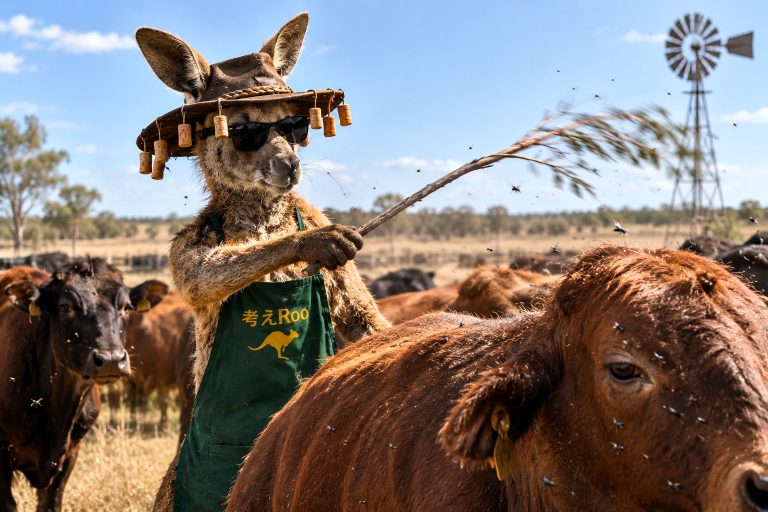
考えRoo の考え

Some words carry suitcases of meaning. “Heaps” just carries more of everything else. 言葉の中には、たくさんの意味を運ぶものがある。”Heaps” はただ、他のすべてを「もっと」運んでくれる言葉だ。


Cop A Gander At These Rippers Too...

  • Big smoke/都会

    big smoke Australian English A big city, especially Sydney or Melbourne, Australia’s two most populous cities. 日本語 都会。特にオーストラリアの最も人口が多い都市のシドニーとメルボルンに対して使われている。直訳すると「大きな煙」という意味。 Plain English A large city. Strine Dictionary

  • Strine Gives Two Chances: Buckley’s And None

    Buckley’s chance (or hope) is Strine for almost no chance. It means very unlikely or hopeless. Usually, Buckley’s alone is enough to convey the message. 日本語の意味 Buckley’s chance は「ほぼ可能性ゼロ」という意味です。 Explanation It comes from Australian history and folklore. It emphasizes extreme improbability. 日本語での解説 非常に低い確率を表す表現です。歴史由来の言い回しです。 Example “You’ve got Buckley’s chance of winning.”「勝てる可能性はほぼないよ。」 Strine Culcha Strine uses historical names for expressive exaggeration. The origin of Buckley’s as a saying is obscure. Some say it derived from the amazing story of William Buckley, a convict who went missing and was declared dead in the early 18th century only to emerge decades later having lived with indigenous peoples. Or it could have been Buckley &…

  • Over The Road Is Just Across The Street

    Over the road is Strine (Australian English) for across the street. It is used for nearby places on the opposite side. 日本語の意味Over the road は「道路の向こう側」という意味です。 ExplanationAustralians use it for simple directions. It usually means just across the street. 日本語での解説オーストラリアでは「すぐ向かい」を指します。とても日常的な表現です。 Example“The pub is just over the road.”「パブは道の向かいだよ。」 Strine CulchaStrine prefers simple spatial phrases in everyday talk. オージー文化メモストラインは日常表現がとてもシンプルです。 Related Terms

  • |

    豪キャブラリー:Fair suck of the sav(eloy)

    Fair suck of the savは典型的なオージー英語表現だ。実は、独特なオージー英語の中では最も有名な表現の一つかもしれない。  この表現は「均等機会を与えよう」と不当扱いされていると思っている人々が加害者と思っている人に対して言う表現だ。  平等・均等的な社会と思っているオーストラリアでは非常に重要な表現となっている、、、にも関わらず直訳すると「私にもウィーナーを均等に吸わせてくれよ」となる。Savはsaveloyの省略であり、saveloyはウィーナー見たいなソーセージの一種だ。

  • No Flies On Why Sharp Aussies Never Sit Still

    Why would Aussies compliment someone’s intelligence by talking about insects that aren’t there? なぜオーストラリア人は、そこに「いない」虫の話で相手の賢さを褒めるのだろうか? In the paddocks of 1840s colonial Australia, stockmen noticed something about their cattle: the laziest, slowest animals attracted swarms of flies, while the sharp, active ones moved around too much for any fly to settle on them. From that simple bit of bush observation came one of Australia’s oldest surviving slang phrases, and it was exporting itself to the U.S. and Britain within a few decades. 1840年代、植民地時代のオーストラリアの牧場で、牧夫たちは牛について面白いことに気づいた。動きの鈍い牛にはハエがたかるが、活発に動き回る牛にはハエがとまる暇がない、というのだ。この素朴な観察から生まれたのが、オーストラリアに現存する最古のスラングのひとつであり、数十年のうちにアメリカやイギリスにも輸出されていった。 Meaning “No flies on [someone]” means that person is sharp, alert, and not easily fooled — the exact opposite of a “drongo.” It’s almost always used as a compliment….

  • |

    豪キャブラリー: Rednut

     なぜか分からないが赤毛の人がよくからかわれる。呼び方がたくさんある。オージー英語では、赤毛の人に対して最も有名なニックネームが「皮肉たっぷりの赤の正反対の」Blueyだが、その他もrednutもある。Rednutのnutは頭(head)のことを示す。Rangaともいう。ちなみに、オーストラリア首相ジューリア・ギラード氏はオージー英語の鉛の強烈さの上にrednutであるのが特徴とされている。