The Yartz

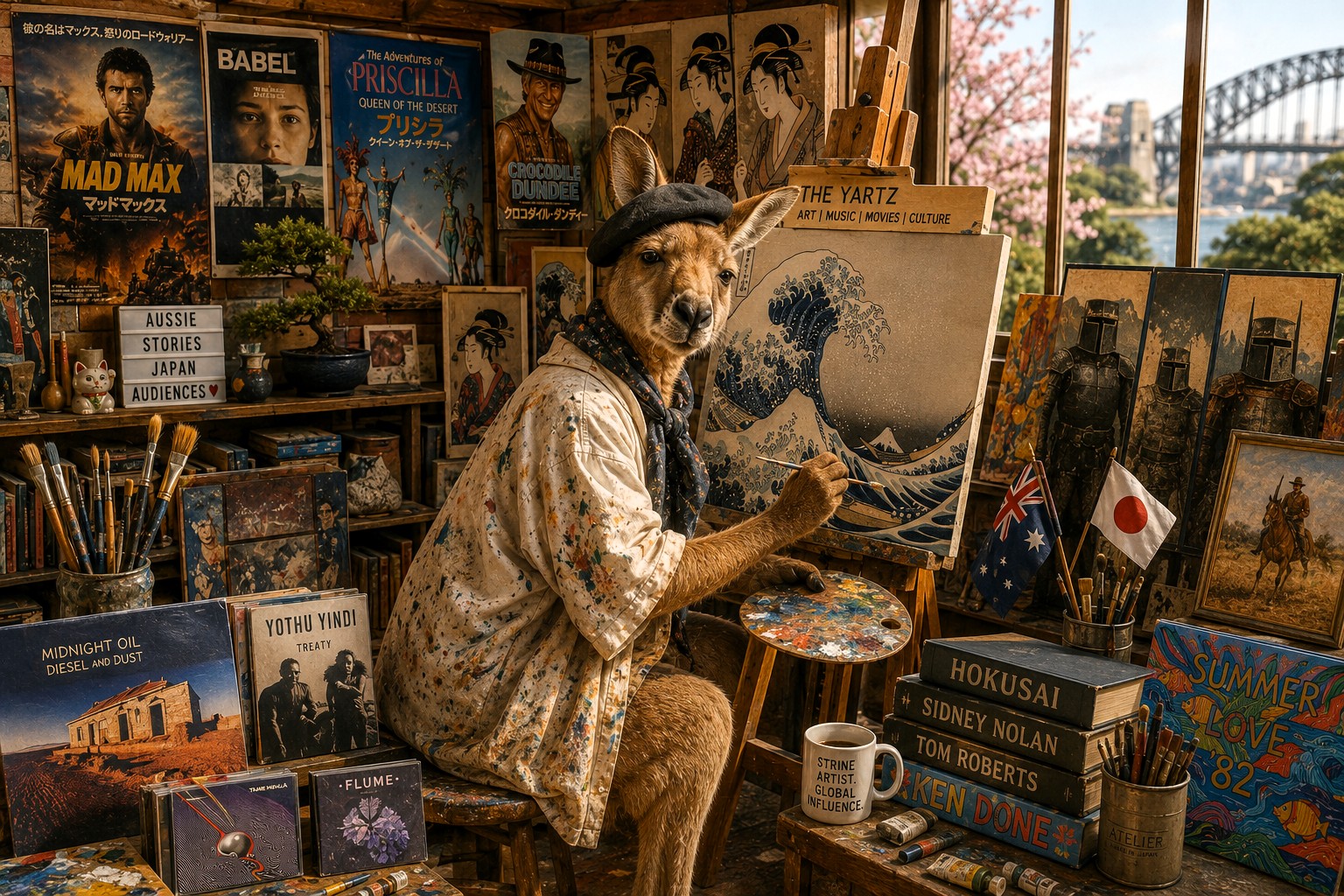
The Yartz is Strine for arts (and entertainment). Read about Japan- and Australia-related yartz here.

「ヤーツ」はストラインで「アーツ(芸術・エンタメ)」のこと。ここでは、日本やオーストラリアに関わるヤーツを紹介します

  • | |

    How Did a Japanese Celebrity Wedding Spark Australia’s Honeymoon Boom?

    郷の豪華な豪州結婚は、なぜオーストラリアへの新婚旅行ブームを生んだのか? In 1987, millions of Japanese watched one of the country’s biggest pop stars honeymoon in Australia. It wasn’t just celebrity gossip. It became one of the most successful tourism campaigns Australia had ever seen. 1987年、日本を代表する人気歌手・郷ひろみさんと女優・二谷友里恵さんの新婚旅行を何百万人もの日本人がテレビで見ました。それは芸能ニュースでは終わりませんでした。オーストラリア観光史に残る成功例となったのです。 A Wedding Captivates Japan 日本中が注目した結婚 When singer Hiromi Go married actress Yurie Nitani in 1987, it was one of Japan’s biggest entertainment stories. The couple were household names, and public interest in their wedding was enormous. 日本中が注目した結婚 1987年、人気歌手の郷ひろみさんと女優の二谷友里恵さんが結婚しました。 二人は当時を代表するスターであり、その結婚は日本中の注目を集めました。 Australia Saw an Opportunity オーストラリアが注目した The Australian Tourist Commission recognised an opportunity. Instead of simply advertising beaches and sunshine, it invited the newlyweds to spend their honeymoon in Australia. Their journey was filmed for Japanese…

  • | |

    How Did Noriko Nishimoto Help Thousands of Japanese Discover Australia?

    西本典子さんは、どのように何千人もの日本人とオーストラリアを結び付けたのか? Long before influencers and travel bloggers, one Japanese woman was quietly introducing Australia to generations of Japanese visitors. Through warmth, knowledge and tireless community work, Noriko Nishimoto became one of the unsung builders of Australia–Japan friendship. SNSも旅行インフルエンサーも存在しなかった時代、一人の日本人女性が静かにオーストラリアの魅力を日本へ伝えていました。西本典子さんは、長年にわたり多くの人々を結び付けた、知られざる日豪交流の立役者です。 A New Home 第二のふるさと Noriko Nishimoto did more than settle in Australia. She made it her mission to help Japanese visitors and residents feel welcome. Whether answering questions, sharing local knowledge or building friendships, she became a trusted bridge between two cultures. 第二のふるさと 西本典子さんは、オーストラリアで暮らすだけではありませんでした。 日本人が安心して生活し、旅を楽しめるよう支え続けました。 情報を伝え、人と人を結び、日豪をつなぐ架け橋となったのです。 Building Communities コミュニティを育てる International friendship rarely happens through official ceremonies. It grows through everyday acts of kindness. By helping newcomers find their feet, Nishimoto strengthened both…

  • | |

    Did Japan Inspire Australia to Choose National Living Treasures?

    日本の「人間国宝」はオーストラリアの「リビング・トレジャーズ」に影響を与えたのか? Australia’s National Living Treasures celebrate remarkable Australians. Japan’s Living National Treasures protect traditional masters. The two honours are different—but they may be connected by an idea that travelled across the Pacific. オーストラリアの「ナショナル・リビング・トレジャーズ」は優れた人物をたたえる制度です。一方、日本の「人間国宝」は伝統技術の継承者を守る制度です。両者は異なりますが、その背景には海を越えて受け継がれた一つの考え方がありました。 Japan Had the Idea First 最初に制度を作ったのは日本 After the Second World War, Japan faced an urgent question. How could traditional arts survive in a rapidly modernising society? The answer was to recognise exceptional craftspeople and performers as Living National Treasures, helping preserve skills that might otherwise disappear. 最初に制度を作ったのは日本 戦後の日本は、急速な近代化の中で伝統文化をどう守るかという課題に直面しました。 そこで生まれたのが「人間国宝」の制度です。 卓越した技術を持つ職人や芸能家を顕彰し、その技を未来へ伝える仕組みとなりました。 Australia Took a Different Path オーストラリアは独自の形へ When Australia’s National Trust introduced its National Living Treasures in 1997, the goal was different. Instead of recognising only traditional artists,…

  • | |

    Why Did a Japanese Potter Choose a Tiny Aussie Country Town?

    なぜ日本人陶芸家は小さなオージーの町を選んだのか? When Japanese ceramic artist Tatsuzo Shimaoka visited Australia, he wasn’t looking for fame. Instead, he helped inspire generations of Australian potters through workshops, demonstrations and friendships. His influence can still be found in studios across the country today. 日本を代表する陶芸家・島岡達三は、名声を求めてオーストラリアを訪れたわけではありません。彼は講習会や実演を通じて多くのオージー陶芸家に影響を与え、その足跡は今も各地の工房に残っています。 A Living National Treasure 人間国宝の陶芸家 Tatsuzo Shimaoka (1919–2007) was one of Japan’s most respected ceramic artists. In 1996, he was designated a Living National Treasure for his mastery of traditional pottery techniques. His work combined craftsmanship with humility—a combination that resonated strongly with Australian potters. 人間国宝の陶芸家 島岡達三(1919〜2007)は、日本を代表する陶芸家の一人です。 1996年には益子焼の技術で人間国宝に認定されました。 卓越した技術と謙虚な人柄は、多くのオージー陶芸家にも深い印象を与えました。 Sharing, Not Teaching 「教える」のではなく「分かち合う」 During his visits to Australia, Shimaoka gave demonstrations and workshops rather than formal lectures. He encouraged artists…

  • | |

    Why Do Japanese Musicians Keep Bringing Taiko to Australia?

    なぜ日本の和太鼓はオーストラリアで愛され続けているのか? From school halls to multicultural festivals, the powerful sound of taiko echoes across Australia. Behind every performance are Japanese teachers and volunteers who have spent decades sharing far more than music. 学校の体育館から各地のフェスティバルまで、力強い和太鼓の音がオーストラリア中に響いています。その背景には、音楽だけでなく日本文化そのものを伝えてきた多くの日本人指導者の存在があります。 More Than a Performance 演奏だけではない Taiko performances are exciting. But rehearsals are where friendships begin. Australian and Japanese players practise together for months before stepping onto the stage. 演奏だけではない 和太鼓は迫力ある演奏が魅力です。 しかし、本当の交流は練習から始まります。 日本人とオージーのメンバーは、何か月も一緒に汗を流して本番を迎えます。 Teaching Without Words 言葉を超えた指導 Many Japanese instructors speak only limited English. Many Australian students know little Japanese. Rhythm becomes their shared language. 言葉を超えた指導 日本人指導者の中には英語が得意ではない人もいます。 一方、オージーの生徒も日本語を話せるとは限りません。 それでも太鼓のリズムが共通の言葉になります。 Building Community 地域をつなぐ太鼓 Community festivals across Australia regularly feature taiko performances. They attract audiences of every background. For many…

  • |

    How Paul McCartney Clipped His Wings In Japan

    On this day in 1980…. …ex-Beatle Paul McCartney was arrested in Japan. He was caught with 219 grams of marijuana in his bag at New Tokyo International Airport in Narita, the airport was then known. McCartney had arrived in Japan for a concert tour with his band, Wings. He arrived at Narita after a long flight from London, accompanied by his wife, Linda, and their four kids. Customs officials found marijuana in his luggage during a routine check. The discovery shocked many fans and the media worldwide. He had made little effort to conceal the stash, which was in a suitcase. “This stuff was too good to flush down the…

  • How Molly Meldrum Almost Created A Japanese Juggernaut

    Ian “Molly” Meldrum, one of Australia’s most prominent figures in the popular music world, came within a whisker in 1984 of making a then rising Japanese band reach superstardom while using Down Under as a launching pad to hit the top. Sandii and the Sunsetz had become only the second-ever Japanese act to reach the Top 10 in Australia with their 1983 hit, Sticky Music, but they were about to get kicked out of the country in disgrace. Meldrum, probably one of the world’s best-known rock journalists despite being notorious for poor elocution, stepped in and asked for help on behalf of the band, whose members had overstayed their visas…

  • | |

    Have A Very Merry Mad Max Xmas!

    It was with great delight that I learned overnight that Christmas in Japan in 2025 will have a tinge of Aussie about it. And my enthusiasm was in no way quelled by the fact that this merely meant a screening of Mad Max. With a message of “Merry Mad Max,” National broadcaster NHK‘s Premium Cinema channel will celebrate the festive season with a screening of the Aussie classic propelled to worldwide success on the back of becoming a hit in Japan when it was released here in 1979. Mad Max is Australia’s most successful film franchise and Japan played a huge role in it becoming that way, as we have…

  • |

    Bigger Than The Beatles! ’60s Strayan Schoolkids Swoon At Shintaro The Samurai

    Possibly my first connection with Japan was waking at an ungodly hour (lifelong habit) and turning on the telly to watch Shintaro the samurai and his sidekick, Tombei the Mist, take on the evil Koga ninja and other assorted nasties threatening the Shogunate. I was watching The Samurai, a program where Shintaro, played by Koichi Ose, possibly did more than anything else to restore friendly postwar relations between Australia and Japan. The Samurai was the first Japanese TV to screen in Australia in late 1965, and when Ose toured Down Under the following year, thousands of children swarmed Melbourne and Sydney airports to catch a glimpse of their hero, their…