
Sayonara Stories

Mobile phones were starting to become a reality when Kangaeroo left Australia around this time of the year back in 1988, a year when the bicentennial of British colonization was marked.

It was supposed to be a six-week holiday in Japan.

Some 32 years later, that trip effectively hasn’t ended.

Japan was in the news in Australia at the time of departure.

Then Emperor Hirohito was in a critical condition (he would die shortly into the new year).

The Japanese economy was booming and Japan seemed poised to take over leadership of the global business world.

But, the more things change, the more they seem to stay the same.
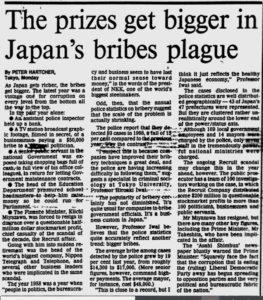
Like now, the Liberal Democratic Party governed Japan and it was as rotten to the core as it has always been.

Kiichi Miyazawa had just resigned as Finance Minister after being embroiled in the Recruit Scandal, a case that would rock Japanese politics with dozens of politicians greedily accepting bribes for stocks in the then-skyrocketing stock market.

There was no consumption tax, but a 3% levy on all goods and services was due to be implemented from the following April and 1 yen coins were being produced to meet the expect demand the tax would bring for them.

Miyazawa would make a comeback and eventually rose to become prime minister. American reporters loved him because he could speak English and had a fawning affinity for the United States, but he was corrupt and inept. He would be at the helm when the LDP lost government for the first time in its existence in 1993.

Sydney Morning Herald Tokyo Correspondent Peter Hartcher, then a young, almost cub reporter in his first posting as a correspondent, would let Australian readers know of the situation in Japan at the time. Hartcher would go on to an illustrious career as a political commentator.
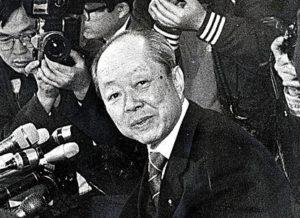
Kiichi Miyazawa resigns as Finance Minister for accepting bribes in 1988

Lots has changed over the ensuing decades, but not prices, which have remained amazingly stable in that time, rising, but not to an unrecognizable extent as has been the case with Oz.

Mobile phones were non-existent in Japan then. Even car phones, which were not common but hardly rarities in Australia in the late ’80s, were unseen in late Hirohito-era Japan.

No worries about finding a mobile phone for a bit less than $4,000 nowadays, though.
Cop A Gander At These Rippers Too...

  • |

    Why Did Japan Fall In Love With The Frill-necked Lizard?

    なぜ日本はエリマキトカゲに夢中になったのか? Few Aussie animals have captured Japan’s imagination quite like the frill-necked lizard. For a brief moment in the 1980s, this remarkable reptile became one of Japan’s biggest stars. But why did one unusual Australian lizard become a household name nearly 7,000 kilometres from home? オージーの動物の中でも、1980年代に日本中を熱狂させた存在があります。それがエリマキトカゲです。なぜ、この少し変わったトカゲが遠く離れた日本で国民的人気を集めたのでしょうか。 An Unusual Aussie ちょっと変わったオージー Australia is famous for unusual…

  • | |

    Is Niseko Still Australia’s Ski Town?

    ニセコは今も「オーストラリア人のスキーの町」なのか? Walk through Niseko today and you’ll hear conversations in Japanese, English, Mandarin, Korean and many other languages. The resort that Australians helped introduce to the world has become one of Asia’s most international winter destinations. Visitors now arrive from across the globe, while investment comes from many countries. So, after more than three decades,…

  • What Did Ya Aussie Garden In Tokyo Look Like Before?

    都内のオージープランツ庭はもともとどうだった? Well, we’ve gotta go back a bit. But this is what our garden looked like when it started. I removed everything I could, made the plot as flat as possible, removed all the weeds and then waited for instructions from Alex Endo. ちょっと昔にさかのぼる必要があるんだけど、庭づくりを始めた頃はこんな感じだったんだ。できる限り全部取り除いて、区画をできるだけ平らにして、雑草も全部抜いてから、遠藤アレックスの指示を待った。 And before this, it was even more of an eyesore.

  • | | |

    モー、、十分か?牛関係のBig Thingsでもオーストラリアに盛ん

     オーストラリア経済にとって乳製品・肉食関係などがいずれも重要な分野であり、国及び国民のほとんどに欠かせない存在である。  なので、オーストラリアでの生活になんらかな不思議な影響がある「Big Things」も当然牛などと関連するものも多数。  多分、背景が最も面白いのがビクトリア州のバーチップにあるBig Mallee Bull。  Malleeという言葉をオージー英語でたくさん意味があるが、主に地域や木の種類に使われている。  そして、fit as a mallee bullという表現は、独特なオージー英語であり、どんな豪州人でも分かるはずだ。直訳すると「マリー地域の雄牛並みの体が鍛えられている」で、意味が「極めて壮健だ」。  それに因んでビクトリア州のマリー地域にあるバーチップが街のど真ん中に巨大な雄牛を称える。  問題は、実際にmallee bullという牛が元々存在しない。  でも、それを別においておいて、他も見てみよう。  まずは、北部のクイーンズランド州から始まろう。  南回帰線にあることで有名な町ロックハンプトンは元々ビーフ産業が栄えている地域である。  それを称えるため地域の象徴である牛3頭の「Big Things」を町のあっちこっちに設置されたが、一つが朽ち果てたようで現在2頭のBig Bullしか残っていないらしい。  そう遠く離れていないのが同州ヤンディナ。  ロックハンプトン同様、この地域も牛産業が重要であり、牛の「Big Things」が作られた。  もう一つの特徴がしょうが農家が多い。  決してイヤンディナという地域について「しょうがない、な~」と言い難い。  実にしょうがだらけだ。  はい、くだらないギャグをやめよう。  ニューサウスウェールズ州海岸添え北部の町ワーチョープは元々「Big Things」があった町。  だが、そこにあったBig Bullは、老化で約5年前撤去されたようだ。  オープンした当時お土産屋やビーフに関する展示があったようだったが、集客力があまりなかった見たい。  同州南部海岸添えの方へ行くとボダラという町がある。  ボダラは牛が有名というよりチーズをはじめ乳製品が有名だ。  そこで同町に巨大なチーズ像がある。  だが、上記Big Bullと同じようにこれも老朽化し、今一般人がなかなか近づかないようになっているようだ。  しかし、ハイウェイから良く見えるらしいし、写真も撮れる。  そして、他の牛などに関連する「Big Things」は、以前に考えRooで取り上げられているものだ。  今週、話に触れたばかりのBig Cowsがある。  これらが他数件と一緒にビクトリア州の「Big Things」都であるフィリップ島にある。  同島のニューヘーブンという町にある。  (皮肉的にカウズ<牛の複数形>でありながらカウズという町がとなりにあってにもかかわらずそこで立てられなかった。)  そして、ほぼオーストラリア全国に渡って西オーストラリア州へ。  ここにはCow on the Cornerという巨大な牛がある。  このデカイ牛はブランズィック・ジャンクションという町にあってにも関わらず、日本と深い関係がある。  日本で発売されているLady Bordenアイスクリームが元々この地域に作られて1990年代以降輸出された。…

  • | |

    Nissan’s Fine Fragrance From Perfumed Kangaroos

    Automaker Nissan Motor Co. has long used kangaroos in its advertising, particularly in the early 2010s and notably when enlisting the aid of technopop girl group Perfume, which was then at the peak of its popularity. Nissan stylized Perfume’s three members–Kashiyuka, A-chan and Nocchi–as pink kangaroos to promote its Serena, Note and Cube models. Perfume…