What Did Ya Aussie Garden In Tokyo Look Like Before?

都内のオージープランツ庭はもともとどうだった?

Well, we’ve gotta go back a bit. But this is what our garden looked like when it started. I removed everything I could, made the plot as flat as possible, removed all the weeds and then waited for instructions from Alex Endo.

ちょっと昔にさかのぼる必要があるんだけど、庭づくりを始めた頃はこんな感じだったんだ。できる限り全部取り除いて、区画をできるだけ平らにして、雑草も全部抜いてから、遠藤アレックスの指示を待った。

And before this, it was even more of an eyesore.

Cop A Gander At These Rippers Too...

  • Aussie Pair in Contention for one of Japan’s Top Talent Contests

    A pair of Gold Coast teens are among the finalists in the 13th Japan Bishojo Contest, a beauty and talent pageant for young women that has been the launching pad for some of Japan’s top female performers over the past 25 years. Aussie-born Gold Coast residents Ayano Wakayama and Runa Takahashi are among the 21 finalists in the contest to be decided in Tokyo on Aug. 25, 2012. The contest is open to young women aged 13 to 20 who want to become a star. Among the previous prizewinners in the contest who have gone on to become prominent performers in Japan include stars such as Aya Ueto, Ryoko Yonekura…

  • | |

    How Did A Japanese-Born Sydneysider Become One Of Australia’s Biggest Food Names?

    なぜ日本生まれのシドニーっ子が、オーストラリアを代表する料理人になったのでしょうか? Nagi Maehashi was born in Japan and moved to Australia with her family in 1981, when she was three. Raised in Sydney, she eventually swapped a 17-year corporate finance career for a second-hand camera, a food blog and a very uncertain future. Today, RecipeTin Eats reaches millions of people and has made Nagi one of Australia’s best-known food personalities. Her story also begins with her Japanese mother and the food she grew up eating. 日本生まれのNagi Maehashiさんは、3歳だった1981年に家族とともにオーストラリアへ移住しました。シドニーで育った彼女は、17年間の金融業界でのキャリアを捨て、中古カメラと料理ブログを手に、まったく未知の世界へ飛び込みました。 現在、RecipeTin Eatsは世界中から読者を集め、Nagiさんはオーストラリアを代表する料理家の一人となっています。その原点には、日本生まれの母親と、家庭で食べていた料理がありました。 From Tokyo to Sydney 東京からシドニーへ Nagi’s mother, Yumiko, was born and raised in Tokyo and moved to Australia with her family in 1981. She continued cooking Japanese food after settling in…

  • |

    Olden And Golden

    Cleaning up my PC over the weekend, I got a great reminder of misspent hours more than a decade ago, when I found loads of vintage posters touting the wonders of Australia. Some of them also came from a campaign taking the piss of the retro trend. See if you can find which ones. This gallery is a reminder of when Kangaeroo aspired to be a blog about a lesser-known side of Australia.

  • |

    Sheer Nonsense? No, Shear Delight!

    Australia hasn’t really had much of an impact on Japanese culture over the years, but there is one case that inspires sheer delight….or perhaps that should be “shear?” For Japanese of a certain age, 調子をそろえて、クリック、クリック、クリック (Choshi wo soroete kurikku, kurikku, kurikku, is a highly familiar song picked up in an early season of Minna no Uta, a radio and TV program broadcast by NHK since 1961 to introduce new tunes to the Japanese public. The song is known in English as Click Go the Shears and Peggy Hayama, who sang the Japanese version of the song with lyrics written by Takashi Otowa, would retain a lifelong connection with Australia because…

  • Green Godzilla

    On what was something of a strange weekend, perhaps the weirdest moment came when I got to come face-to-face with a green, as in made of plants, Godzilla. There’re plenty of Godzilla statues and effigies all over Tokyo, as I’ve reported before, and the rest of Japan, some life-sized, others tiny and plenty in-between and loving devoted to Japan’s most adored monster. In western Tokyo, where I live, the most famous example is probably the Godzilla statue outside the TOHO CO., LTD. studios near Seijogakuen-mae, which is a bit of a trip for me further out in the boonies. So, I was surprised to learn that there is actually a…

  • | | |

    How Did A 19th Century Kangaroo Spark Japan-Australia Ties That Now Seem A Perfect Match?

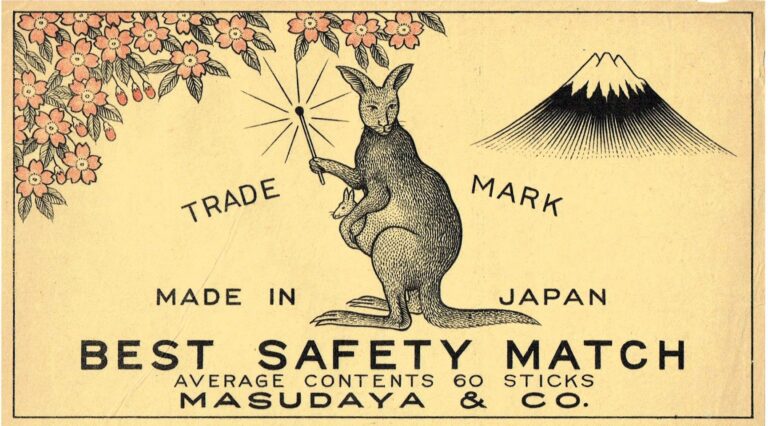
    カンガルーが火をつけた日豪交流 ― まさに“マッチ”した関係の始まり? Long before Australia became one of Japan’s closest partners, Japanese manufacturers had been using kangaroos to promote their products. The earliest documented reference to the commercial use of a kangaroo in Japan came from 1884, when a misemono traveling curiosity show advertised that it would feature a fukuro nezumi, literally a pouch mouse, at the Tenmangu Shrine grounds in Osaka. オーストラリアが日本の最も親しいパートナーの一つとなるはるか以前、日本のメーカーはすでにカンガルーを商品の宣伝に活用していました。 現在確認されている日本におけるカンガルーの最初期の商業利用は、1884年に大阪・天満宮境内で開かれた見世物興行の広告です。そこには、カンガルーが「袋鼠(ふくろねずみ)」として紹介されていました。 A Kangaroo on a Matchbox マッチラベルに描かれたカンガルー Japan first enacted a trademark registration system in June 1885, and Kobe-based match manufacturer Seisuisha registered its first trademark on Oct. 11 of that year. It was a matchbox featuring a lion. The lion was part of a series…