Sheer Nonsense? No, Shear Delight!

Australia hasn’t really had much of an impact on Japanese culture over the years, but there is one case that inspires sheer delight….or perhaps that should be “shear?”

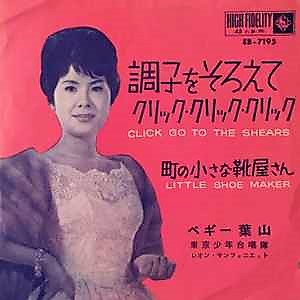
For Japanese of a certain age, 調子をそろえて、クリック、クリック、クリック (Choshi wo soroete kurikku, kurikku, kurikku, is a highly familiar song picked up in an early season of Minna no Uta, a radio and TV program broadcast by NHK since 1961 to introduce new tunes to the Japanese public.

The song is known in English as Click Go the Shears and Peggy Hayama, who sang the Japanese version of the song with lyrics written by Takashi Otowa, would retain a lifelong connection with Australia because of it.

Ironically, her version of the song was originally a B-side to a 1962 release, but became a hit after NHK picked it up for Minna no Uta. It became a roaring success after being re-released as an A-side in 1963, and resurfaced in 2022 when broadcast to celebrate the 60th anniversary of the program being on air.

Hayama had a series of hits in the 1950s and 1960s, many being Japanese language covers of English songs, perhaps most notably being the Japanese version of Do-Re-Mi from The Sound of Music and Que, Sera, Sera, the lyrics in the latter also penned by Otowa.

Hayama made considerable contributions to the fine arts, receiving honors from the Ministry of Education and an Order of the Rising Sun medal. She died aged 83 in Tokyo in 2017. Her legacy lives on with a touch of Australia.
Cop A Gander At These Rippers Too...

  • |

    Macropod Music and Getting Sentimental Over Kangaroos in Japan

    Kangaroos and koalas are among the symbols Japanese pop culture has, for many and various reasons, adopted at times (the latter with particular relish), and singer Misato Watanabe‘s choice of subject topic for her 1988 hit Sentimental Kangaroo proved a marsupial masterpiece. Watanabe made her debut in 1986 with My Revolution, a huge hit that…

  • | |

    Worst Aussie Songs Ever! 豪史上最低曲ワースト10!

    オーストラリア歌謡曲ワースト10は1980年代・1990年代が中心となっており、2000年シドニー・オリンピック開会式主人公だったニッキ―・ウェブスター氏の「Strawberry Kisses」と最低となり事実上同氏のキャリアにピリオドにうった効果と言っても過言ではない。  同リストが音楽会関係者数人が匿名を条件として、今年決めたものだ。  1980年代活躍したオージーボール選手2人や一発屋などが中心となっているけど、世界的にヒットしたPseudo Echoや1970年代オージー・ロックを象徴とするSkyhooksといって素晴らしい実績を残してるバンドの曲も入っている。中には、オーストラリア史上最高売り上げ数の「Shaddap You Face」も仲間入りしている。  このバンドは日本であまり馴染みがないが日本で1970年から1989年の間に開催された世界歌謡祭記念大会でPseudo Echoが1987年と1989年唯一2回もオーストラリア代表として出演し、前方では「Take On The World」という曲で見事に同大会を優勝した。 No. 1 – Nikki Webster – Strawberry Kisses No. 2 – Mark ‘Jacko’ Jackson – I’m An Individual No. 3 – Colette– Ring My Bell No. 4 – Craig McLachlan – Mona No. 5 – Joe Dolce – Shaddap You Face No. 6 –…

  • | |

    豪文化に独特な貢献した鞭打ちを称えるビッグ・ストックホイップ

     現代オーストラリアの文化には「鞭打ち」が独特な役割を果たした、と豪鞭打ち境界がいう。  その貢献を称えるため、オーストラリア北部にあるノーザン・テリトリー州首都ダーウィンより車で約1時間離れているヌーナマー町に「ビッグ・ストックヒップ」が2003年に作られ、オーストラリアの「Big Things」を仲間入りした。  高さ約8メートルの「ビッグ・ストックヒップ」はエコ牧場を経営するミック・デニガン氏に作られてた。ストックホイップ(家畜用の鞭)は農業大国であるオーストラリアに欠かせない存在となり、大きく貢献したはずだ。以下のビデオで見られるようにデニガン氏自身がかなりユニークな方であり、牧場経営の上に手作りで年間約3万の鞭を作ったり、歌も歌ったり、自由な時間にワニ狩人だという。 View Larger Map オーストラリア鞭打ち協会