How Did Japan Change the Way Artist Margaret Preston Saw Australia?
日本との出会いは、画家マーガレット・プレストンのオーストラリア観をどう変えたのか?
A journey that began with Japanese prints
日本の版画から始まった旅
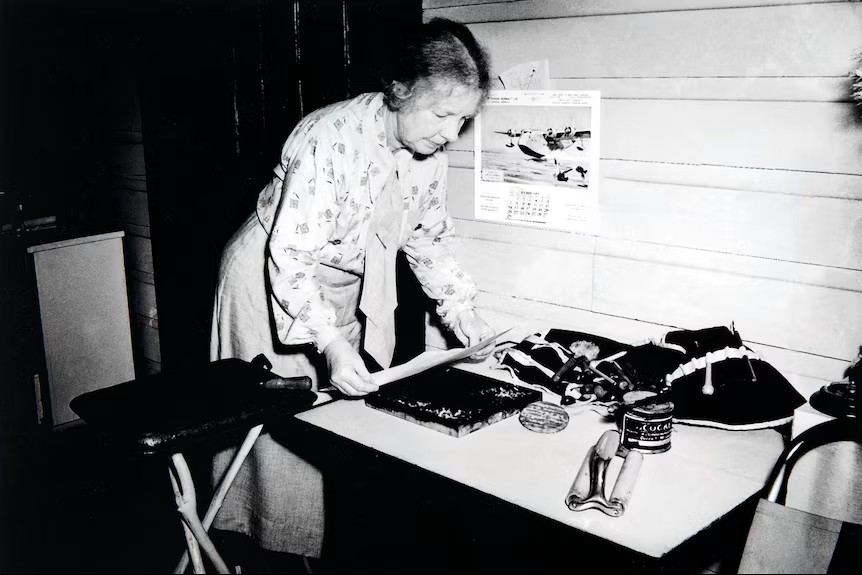
Margaret Preston (1875–1963) helped change the look of modern Australian art. Her striking prints of native flowers, harbour views and birds drew on an unexpected source: Japan’s centuries-old tradition of ukiyo-e woodblock printing. But this was not simply a case of an Australian artist admiring Japanese pictures from a distance. Preston travelled to Japan herself, returning to study the craft that had fascinated her for years.
マーガレット・プレストン(1875~1963年)は、オーストラリア近代美術の表現を大きく変えた芸術家だ。野生の花や港の風景、鳥などを大胆に描いた版画には、意外な源流がある。日本で何世紀にもわたって発展した浮世絵の木版画だ。しかし、彼女の日本との関係は、遠い国の美術に憧れて作品をまねたというだけではない。長年関心を寄せていた版画の技法を学ぶため、実際に日本を訪れている。
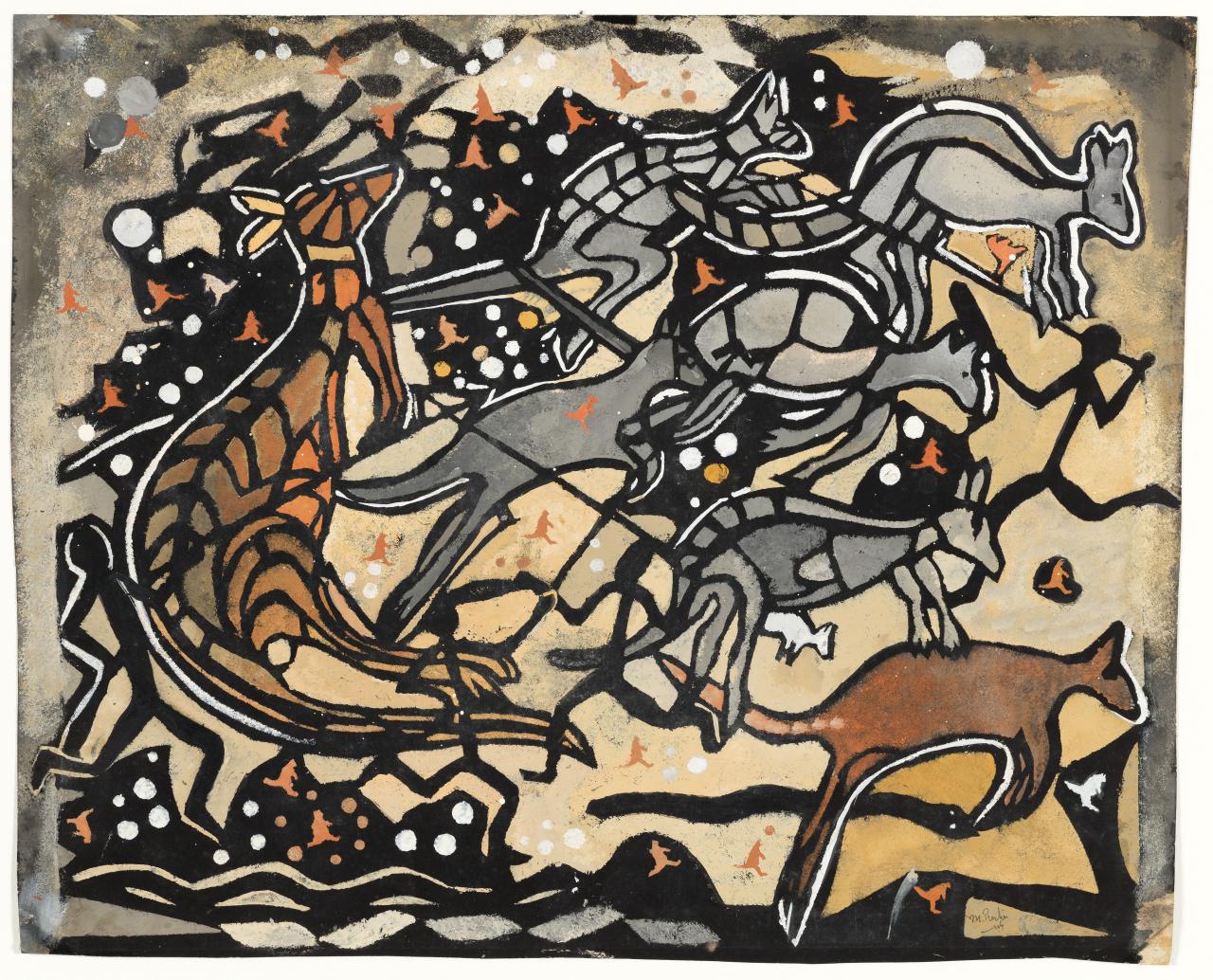
Preston first developed her interest in Japanese prints while travelling and studying in Europe. In Paris, she visited the Musée Guimet, now the National Museum of Asian Arts, and studied ukiyo-e. She was drawn to the prints’ bold outlines, flattened spaces, asymmetrical compositions and striking use of pattern. These offered a different way to organise a picture from the European traditions in which she had trained.
プレストンが日本の版画に関心を持ったのは、ヨーロッパで旅行や美術の勉強をしていた時期だった。パリでは、現在のギメ東洋美術館にあたる美術館を訪れ、浮世絵を研究した。力強い輪郭線、奥行きを抑えた画面、左右対称にこだわらない構図、印象的な模様。そうした特徴は、ヨーロッパ美術を学んできた彼女に、画面を構成する新しい方法を示した。
Japan, 1926 and 1934
1926年、そして1934年の日本
Preston’s first recorded visit to Japan was a brief stopover in 1926. The surviving accounts cited by galleries offer little detail about what she saw or where she went on that visit. Her second trip, in 1934, was more directly connected to her artistic ambitions: she travelled to Japan to study woodblock printing with a descendant of the great ukiyo-e master Utagawa Hiroshige.
記録に残るプレストンの最初の訪日は1926年で、短い立ち寄りだった。美術館などが紹介する資料からは、その際にどこを訪れ、何を見たのかについて、詳しいことまでは分からない。一方、1934年の再訪は、彼女の芸術活動とより直接的に結びついていた。浮世絵の巨匠・歌川広重の子孫から、木版画の技法を学ぶために日本を訪れたのだ。
This was an important step beyond looking at finished prints in European collections. Japanese woodblock printing involved a demanding process: a design was transferred to a block, carved, inked and printed with great care. Traditional multicolour prints could require several blocks, each aligned precisely with the others. Preston was particularly interested in the strength of the black outline, the relationship between shapes and open space, and the way colour could transform a simple design.
ヨーロッパの美術館で完成した版画を鑑賞することと、実際の技法を学ぶことは違う。日本の木版画では、図柄を版木に写し、彫り、墨や絵の具をのせ、細心の注意を払って紙に摺る。多色刷りの場合は、色ごとに複数の版木を使い、位置を正確に合わせなければならない。プレストンが特に注目したのは、黒い輪郭線の力強さ、形と余白の関係、そして簡潔な図柄を色彩によって生き生きと見せる方法だった。
There is an unresolved discrepancy in published accounts of her 1934 visit: ABC News places her study with Hiroshige’s descendant in Tokyo, while Geelong Gallery identifies Kyoto. The important point is clear, however: Preston went to Japan to learn from its printmaking tradition, not merely to admire it.
なお、1934年に彼女が広重の子孫から学んだ場所については、ABC Newsが東京、ジーロング・ギャラリーが京都と記しており、資料によって違いがある。ただし、確かなのは、プレストンが日本の版画を鑑賞するだけでなく、その伝統から技法を学ぼうとしたことだ。
Bringing Japan home to Australia
日本で学んだ技法をオーストラリアへ
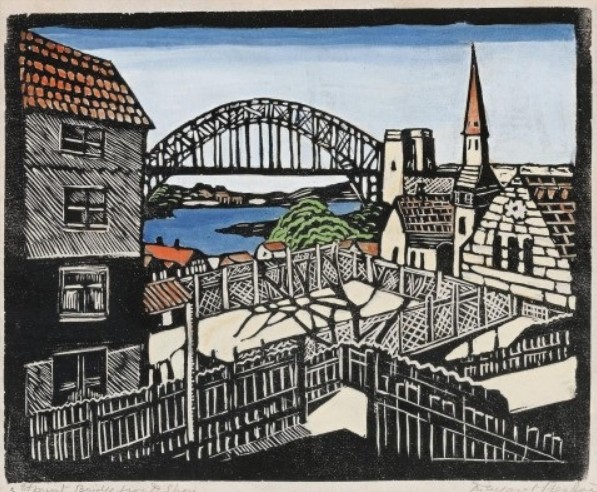
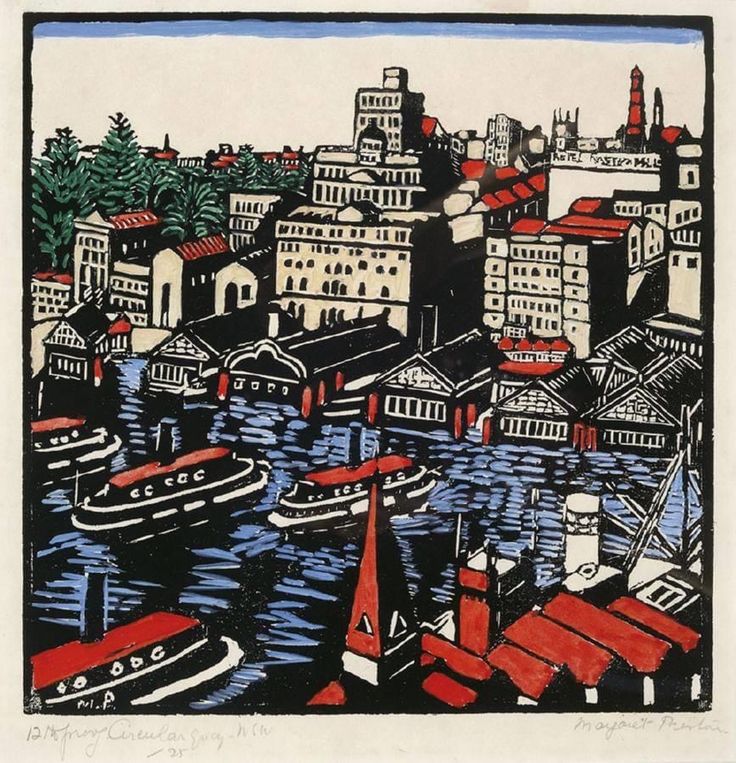
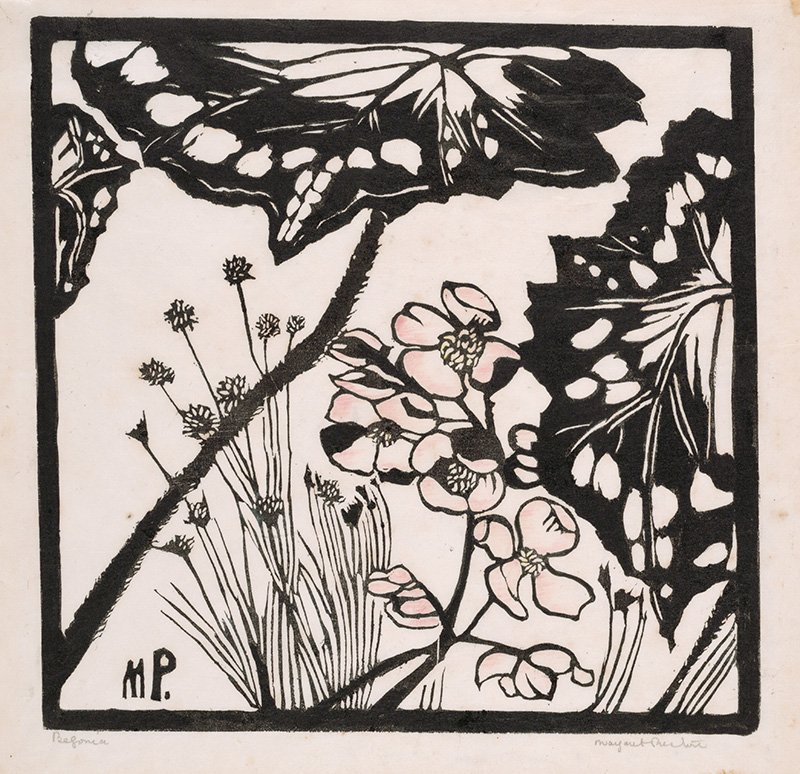
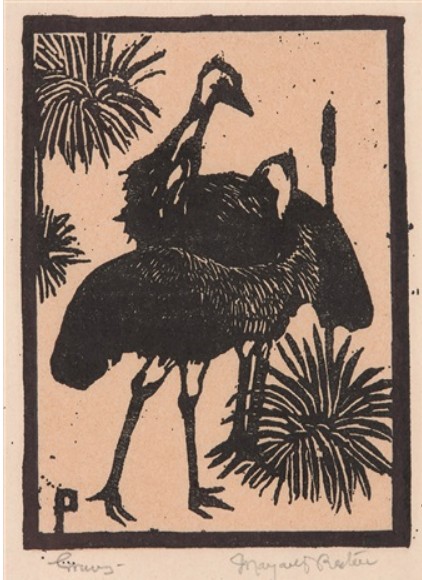
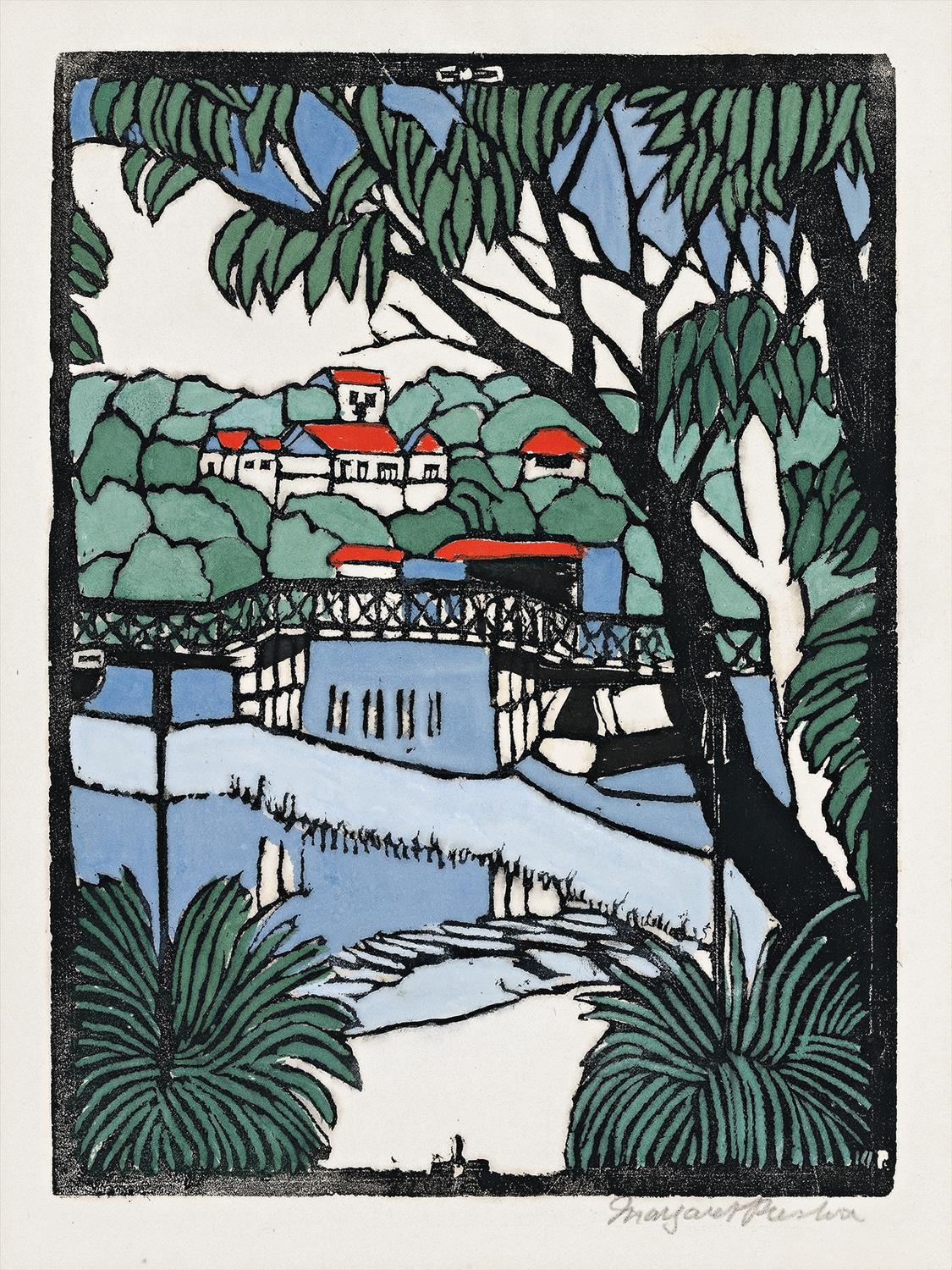
After settling in Sydney, Preston began applying Japanese printmaking principles to familiar Australian subjects. Her Mosman Bay (1920) used the harbour scenery around her as a modern, carefully arranged composition. Later works such as Begonia (c. 1935) and Tea-tree and Hakea petiolaris (1936) reveal how she adapted the lessons of Japanese prints to Australian plants.
シドニーに定住したプレストンは、日本の版画から学んだ表現を、身近なオーストラリアの題材に応用し始めた。1920年の《モスマン・ベイ》では、身近な港の風景を、構成を練り上げた近代的な画面として描いた。その後の《ベゴニア》(1935年頃)や《ティーツリーとハケア・ペティオラリス》(1936年)には、日本の版画から得た発想をオーストラリアの植物に生かした成果が表れている。
Rather than relying on multiple colour blocks, Preston often printed a strong black outline from a single block and then coloured the image by hand with watercolour or gouache. This approach gave her control over both the graphic structure and the final colour. Japanese printmaking provided a foundation, but the plants, colours and artistic choices were her own. She was building a visual language for Australia, using ideas that had travelled across the sea.
プレストンは、色ごとに多数の版木を使う方法にこだわらず、ひとつの版木から力強い黒い輪郭線を摺り、その上に水彩絵の具やガッシュで手彩色することが多かった。これにより、画面の構成と最終的な色彩の両方を自分で調整できた。日本の版画は土台となったが、描かれた植物や色の選択、作品の個性は彼女自身のものだった。海を越えて伝わった発想を使い、オーストラリアを表現する新たな視覚言語を築いたのである。
A connection that continues
受け継がれる日本とオーストラリアのつながり
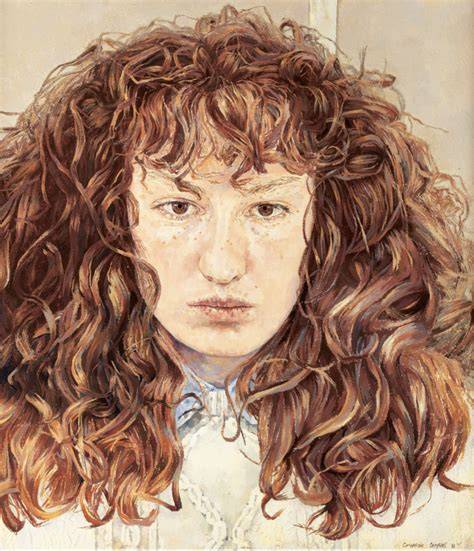
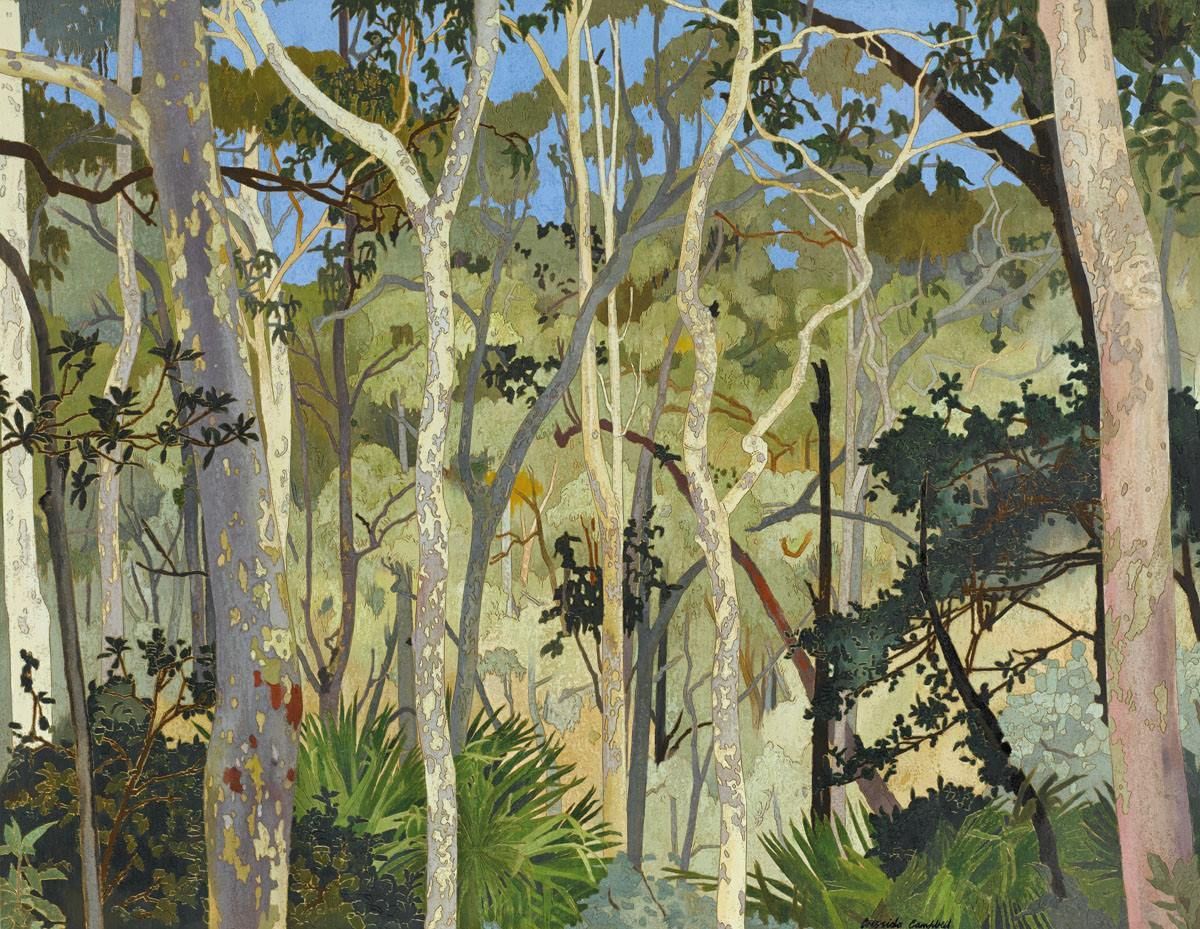
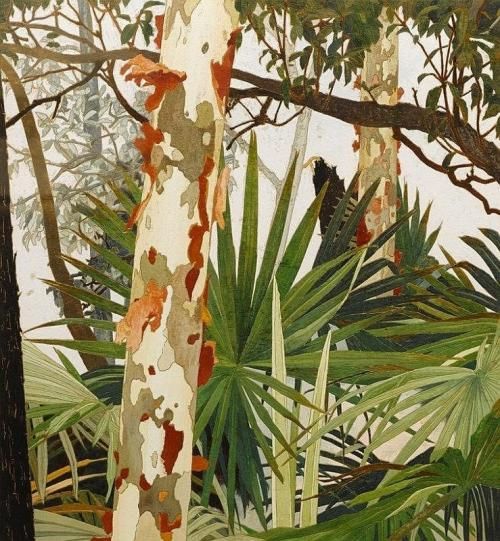
Preston’s influence can be seen in later generations. Australian artist Cressida Campbell has recalled seeing Preston’s work as a teenager and finding it a revelation. Campbell subsequently travelled to Tokyo in 1985 to study at the Yoshida Hanga Academy, developing her own distinctive method of painting directly onto carved woodblocks. Her work, like Preston’s, brings Japanese printmaking into conversation with Australian subjects.
プレストンの影響は、後の世代にも見られる。オーストラリア人作家クレシダ・キャンベルは、10代のときにプレストンの作品を見て、大きな衝撃を受けたと振り返っている。キャンベルも1985年に東京へ渡り、吉田版画アカデミーで学んだ。その後、彫った木版に直接絵を描く独自の技法を発展させた。彼女の作品もまた、プレストンと同じように、日本の版画とオーストラリアの題材を結びつけている。
In 2024, Geelong Gallery’s exhibition Cutting Through Time brought together works by Campbell, Preston and Japanese ukiyo-e masters, making this artistic lineage visible. It showed how influence can move across countries and generations, changing as each artist brings their own experiences to it.
2024年、ジーロング・ギャラリーの展覧会「Cutting Through Time」では、キャンベル、プレストン、そして日本の浮世絵師たちの作品が並べて紹介され、このつながりが目に見える形になった。芸術の影響は国境や世代を越えて伝わり、それぞれの作家の経験によって新たな姿へと変わっていく。
Preston’s legacy also raises difficult questions about her use of First Nations cultural designs, which were not always acknowledged with sufficient understanding of their origins and significance. That complexity is part of her history, too. Her encounter with Japan nevertheless remains a compelling example of cultural exchange: an Australian artist travelled to learn from Japanese masters, transformed what she learnt, and helped shape an artistic tradition that continues to evolve.
プレストンの遺産には、先住民の文化的なデザインを作品に取り入れながら、その由来や意味への理解、適切な評価が十分ではなかったという難しい問題もある。それもまた、彼女の歴史の一部だ。それでも、日本との出会いは文化交流の興味深い実例として残っている。オーストラリアの芸術家が日本を訪れて技法を学び、それを自分の表現へと変え、今も進化し続ける芸術の流れを形づくったのだ。
More about Aussie artists and Japanese printmaking
もっと知る:プレストンと日本の版画
- Geelong Gallery: Margaret Preston
- How Japanese ukiyo-e shaped Margaret Preston and Cressida Campbell
- National Gallery of Australia: Margaret Preston
- National Gallery of Australia: The Prints of Margaret Preston